Blade Runner (1982)
Warner Bros.· USA· 117 min· English
Directed by Ridley ScottMusic by VangelisCinematography by Jordan Cronenweth
Synopsis
Los Angeles, 2019: perpetual rain, perpetual night, perpetual advertising. Burned-out cop Rick Deckard is forced back to work hunting four escaped replicants — bioengineered humans with four-year lifespans who have come to Earth to meet their maker and demand more life.
Advertisement
Review
Blade Runner opened in June of 1982, went up against E.T. and a wave of more crowd-pleasing science fiction, and lost badly. Reviews at the time were mixed to hostile; several prominent critics found it cold, slow, needlessly murky, more interested in atmosphere than story. It recouped only a fraction of its budget in theaters. And then, over the following decade, something unusual happened: the film didn't fade the way most box-office disappointments do. It got more influential every year it was out of theaters, until it became close to impossible to watch any subsequent piece of neon-lit, rain-slicked, advertisement-choked science fiction without recognizing the debt. Every hologram-haunted future you've seen since, in film, television, video games or album art, is in conversation with what Ridley Scott, production designer Lawrence G. Paull and conceptual futurist Syd Mead built for this single film: a 2019 Los Angeles so dense with implied history that the production design does more actual worldbuilding than most trilogies manage with hours of dialogue.
What that design work accomplishes, specifically, is a sense of accumulation — the idea that this future didn't spring into being all at once but was built, layer over layer, on top of an older city that nobody bothered to tear down first. Streets are crowded with retrofitted advertising, steam vents, umbrellas, street food, languages blending into an invented patois; buildings mix Mayan Revival architecture with corporate glass towers and jury-rigged wiring running everywhere in between. Douglas Trumbull, already responsible for some of the most influential effects work of the previous decade on 2001 and Close Encounters, supervised visual effects that make the Tyrell Corporation's headquarters feel less like a building than a monument to something already beginning to decay. Jordan Cronenweth's cinematography, all smoke, hard backlighting and venetian-blind shadow, was reportedly complicated by his own struggle with the earliest stages of Parkinson's disease during the shoot, which required additional camera operators to help execute shots as precisely as he wanted — and the resulting look, equal parts film noir and industrial nightmare, remains one of the most imitated lighting schemes in the history of the medium.
None of that design work would matter, though, if the film underneath it were hollow, and it isn't. Adapted loosely, and in some ways only nominally, from Philip K. Dick's 1968 novel Do Androids Dream of Electric Sheep?, Blade Runner is structured as a noir detective story in which the detective turns out to be the least alive person on screen. Harrison Ford's Rick Deckard, a burned-out cop dragged back to work to hunt down four escaped replicants, moves through the film's rain and neon like a man who retired from his own life a long time ago; he barely reacts to anything, drinks constantly, and seems to regard the job as an unpleasant chore rather than a moral crusade. The replicants he's hunting, by contrast, are the only characters who seem to want anything with real intensity — memories, answers, more time, a father who will look them in the eye and explain why he built them to die in four years. The film's actual question isn't whether these artificial people qualify as human. It's whether the humans around them still do.
Rutger Hauer's Roy Batty is the character who makes that question unavoidable. Already an established leading man in Dutch cinema through his collaborations with Paul Verhoeven, Hauer brings a strange combination of physical menace and genuine philosophical yearning to a role that could easily have been played as a straightforward villain. His famous final monologue, delivered as he's dying on a rooftop in the rain with a white dove in hand, was substantially rewritten and trimmed by Hauer himself the night before shooting; he's said in later interviews that the original scripted version was too long and too literal, and that he cut it down to something closer to what a dying man might actually manage to say. The result, "I've seen things you people wouldn't believe... all those moments will be lost in time, like tears in rain," turns what could have been a conventional action climax into something closer to an elegy, with the hunted creature showing more mercy and more poetry in his final moments than his human hunter has shown in the entire film.
The film's most quietly ingenious touch, and the one that has generated the most debate among fans in the decades since, is the Voight-Kampff test itself — an interrogation device that measures involuntary emotional response, pupil dilation and blush reflex to distinguish replicants from humans through a series of increasingly upsetting hypothetical questions. It's presented with total conviction and no real explanation of its underlying mechanism, and yet it anticipates, with unnerving precision, arguments that would later become central to real debates about the limits of the Turing test and, more recently, to questions about how you'd actually verify whether a sufficiently advanced AI genuinely experiences anything or has simply learned to perform the appearance of experience convincingly. The film never resolves whether the test is even reliable, and it's since become one of the most argued-over ambiguities in the franchise: whether Deckard himself might be a replicant is a question Scott has answered differently in different interviews, and the theatrical cut's studio-mandated voiceover and tacked-on happy ending — imposed over Scott's objections after test audiences responded poorly to the ambiguity — actively worked against the reading the director always intended.
That's part of why the film exists today in more different edited versions than perhaps any other major studio release: a workprint, the theatrical cut with its narration, an international cut, a 1992 Director's Cut that restored some of Scott's intentions but was assembled without his direct involvement, and finally the 2007 Final Cut, produced twenty-five years later with Scott personally overseeing every frame, which he has said is the only version that fully represents what he wanted to make. Watching that version now, decades removed from its disastrous opening weekend, it's hard to see what contemporary audiences found so alienating. The film asks you to sit with atmosphere and moral ambiguity rather than momentum, to accept a hero who barely qualifies as heroic, and to leave the theater without a tidy answer to the question it spent two hours asking. That's exactly the kind of patience mainstream 1982 audiences weren't primed to extend. Vangelis's score, largely improvised live on a Yamaha CS-80 and withheld from an official soundtrack release for over a decade, became one of the most bootlegged pieces of film music ever made in the meantime, which tells you something about how many people were quietly falling in love with this film while the industry had already written it off. Watch it on a rainy night, ideally the Final Cut, and give it the patience it originally didn't receive.
Trivia & Color Notes
Tears in rain, written overnight
Rutger Hauer trimmed and rewrote Roy Batty's death speech the night before shooting, adding 'All those moments will be lost in time, like tears in rain.' The crew reportedly applauded; some wept.
The Voight-Kampff machine
The empathy-detecting interrogation device — bellows breathing, iris-scanning eye — was a functional-looking prop with no explained mechanism, yet it anticipated real debates about detecting machine intelligence by emotional response.
The Bradbury Building
J.F. Sebastian's decaying home is the 1893 Bradbury Building in downtown LA, its wrought-iron atrium already a film-noir landmark. It still stands, and still gets pilgrimages from fans.
Spinners over LA
Syd Mead designed the flying 'spinner' police cars as vertical-takeoff vehicles; 25 full-size units were built. One hangs in Seattle's Museum of Pop Culture.
Seven versions of one film
Workprint, US theatrical (with studio-imposed narration and happy ending), international cut, Director's Cut, Final Cut… at least seven distinct versions exist. Scott considers only 2007's Final Cut fully his own.
Replicants are biological androids — closer to today's synthetic-biology speculation than to robotics, and the four-year lifespan is a narrative device rather than science. The Voight-Kampff empathy test, however, is a genuinely prescient idea: distinguishing humans from machines via emotional response anticipates both the Turing test's limitations and modern AI-detection debates. The perpetual-advertising megacity extrapolated 1982's Japan-ascendant economics; it missed the internet completely, but got the atmosphere of technological melancholy exactly right.
🎵 Soundtrack
Music by Vangelis
Vangelis's score — improvised largely live on a Yamaha CS-80 — is the sound of neon reflected in rain. Withheld from official release for over a decade, it became one of the most bootlegged soundtracks ever and the blueprint for every synthwave artist working today.
🔗 This film connects to…
- The Matrix (1999)— Same subgenre: cyberpunk
- Blade Runner 2049 (2017)— Same franchise: Blade Runner — the sequel, 35 years later
- Alien (1979)— Same director: Ridley Scott
- Star Wars (1977)— Shared actor: Harrison Ford
- Close Encounters of the Third Kind (1977)— Same effects master: Douglas Trumbull
- Akira (1988)— Same theme: the neon megacity
- RoboCop (1987)— Same theme: what's left of the human inside the product
- Metropolis (1927)— Same theme: the vertical dystopian city
- Silent Running (1972)— Same effects artist: Douglas Trumbull
Cast & Crew
Director
Composer
Cinematographer
Special Effects
Cast
- Harrison Ford as Rick Deckard
- Rutger Hauer as Roy Batty
Advertisement
You Might Also Like
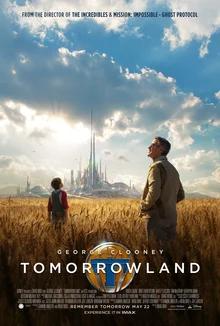
Tomorrowland
Optimistic teenager Casey Newton receives a mysterious pin that, when touched, drops her into a vision of Tomorrowland — a gleaming hidden city of impossible future technology. Tracking down the pin's origin leads her to Frank Walker, a disillusioned former boy-genius who was exiled from that city decades ago, and together they race to understand why humanity's brightest possible future has been sealed away and left to die.
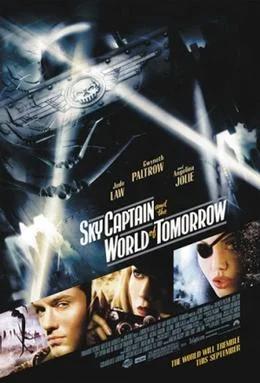
Sky Captain and the World of Tomorrow
1939, an alternate New York besieged by giant robots stomping through Manhattan. Mercenary pilot Joe 'Sky Captain' Sullivan and journalist Polly Perkins — his ex — race to uncover who is behind the attacks, chasing the trail across the globe to a hidden island fortress where a mad scientist's decades-old plan for 'the world of tomorrow' is finally coming to fruition.
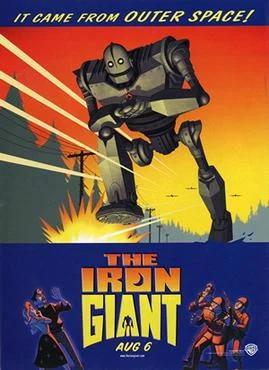
The Iron Giant
Maine, 1957. Young Hogarth Hughes discovers a colossal robot that fell from space, its memory wiped, hiding in the woods behind his house. As Hogarth teaches the Giant about the world — and about choice — a paranoid government agent closes in, convinced the visitor is a Cold War weapon that must be destroyed before it destroys them first.
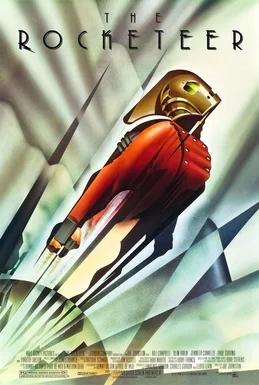
The Rocketeer
1938, Los Angeles. Stunt pilot Cliff Secord stumbles onto a prototype jetpack hidden in his hangar by gangsters — and straps it on. As word of a flying man spreads, Cliff finds himself hunted by Neville Sinclair, a matinee-idol movie star secretly working for Nazi agents desperate to recover the rocket before it reaches Germany, with only his mechanic Peevy and his girlfriend Jenny standing between the jetpack and the Third Reich.
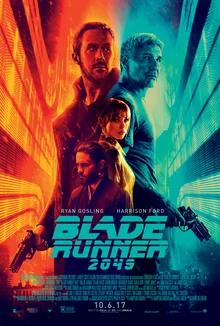
Blade Runner 2049
Thirty years after the original, K is a new-model replicant working as a blade runner for the LAPD, retiring older rogue models without complaint — until a routine job unearths a buried secret: evidence that a replicant once gave birth. The discovery could break the wall between the born and the built, and it sends K hunting for a child hidden decades ago, for a vanished blade runner named Deckard, and for an answer about himself he wants too badly to trust.
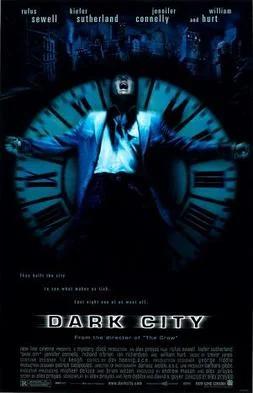
Dark City
John Murdoch wakes in a hotel bathtub with no memory, a dead woman in the next room, and detectives closing in for murders he can't remember committing. As he runs through a city where it is always midnight, he begins noticing what no one else does: at 12:00 exactly, the entire population falls asleep, the buildings physically rearrange themselves — and pale men in long coats move among the sleepers, injecting new memories into new lives.
User Ratings
Comments
Sign in to join the conversation
No comments yet. Be the first!
Advertisement