The Matrix (1999)
Warner Bros.· USA· 136 min· English
Directed by Lana WachowskiMusic by Don Davis
Synopsis
By day, Thomas Anderson writes software; by night, as the hacker Neo, he chases a phrase that haunts the net: the Matrix. The answer — that reality is a simulation run by machines farming humanity for power, and that he may be the anomaly foretold to end it — arrives with sunglasses, a red pill, and the best action cinema of the decade.
Advertisement
Review
The Matrix arrived in the spring of 1999 and effectively closed out the century by fusing nearly everything the science fiction genre had spent the preceding two decades learning into a single black-leather package. Cyberpunk's simulated realities and corporate-owned digital consciousness supply the premise; Hong Kong martial arts cinema supplies the actual physical grammar of its action, with the Wachowskis hiring legendary choreographer Yuen Woo-ping and putting their principal cast through roughly four months of training before shooting a single fight; anime supplies its camera language, most directly from Ghost in the Shell, which the Wachowskis have reportedly described pitching to producers with something close to "we want to do that, for real"; and a genuinely legible undergraduate philosophy syllabus — Plato's cave allegory, Descartes's evil-demon thought experiment, Jean Baudrillard's writing on simulation, name-checked directly on screen via a hollowed-out copy of his own book — gets welded onto a three-act structure so classically, cleanly built that it could be diagrammed on a whiteboard. By any reasonable expectation, a film assembled from this many borrowed sources should feel like a patchwork. It plays, instead, like something entirely new, because the synthesis itself is the genuinely original achievement.
"Bullet time," the effect that lets the camera appear to orbit frozen or near-frozen action — Trinity's opening kick suspended mid-air, Neo bending backward away from a hail of gunfire — became instantly the most imitated visual technique in the industry, parodied within months by everything from animated comedies to unrelated action films chasing the same viral moment. But the reason the film's action still holds up decades later, long after bullet time itself became a dated novelty, has less to do with any single effect and more to do with a simpler, increasingly rare virtue: you can actually see what's happening. Cinematographer Bill Pope and the Wachowskis favor long, geographically coherent takes that let the trained cast's own physical performance carry the choreography, rather than concealing stunt work behind rapid cutting the way so much subsequent action cinema would. The lobby shootout and the helicopter rescue sequence are staged with something close to the rhythmic precision of a musical number, and the film's Academy Award-winning editing and sound design work together to make heavily digital spectacle register as physically weighty rather than weightless — a lesson a great many of the film's imitators reproduced the slow-motion gunplay of without ever understanding why the original version felt like it had stakes.
Keanu Reeves's specific, open-hearted blankness as an actor turns out to be close to perfect casting for Neo, a character whose entire narrative function is to ask the exact questions a genuinely bewildered audience member would ask upon being told the world they've always known is a fabricated simulation. Laurence Fishburne, opposite him, sells Morpheus's near-religious conviction with a stage-trained gravity that makes lines that could easily read as pure exposition — extended monologues about the history of human enslavement to machines — land instead as genuine prophecy. Carrie-Anne Moss invents an entire enduring action-heroine archetype within the first five minutes of screen time, her rooftop leap and subsequent evasion of pursuing police used specifically, according to reports from the production, to convince a nervous Warner Bros. that the Wachowskis' ambitious action vision was actually achievable before the studio would commit further resources to the shoot. And Hugo Weaving's Agent Smith, delivered in a clipped, contemptuous drawl the actor has said he partly modeled on the flat, hostile tone of DMV and immigration officials, gives the machine world's enforcement arm a genuine, quotable menace — a villain as endlessly imitated in his own right as the special effects surrounding him.
It's worth remembering, too, how much of the film's premise was quietly softened for commercial reasons before release. The Wachowskis' original concept reportedly had the machines harvesting human brains directly for computational processing power rather than using human bodies as literal batteries, a premise some studio executives feared would be too complicated for mainstream audiences to track in a single sitting. The battery version that made it to screen has the disadvantage of violating basic thermodynamics — human bodies consume considerably more energy than they could ever generate as a power source — but it has the advantage of being instantly and viscerally graspable in a single line of dialogue, which is exactly the kind of tradeoff a tightly constructed blockbuster has to make constantly and rarely admits to making at all.
Beneath the trench coats, the shell casings and the still-startling green-tinted digital rain — itself built in part from a production designer's borrowed collection of Japanese character sets — sits a genuinely sincere, endlessly re-interpretable myth about waking up to a truth you'd rather not have been shown. The Wachowski sisters have since spoken publicly about how thoroughly the film's themes of concealed identity and enforced conformity mirrored their own experiences prior to their gender transitions, a reading that has reshaped how a generation of critics and audiences understand the "red pill" metaphor at the film's center, often in directions the culture surrounding the film's imagery has taken in entirely unintended ways. That's what durable myths do, though — they keep getting reread by people who need something different from them than the audience before did. Twenty-five years on, there is still no spoon, and there is still, by a wide margin, no better science fiction action film.
The film's costume department underlined those factional loyalties with a level of care that rewards close attention: every major character's sunglasses were custom-fabricated without visible hinges or branding, and designer Kym Barrett gave each individual lens a distinct shape — rounder for Neo, sharper and more angular for Agent Smith — specifically so an attentive viewer could read which side of the story's central conflict a character belonged to even in a fleeting reflection. That kind of granular, almost obsessive attention to detail runs through every department on the production, from Don Davis's score, which mirrors the plot's own thematic doubling by having brass choirs answer each other like reflections across the stereo field, to an era-defining soundtrack of industrial and electronic music that dates the film precisely to 1999 without ever making it feel like a period piece. Few films have managed to be this thoroughly of their specific moment and this durably ahead of it at the same time.
Trivia & Color Notes
Bullet time: 120 still cameras
The signature effect used rings of up to 120 still cameras firing in sequence around the actor, interpolated digitally into impossible camera moves. The technique won the VFX Oscar and was parodied within months by everything from Shrek to Scary Movie.
Four months of kung fu
Choreographer Yuen Woo-ping required the four leads to train ~4 months before shooting. Reeves did it with a recently fused neck vertebrae; the Neo–Morpheus dojo fight is the actors, full-length, minimal doubles.
The battery problem
Humans as power sources would violate thermodynamics — we consume more energy than we produce. The Wachowskis' original concept had humanity used as neural processing power, changed because the studio feared it was too complicated. Nerds have grumbled ever since.
The green tint and the code rain
The Matrix scenes are graded green after the phosphor glow of old monochrome monitors; the real world is blue. The iconic 'digital rain' was built partly from a designer's wife's sushi-cookbook katakana characters.
Sunglasses with no hinges
Every major character's shades were custom-made without visible hinges or brands. Costume designer Kym Barrett gave each character a unique lens shape — Neo's round, Smith's angular — so allegiances read even in reflections.
The famous premise flaw is real: using humans as a power source violates thermodynamics spectacularly — bodies consume more energy than they yield (early drafts had the machines using human brains as processors, which executives feared audiences wouldn't follow; it's also the scientifically saner idea). Brain-computer interfacing, however, is a genuine field moving in this direction at glacial speed, and 'simulation hypothesis' arguments are now taken half-seriously by real philosophers and physicists. The kung-fu download button, sadly, remains unavailable.
🎵 Soundtrack
Music by Don Davis
Don Davis's score mirrors the film's theme in structure — brass choirs answering each other like reflections — and fuses with a era-defining industrial/electronic soundtrack: Rob Zombie, the Prodigy, and Rage Against the Machine over the closing dial tone.
🔗 This film connects to…
- Blade Runner (1982)— Same subgenre: cyberpunk
- Akira (1988)— Direct influence: anime action and digital dystopia
- Ghost in the Shell (1995)— Direct influence: the Wachowskis pitched The Matrix as 'Ghost in the Shell for real'
- Johnny Mnemonic (1995)— Shared actor: Keanu Reeves — data courier, then digital messiah
- Dark City (1998)— Same theme: manufactured reality — The Matrix even reused Dark City's sets
Cast & Crew
Director
Composer
Cast
- Keanu Reeves as Neo
- Laurence Fishburne as Morpheus
- Carrie-Anne Moss as Trinity
- Hugo Weaving as Agent Smith
Advertisement
You Might Also Like
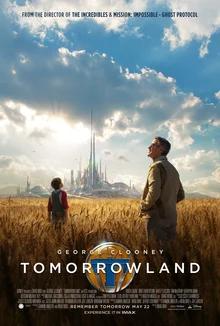
Tomorrowland
Optimistic teenager Casey Newton receives a mysterious pin that, when touched, drops her into a vision of Tomorrowland — a gleaming hidden city of impossible future technology. Tracking down the pin's origin leads her to Frank Walker, a disillusioned former boy-genius who was exiled from that city decades ago, and together they race to understand why humanity's brightest possible future has been sealed away and left to die.
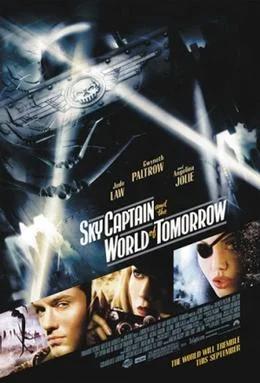
Sky Captain and the World of Tomorrow
1939, an alternate New York besieged by giant robots stomping through Manhattan. Mercenary pilot Joe 'Sky Captain' Sullivan and journalist Polly Perkins — his ex — race to uncover who is behind the attacks, chasing the trail across the globe to a hidden island fortress where a mad scientist's decades-old plan for 'the world of tomorrow' is finally coming to fruition.
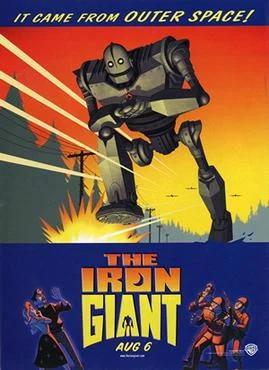
The Iron Giant
Maine, 1957. Young Hogarth Hughes discovers a colossal robot that fell from space, its memory wiped, hiding in the woods behind his house. As Hogarth teaches the Giant about the world — and about choice — a paranoid government agent closes in, convinced the visitor is a Cold War weapon that must be destroyed before it destroys them first.
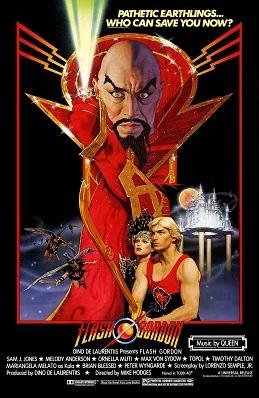
Flash Gordon
Football star Flash Gordon, travel agent Dale Arden and eccentric scientist Dr. Hans Zarkov are pulled through space to the planet Mongo, ruled by the tyrannical Ming the Merciless — who has set Earth in his crosshairs purely for sport. Flash must rally Mongo's warring kingdoms, the hawk-men of Sky City and the forest-dwelling Arboria, into a single rebellion before Ming's whim wipes out his home planet.
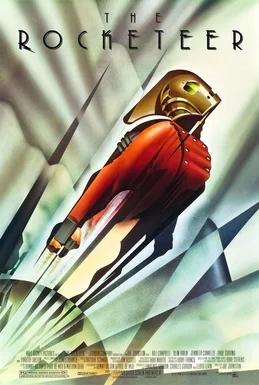
The Rocketeer
1938, Los Angeles. Stunt pilot Cliff Secord stumbles onto a prototype jetpack hidden in his hangar by gangsters — and straps it on. As word of a flying man spreads, Cliff finds himself hunted by Neville Sinclair, a matinee-idol movie star secretly working for Nazi agents desperate to recover the rocket before it reaches Germany, with only his mechanic Peevy and his girlfriend Jenny standing between the jetpack and the Third Reich.
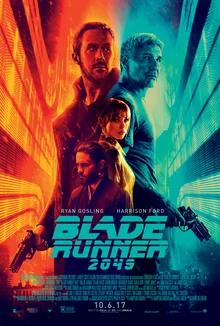
Blade Runner 2049
Thirty years after the original, K is a new-model replicant working as a blade runner for the LAPD, retiring older rogue models without complaint — until a routine job unearths a buried secret: evidence that a replicant once gave birth. The discovery could break the wall between the born and the built, and it sends K hunting for a child hidden decades ago, for a vanished blade runner named Deckard, and for an answer about himself he wants too badly to trust.
Comments
Sign in to join the conversation
No comments yet. Be the first!
Advertisement