Johnny Mnemonic (1995)
TriStar Pictures· USA· 96 min· English
Directed by Robert Longo
Synopsis
2021: half the world suffers from a technology-induced plague, and the most valuable data travels not on networks — too easily hacked — but inside the heads of mnemonic couriers. Johnny is one of them, and his latest job stuffs his implanted memory far beyond safe capacity with data the Yakuza and a pharmaceutical giant will kill for. He has roughly a day to make delivery before the payload literally destroys his brain — the same brain he emptied of his own childhood to make room for cargo.
Advertisement
Review
Johnny Mnemonic occupies a genuinely unique place within the cyberpunk canon: it stands as the only film from the movement's founding era actually written by the movement's founding literary author, with William Gibson adapting his own 1981 short story for the screen himself. That pedigree shows up directly in the film's world-building texture, even in stretches where the surrounding B-movie machinery creaks audibly around it. The LoTeks, an off-grid resistance living inside a scavenged-tech bridge-squat, information sickness rendered as a literal plague of technological overexposure, corporations deliberately withholding a cure because ongoing treatment is simply better business than actual healing — these are ideas with real conceptual bite, straight from Gibson's own imagination rather than studio-mandated genre filler bolted onto an existing script.
And the machinery does creak, often visibly. Director Robert Longo, a celebrated contemporary visual artist making his only feature film to date, was reportedly fighting significant studio interference throughout production, and the released cut lurches unevenly between Gibson's deadpan satirical instincts and fairly standard-issue mid-1990s action beats. A cyborg dolphin codebreaker named Jones and Dolph Lundgren's messianic, staff-wielding assassin preacher mark the exact point where the film abandons any pretense of measured tonal control and surrenders fully to cult-movie delirium. Keanu Reeves plays the title role with a stiffness that reads, in retrospect, like an unpolished dress rehearsal for the far better-calibrated digital messiah he'd play four years later in The Matrix, though the film's now-famous "room service" meltdown monologue has been thoroughly reclaimed by generations of fans as intentional camp perfection regardless of how it was originally received.
Longo and Gibson have both said they originally conceived the project as a considerably smaller, more art-house-inflected production before studio financing inflated its scale into something closer to a conventional action vehicle than either of them had initially planned, a mismatch between original intention and eventual execution that's visible in nearly every scene where the film's satirical ambitions collide with its need to deliver mid-decade genre spectacle.
The film's most quietly effective grounding detail is one that reads today as almost accidentally sophisticated: Johnny's brain implant, the plot's entire engine, maxes out catastrophically at what the film treats as an almost unimaginable 320 gigabytes of storage in a world where that capacity is worth killing for. That figure became an affectionate, gentle punchline within roughly a decade, once consumer hard drives casually surpassed it, but the underlying security logic the film builds around the number — physically couriering the most sensitive data by hand because digital networks simply can't be trusted against sufficiently motivated attackers — mirrors real air-gapping and sneakernet practices that intelligence agencies genuinely rely on to this day, precisely because the safest network is sometimes no network at all.
Seen again now, decades past its intended near-future setting, the film emerges as a genuinely fascinating half-success. It's wrong about nearly every surface detail of its imagined 2021 — the specific technology, the exact shape of its corporate villains, the fashion — and eerily, uncomfortably right about the deeper currents underneath: data functioning as the world's single most valuable and dangerous commodity, technology-induced illness as a real public health category, corporate medicine's perverse incentive structures rewarding ongoing treatment over actual cures, and a hero who traded away his own childhood memories for extra storage capacity, which remains as purely, cleanly cyberpunk a bargain as the genre has ever proposed in any medium. The dystopia arrived roughly on the schedule Gibson predicted. It just ended up looking considerably more mundane, and considerably less cinematic, than the movie's own pulpy trappings ever promised it would.
Gibson has said the "Nerve Attenuation Syndrome" plague depicted throughout the film, caused by cumulative technology saturation, was pure speculative shorthand when he first wrote the underlying short story in 1981, and it reads today as a blunt but genuinely early guess at the screen-related health anxieties that would eventually become a mainstream public health conversation. That the film's most cartoonish elements — the cyborg dolphin, the messianic street preacher — sit right alongside ideas this quietly prescient is exactly what makes Johnny Mnemonic such an uneven but genuinely interesting artifact of cyberpunk's brief, chaotic mid-90s studio moment.
Longo has returned almost entirely to his visual-art career in the decades since, never directing a second feature, which leaves this film standing as a strange, singular curio: the one time a major contemporary artist and the genre's founding novelist collaborated directly on a studio production, with all the friction and occasional brilliance that unlikely pairing was always going to produce.
Trivia & Color Notes
Gibson adapting Gibson
This remains the only theatrical film with a screenplay written by William Gibson himself, adapted from his own 1981 short story — making it, for better and worse, the most 'authentic' Gibson adaptation ever produced.
80 gigabytes of lethal cargo
Johnny's brain implant maxes out catastrophically at 320GB in a world where that's worth killing for — a figure that became an affectionate punchline within a decade, when consumer hard drives casually passed it.
Keanu's cyberpunk dress rehearsal
Four years before The Matrix, Reeves was already playing a black-suited courier jacking hardware into his skull to move forbidden data — the two films make a striking before-and-after of the same actor and nearly the same premise.
A gallery artist's only feature
Director Robert Longo was (and remains) a major contemporary visual artist; he and Gibson originally conceived the project as a low-budget art film before studio funding inflated it into an action vehicle neither had planned.
Wet-wired brain storage measured in gigabytes ("80 gigs" as a lethal overload reads charmingly quaint now) misjudged both digital scale and the fact that brains don't store data like drives — but the core premise, physically couriering sensitive data because networks can't be trusted, is a real security practice (air-gapping and sneakernets) that intelligence agencies genuinely use. "Nerve Attenuation Syndrome," a plague caused by technology saturation, was speculative shorthand in 1995 and reads today as a blunt but early guess at screen-related health anxieties.
🎵 Soundtrack
An industrial-heavy soundtrack anchored by a brooding score, very much of its cyber-thriller moment — the film's sonic world leans on the same mid-90s industrial textures that scored the entire Lollapalooza-era vision of the digital future.
🔗 This film connects to…
Cast & Crew
Advertisement
You Might Also Like
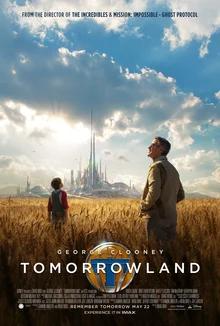
Tomorrowland
Optimistic teenager Casey Newton receives a mysterious pin that, when touched, drops her into a vision of Tomorrowland — a gleaming hidden city of impossible future technology. Tracking down the pin's origin leads her to Frank Walker, a disillusioned former boy-genius who was exiled from that city decades ago, and together they race to understand why humanity's brightest possible future has been sealed away and left to die.
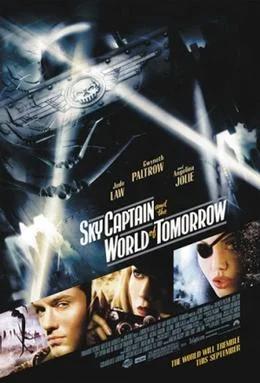
Sky Captain and the World of Tomorrow
1939, an alternate New York besieged by giant robots stomping through Manhattan. Mercenary pilot Joe 'Sky Captain' Sullivan and journalist Polly Perkins — his ex — race to uncover who is behind the attacks, chasing the trail across the globe to a hidden island fortress where a mad scientist's decades-old plan for 'the world of tomorrow' is finally coming to fruition.
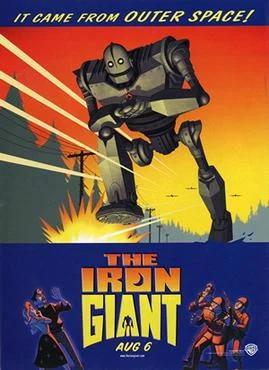
The Iron Giant
Maine, 1957. Young Hogarth Hughes discovers a colossal robot that fell from space, its memory wiped, hiding in the woods behind his house. As Hogarth teaches the Giant about the world — and about choice — a paranoid government agent closes in, convinced the visitor is a Cold War weapon that must be destroyed before it destroys them first.
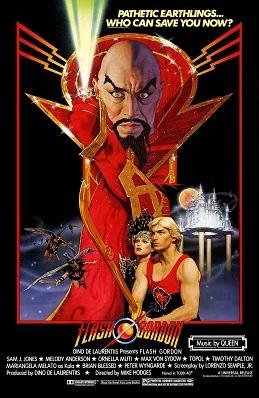
Flash Gordon
Football star Flash Gordon, travel agent Dale Arden and eccentric scientist Dr. Hans Zarkov are pulled through space to the planet Mongo, ruled by the tyrannical Ming the Merciless — who has set Earth in his crosshairs purely for sport. Flash must rally Mongo's warring kingdoms, the hawk-men of Sky City and the forest-dwelling Arboria, into a single rebellion before Ming's whim wipes out his home planet.
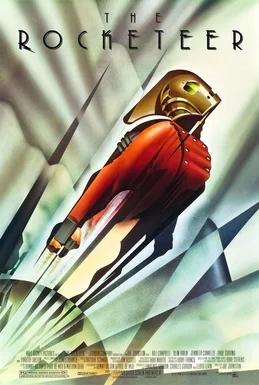
The Rocketeer
1938, Los Angeles. Stunt pilot Cliff Secord stumbles onto a prototype jetpack hidden in his hangar by gangsters — and straps it on. As word of a flying man spreads, Cliff finds himself hunted by Neville Sinclair, a matinee-idol movie star secretly working for Nazi agents desperate to recover the rocket before it reaches Germany, with only his mechanic Peevy and his girlfriend Jenny standing between the jetpack and the Third Reich.
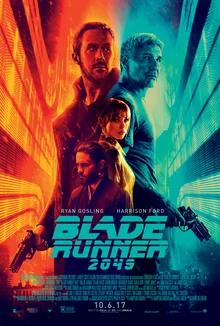
Blade Runner 2049
Thirty years after the original, K is a new-model replicant working as a blade runner for the LAPD, retiring older rogue models without complaint — until a routine job unearths a buried secret: evidence that a replicant once gave birth. The discovery could break the wall between the born and the built, and it sends K hunting for a child hidden decades ago, for a vanished blade runner named Deckard, and for an answer about himself he wants too badly to trust.
Comments
Sign in to join the conversation
No comments yet. Be the first!
Advertisement