The Rocketeer (1991)
Walt Disney Pictures· USA· 108 min· English
Directed by Joe JohnstonMusic by James Horner
Synopsis
1938, Los Angeles. Stunt pilot Cliff Secord stumbles onto a prototype jetpack hidden in his hangar by gangsters — and straps it on. As word of a flying man spreads, Cliff finds himself hunted by Neville Sinclair, a matinee-idol movie star secretly working for Nazi agents desperate to recover the rocket before it reaches Germany, with only his mechanic Peevy and his girlfriend Jenny standing between the jetpack and the Third Reich.
Advertisement
Review
The Rocketeer is dieselpunk's founding text on film — a love letter to a future that 1938 imagined for itself, built from Bakelite radios, chrome diners and Erroll Flynn matinees rather than any future that actually arrived. Adapted from Dave Stevens's comic, Joe Johnston (an effects artist turned director, fresh off the practical-magic instincts of Raiders of the Lost Ark) treats the jetpack not as science fiction but as pulp-adventure furniture: a gadget that belongs in this world precisely because it looks like something 1938 would have drawn if it dared to dream a little further.
Bill Campbell's Cliff Secord makes an unlikely, endearing hero — more a nervous stunt pilot playing at heroism than a chiseled icon — while Timothy Dalton, fresh off two James Bond films, has enormous fun as Neville Sinclair, a swashbuckling movie star who is secretly the villain, a wink at real Golden Age rumors about matinee idols with hidden loyalties. Jennifer Connelly's Jenny Blake, modeled visually on 1950s pinup icon Bettie Page (creator Dave Stevens's muse for the comic), anchors the film's old-Hollywood glamour against its pulp derring-do.
Johnston's path to the director's chair matters more than it might first appear. He came up as an effects artist and conceptual designer, contributing to Star Wars, The Empire Strikes Back and Raiders of the Lost Ark before ever sitting in the director's chair himself, and that background shows in every frame of The Rocketeer's flight sequences. The jetpack stunts are built almost entirely from miniatures, matte paintings and cable rigs rather than the nascent CGI other 1991 blockbusters were beginning to lean on, and the result has aged with a tactile solidity that many effects-forward films from the same decade have not.
The project itself took the better part of a decade to reach screens, passing through several attached directors and at least one abandoned draft before Disney settled on Johnston and a script that trusted the comic's pulp sincerity rather than trying to modernize or ironize it. That patience paid off in a film willing to go somewhat darker than the studio's family-adventure brand typically allowed — on-screen Nazi agents, a zeppelin catastrophe lifted almost wholesale from newsreel footage of the Hindenburg, and a villain whose fate is considerably grimmer than a Disney PG picture usually permits. The tonal risk is part of why the film still reads as more than pastiche.
It underperformed on release, squeezed into a crowded summer of 1991 that also delivered Terminator 2's effects revolution and left comparatively little oxygen for a modestly budgeted period adventure. Word of mouth, Disney Channel reruns and a devoted home-video afterlife rebuilt its reputation slowly across the following decades, until its Populuxe-meets-Deco aesthetic, invented-yesterday gadgetry and Nazi-adjacent pulp stakes became visible touchstones for an entire generation of dieselpunk art direction, from the Fallout franchise's retro-atomic America to design language borrowed by animators and game artists who grew up catching it on cable.
What keeps the film from curdling into empty nostalgia is Cliff himself — a hero motivated by nothing grander than decency and a stubborn refusal to hand the jetpack to men who would misuse it, rather than any hunger for power or fame. Few films have made "the future, as the past once imagined it" look this joyful, and fewer still have made that joy feel earned rather than merely decorated.
Alan Arkin's Peevy, Cliff's gruff mechanic and surrogate father figure, deserves specific credit for grounding the film's more fantastical stretches — he treats the jetpack with the exasperated practicality of a man who has to actually fix the thing after every reckless flight, which does more to sell the gadget's reality than any effects shot could manage on its own. That small note of blue-collar exhaustion, threaded through an otherwise gleaming pulp fantasy, is very much the Rocketeer's quiet secret weapon.
James Horner's score, meanwhile, sits comfortably among his most purely romantic work, favoring brass fanfares and swooning string themes over the darker, percussive textures he was becoming known for elsewhere in the same period. It plays the film's pulp heroics with total sincerity, never once undercutting the earnestness on screen with irony, which is exactly the choice a film this openly in love with its own genre demanded.
The film's zeppelin-disaster centerpiece, staged at a fictional airfield opening ceremony, deliberately restages iconic Hindenburg newsreel imagery beat for beat before subverting it into an action set piece — a risky choice for a Disney adventure picture that nonetheless gives the sequence a weight and dread that pure invented spectacle rarely achieves, precisely because audiences recognize the real disaster being echoed underneath the fiction.
Trivia & Color Notes
A real jetpack, backdated
The comic and film's jetpack was directly inspired by real experimental rocket belts developed by Bell Aerosystems in the 1960s — creator Dave Stevens simply imagined the technology arriving twenty-five years earlier, in a pulpier world built to receive it.
A villain modeled on Hollywood rumor
Timothy Dalton's Neville Sinclair — a swashbuckling movie idol secretly working for foreign agents — plays on real (and still-debated) Golden Age gossip about Errol Flynn's wartime loyalties, without ever naming him directly.
A pinup queen's face
Dave Stevens closely modeled Jenny Blake's look in the original comic on 1950s pinup icon Bettie Page, whom he knew personally — one of pulp comics' most famous real-life muses.
A flop that built a genre
The Rocketeer underperformed against a crowded 1991 slate, but its Deco-and-chrome pulp aesthetic went on to become the reference point for an entire dieselpunk visual style, cited by everything from Fallout's art direction to The Incredibles.
The Cirrus X-3 rocket pack is fictional, but its premise isn't invented from nothing — the U.S. military and private inventors genuinely experimented with rocket belts starting in the 1960s (Bell Aerosystems' Rocket Belt being the most famous), and the film's version simply backdates that real, short-hop-only technology two decades into a pulpier era. True sustained personal jetpack flight, as the film depicts it, remains well beyond what any rocket belt — 1938 or modern — can safely deliver.
🎵 Soundtrack
Music by James Horner
James Horner's score leans fully into 1930s adventure-serial grandeur — brass fanfares and swooning strings that could have scored a real Republic Pictures cliffhanger, one of the most purely romantic scores of his career.
🔗 This film connects to…
Cast & Crew
Director
Composer
Cast
- Billy Campbell as Cliff Secord
- Jennifer Connelly as Jenny Blake
- Timothy Dalton as Neville Sinclair
- Alan Arkin as Peevy
Advertisement
You Might Also Like

Tomorrowland
Optimistic teenager Casey Newton receives a mysterious pin that, when touched, drops her into a vision of Tomorrowland — a gleaming hidden city of impossible future technology. Tracking down the pin's origin leads her to Frank Walker, a disillusioned former boy-genius who was exiled from that city decades ago, and together they race to understand why humanity's brightest possible future has been sealed away and left to die.
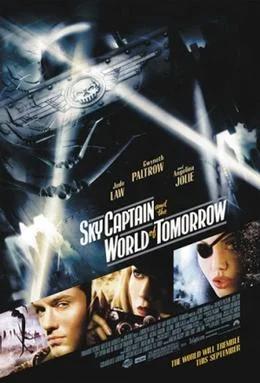
Sky Captain and the World of Tomorrow
1939, an alternate New York besieged by giant robots stomping through Manhattan. Mercenary pilot Joe 'Sky Captain' Sullivan and journalist Polly Perkins — his ex — race to uncover who is behind the attacks, chasing the trail across the globe to a hidden island fortress where a mad scientist's decades-old plan for 'the world of tomorrow' is finally coming to fruition.
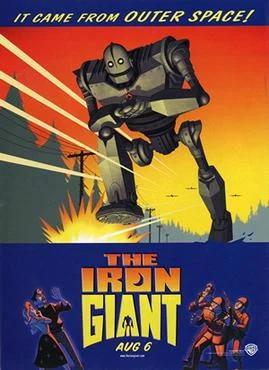
The Iron Giant
Maine, 1957. Young Hogarth Hughes discovers a colossal robot that fell from space, its memory wiped, hiding in the woods behind his house. As Hogarth teaches the Giant about the world — and about choice — a paranoid government agent closes in, convinced the visitor is a Cold War weapon that must be destroyed before it destroys them first.
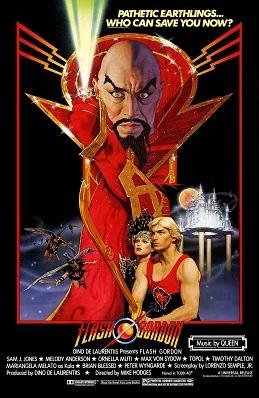
Flash Gordon
Football star Flash Gordon, travel agent Dale Arden and eccentric scientist Dr. Hans Zarkov are pulled through space to the planet Mongo, ruled by the tyrannical Ming the Merciless — who has set Earth in his crosshairs purely for sport. Flash must rally Mongo's warring kingdoms, the hawk-men of Sky City and the forest-dwelling Arboria, into a single rebellion before Ming's whim wipes out his home planet.
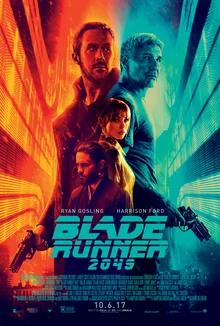
Blade Runner 2049
Thirty years after the original, K is a new-model replicant working as a blade runner for the LAPD, retiring older rogue models without complaint — until a routine job unearths a buried secret: evidence that a replicant once gave birth. The discovery could break the wall between the born and the built, and it sends K hunting for a child hidden decades ago, for a vanished blade runner named Deckard, and for an answer about himself he wants too badly to trust.

Strange Days
Los Angeles, the last two days of 1999. Lenny Nero, ex-cop turned black-market dealer, sells SQUID recordings — full sensory captures of other people's experiences, straight from their cerebral cortex to yours. Addicted to replaying tapes of his own lost relationship, Lenny is dragged out of his loop when a snuff recording lands in his hands: evidence of a murder that connects to his ex, a music-industry conspiracy, and a police killing that could set the burning city off entirely.
Comments
Sign in to join the conversation
No comments yet. Be the first!
Advertisement