Dark City (1998)
New Line Cinema· Australia· 100 min· English
Directed by Alex ProyasMusic by Trevor Jones
Synopsis
John Murdoch wakes in a hotel bathtub with no memory, a dead woman in the next room, and detectives closing in for murders he can't remember committing. As he runs through a city where it is always midnight, he begins noticing what no one else does: at 12:00 exactly, the entire population falls asleep, the buildings physically rearrange themselves — and pale men in long coats move among the sleepers, injecting new memories into new lives.
Advertisement
Review
Released a full year before The Matrix would pose a strikingly similar question dressed up in kung fu and bullet time, Dark City stands as arguably the purest expression of late-1990s reality-paranoia cinema — a noir thriller where the femme fatale, in the end, turns out to be memory itself. Alex Proyas, a director with a background in music videos and commercials who'd previously helmed the cult hit The Crow, builds his perpetual-midnight city as a total, obsessively complete design object, all Metropolis-derived verticals and hard 1940s shadow, before revealing that the design isn't merely a stylistic choice but a literal plot mechanism: the city is an ongoing experiment, physically rebuilt every single night by a dying alien race who shuffle human memories between sleeping bodies, searching for wherever the soul actually resides — in what a person remembers, or in something considerably deeper that memory alone can't fully capture.
Rufus Sewell's amnesiac John Murdoch makes an ideal noir protagonist precisely because his own innocence remains genuinely unknowable even to himself for most of the runtime; a British stage-trained actor with a growing film career at the time, Sewell carries the film's central mystery almost entirely through calibrated physical uncertainty rather than exposition. Kiefer Sutherland, already an established film actor from The Lost Boys and A Few Good Men, delivers a genuinely strange, wheezing, halting turn as Dr. Daniel Schreber, the human doctor forced to perform the Strangers' nightly memory-implantation surgeries — a deliberately unusual vocal and physical performance choice that stands out sharply against his more conventional earlier work, and one he'd later leverage into an entirely different kind of intensity as the lead of television's 24.
Trevor Jones scores the eternal night with heavy, brooding orchestral movements that swell precisely each time the city "tunes" itself into a new configuration — music written, in effect, for architecture rearranging itself while an entire population sleeps through the transformation without ever knowing it happened. New Line Cinema reportedly insisted on an opening voiceover narration that explains the Strangers' entire secret to the audience upfront, fearing viewers would otherwise be hopelessly confused by the film's slow-burn mystery structure; Proyas's later Director's Cut removes that narration entirely, restoring the patient uncertainty the film was originally built around, and it's now widely considered the definitive version to actually watch.
Dr. Schreber's memory formulations, mixed like chemistry — "a dash of first love, a pinch of adolescent rebellion" — dramatize a genuine and still-unresolved philosophical puzzle about whether personal identity could survive a total replacement of one's own remembered past, staged here decades before memory-editing became a serious topic of actual laboratory research rather than pure speculative fiction.
Roger Ebert famously named Dark City the best film of 1998, taught it repeatedly in his own film classes, and recorded a full scene-by-scene commentary track for its home video release — sustained critical advocacy that helped transform what had been a box-office disappointment into a certified cult classic over the years that followed. Both productions shot at Fox Studios in Sydney within a relatively short span of each other, and The Matrix reused several of Dark City's standing rooftop and alley sets directly, a literal, physical connection between the two defining reality-paranoia films of the late 1990s that goes well beyond simple thematic overlap.
If The Matrix took the question "what is real?" and weaponized it into pure kinetic action cinema, Dark City leaves the same question open as an unhealed wound rather than a problem to be solved through combat. Its finale, in which Murdoch finally wins the god-like power to remake the city according to his own will but can never actually recover an authentic, verified past to anchor that power in, lands as the more melancholy and arguably considerably braver answer to a question both films were asking at almost exactly the same moment, on opposite sides of the same studio backlot.
Aliens capable of telekinetically restructuring an entire city overnight, and injecting bottled memories directly through a syringe to the forehead, are pure expressionist fantasy with no scientific grounding whatsoever. But the film's central experiment functions as a legitimate philosophical thought experiment staged with total literal conviction: if every one of your memories were swapped out tonight, would you genuinely still be yourself by morning? Its ultimate position — that identity persists in something considerably deeper than mere autobiographical memory — engages the same personal-identity debates philosophers have argued over for centuries, dramatized here with more commitment than most ostensibly serious philosophical cinema ever manages.
Jennifer Connelly's Emma Murdoch, married to a man who can no longer be certain he's the person she married, gives the film's human stakes a quiet ache that the larger science fiction mystery never overwhelms, and her scenes opposite Sewell ground the film's more abstract metaphysics in a genuinely felt marital tragedy.
Trivia & Color Notes
The Matrix used its sets
Both films shot at Fox Studios in Sydney back-to-back, and The Matrix reused several of Dark City's standing rooftop and alley sets — a literal, physical connection between the two late-90s films about manufactured reality.
Ebert's crusade
Roger Ebert named Dark City the best film of 1998, taught it in his film classes, and recorded a full-length scene-by-scene commentary track for the DVD — advocacy that helped transform a box-office disappointment into a certified cult classic.
The studio-mandated spoiler
New Line insisted on an opening narration that explains the Strangers' entire secret up front, fearing audiences would be confused. Proyas's later Director's Cut removes it — restoring the mystery the film was built around — and is widely considered the definitive version.
A syringe full of childhood
Dr. Schreber mixes memories like chemistry — 'a dash of first love, a pinch of adolescent rebellion' — dramatizing real philosophical puzzles about whether identity survives total memory replacement, staged decades before memory-editing became a lab topic.
Aliens who telekinetically restructure a city nightly and inject bottled memories with a syringe to the forehead are pure expressionist fantasy — but the film's central experiment is a legitimate philosophical thought experiment staged literally: if all your memories were swapped tonight, would you still be you in the morning? Its position — that identity persists in something deeper than autobiographical memory — engages the same personal-identity debates philosophers actually argue, and the film's memory-implantation imagery draws knowingly on real (and really controversial) research into false memory formation.
🎵 Soundtrack
Music by Trevor Jones
Trevor Jones scores the eternal night with heavy, brooding orchestral movements that swell each time the city 'tunes' — music for architecture rearranging itself while the whole world sleeps.
🔗 This film connects to…
Cast & Crew
Director
Writer
Composer
Cast
- Rufus Sewell as John Murdoch
- Kiefer Sutherland as Dr. Daniel Schreber
- Jennifer Connelly as Emma Murdoch
Advertisement
You Might Also Like
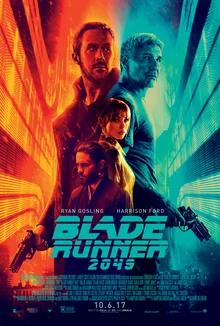
Blade Runner 2049
Thirty years after the original, K is a new-model replicant working as a blade runner for the LAPD, retiring older rogue models without complaint — until a routine job unearths a buried secret: evidence that a replicant once gave birth. The discovery could break the wall between the born and the built, and it sends K hunting for a child hidden decades ago, for a vanished blade runner named Deckard, and for an answer about himself he wants too badly to trust.
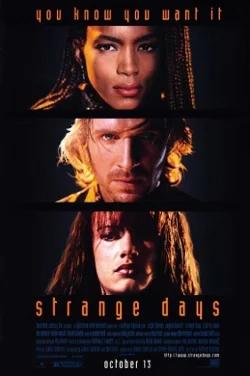
Strange Days
Los Angeles, the last two days of 1999. Lenny Nero, ex-cop turned black-market dealer, sells SQUID recordings — full sensory captures of other people's experiences, straight from their cerebral cortex to yours. Addicted to replaying tapes of his own lost relationship, Lenny is dragged out of his loop when a snuff recording lands in his hands: evidence of a murder that connects to his ex, a music-industry conspiracy, and a police killing that could set the burning city off entirely.
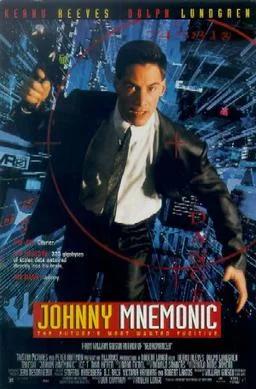
Johnny Mnemonic
2021: half the world suffers from a technology-induced plague, and the most valuable data travels not on networks — too easily hacked — but inside the heads of mnemonic couriers. Johnny is one of them, and his latest job stuffs his implanted memory far beyond safe capacity with data the Yakuza and a pharmaceutical giant will kill for. He has roughly a day to make delivery before the payload literally destroys his brain — the same brain he emptied of his own childhood to make room for cargo.
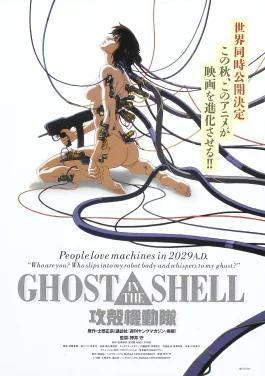
Ghost in the Shell
New Port City, 2029. Major Motoko Kusanagi, a cyborg security officer whose body is entirely artificial, hunts an elusive hacker known as the Puppet Master — an entity that ghost-hacks human minds and rewrites their memories. But the closer she gets, the more the case turns inward: if her body is manufactured and her memories can be edited, what exactly is the 'ghost' in her shell that makes her her?
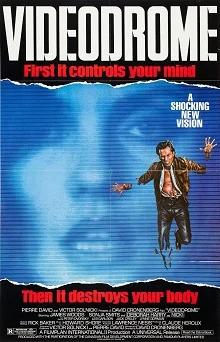
Videodrome
Max Renn, president of a sleazy Toronto UHF station always hunting for harder content, stumbles onto a pirate broadcast called Videodrome: plotless scenes of torture that appear to be real. As he chases the signal's source, his perception begins to warp — hallucinations bleed into reality, his body starts to change, and Max discovers the broadcast isn't entertainment at all, but a weapon that rewires whoever watches it.
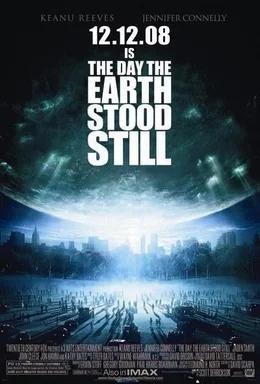
The Day the Earth Stood Still
An alien visitor named Klaatu arrives on Earth inside a glowing sphere, escorted by an enormous, silent robotic guardian called Gort — this time carrying an ultimatum about humanity's environmental destruction rather than its nuclear weapons. As government agents scramble to contain him and astrobiologist Helen Benson tries to understand his true intentions, Klaatu must decide whether a species this reckless with its own planet deserves to survive at all.
Comments
Sign in to join the conversation
No comments yet. Be the first!
Advertisement