Ghost in the Shell (1995)
攻殻機動隊
Production I.G· Japan· 83 min· Japanese
Directed by Mamoru OshiiMusic by Kenji Kawai
Synopsis
New Port City, 2029. Major Motoko Kusanagi, a cyborg security officer whose body is entirely artificial, hunts an elusive hacker known as the Puppet Master — an entity that ghost-hacks human minds and rewrites their memories. But the closer she gets, the more the case turns inward: if her body is manufactured and her memories can be edited, what exactly is the 'ghost' in her shell that makes her her?
Advertisement
Review
If Akira had already demonstrated to Western audiences that anime could be visually spectacular on a scale rivaling any live-action blockbuster, Ghost in the Shell demonstrated something considerably rarer: that the medium could be genuinely philosophically profound. Mamoru Oshii took Masamune Shirow's action-forward manga and deliberately slowed its pacing down to something closer to a meditative pulse, filling the runtime with long, largely wordless passages of Major Motoko Kusanagi drifting through a rain-drenched metropolis modeled closely on Hong Kong, Kenji Kawai's ancient wedding chorale keening overhead like a ceremony for something not yet named. In doing so, Oshii made what remains arguably the definitive cinematic statement about consciousness and identity in a fully networked age, years before "networked age" was even a phrase most audiences would have recognized.
The film's philosophical machinery is genuinely rigorous rather than merely decorative, and that rigor is the entire point rather than an added flourish. Kusanagi's identity crisis isn't deployed as a plot device to generate tension before an action sequence; it's the film's actual, sustained subject, interrogated patiently from nearly every conceivable angle. Her body is legally government property, replaceable and repossessable. Her memories are, in the most literal technical sense, recorded data, and therefore theoretically editable by anyone with sufficient access. Her colleagues, in one of the film's quietest and most unsettling scenes, discover they can't actually prove their own remembered childhoods ever happened at all. When the Puppet Master — an artificial intelligence that claims to have arisen spontaneously "in the sea of information," with no human architect behind its creation — eventually proposes a merger with Kusanagi rather than a confrontation, the film arrives at an ending genuinely unlike almost anything Western science fiction had produced up to that point: not victory over the machine, and not simple absorption by it, but a considered, mutual choice to evolve alongside it.
Kenji Kawai's score deserves particular credit for how thoroughly it embeds the film's themes into its sound design rather than simply illustrating scenes from outside them. His main theme is composed in the style of an archaic Japanese wedding song, sung in the largely extinct Yamato-era language, a deliberate structural foreshadowing of the ending in which the Major and the Puppet Master effectively marry into a single, newly emergent entity. It remains his single most widely recognized piece of work internationally, and one of the more haunting pieces of film music produced by any composer working in animation.
The production's technical ambition matched its philosophical seriousness. The film pioneered a hybrid animation pipeline combining traditional hand-painted cel work with digitally composited effects, most memorably the shimmering, refractive thermoptic camouflage effect used whenever Kusanagi or her colleagues cloak themselves from view — a technique that became a model for anime production throughout the following decade. New Port City itself, all canals, signage-choked alleys and layered vertical architecture, was closely modeled on extensive location photography of 1990s Hong Kong, chosen specifically as the real-world city that best embodied the collision of decaying old infrastructure and hyper-modern technology the story required.
The film's influence on subsequent Western science fiction is close to impossible to overstate. The Wachowskis have said they screened Ghost in the Shell for producer Joel Silver while pitching The Matrix, reportedly telling him directly that they wanted to do the same thing "for real" with a larger budget and live actors — the digital rain, the neck-mounted jack-in ports, the green-tinted title sequence all trace back to this film with a directness that borders on outright homage rather than mere influence. James Cameron has called it the first truly adult animated film to achieve a genuine level of literary sophistication, a striking endorsement from a filmmaker not typically associated with anime criticism.
Three decades on, as real advances in machine intelligence force serious researchers and philosophers to confront versions of the exact same questions the Puppet Master poses in the film's climax, Oshii's work feels considerably less like speculative prophecy and considerably more like an early, unusually well-reasoned briefing document on problems the culture has only recently started taking seriously.
Full-body cyborg prosthetics maintaining brain-only continuity of self, and "ghost-hacking" capable of editing memories directly over a network, remain far beyond anything real neurotechnology can currently approach. But the film's framing of the underlying questions is remarkably serious philosophy rather than technobabble dressing: personal identity grounded in memory, and therefore corruptible along with it; consciousness understood as an emergent pattern rather than a fixed substance; an artificial intelligence arising unplanned from a sufficiently complex information system. All three are positions with genuine standing in contemporary philosophy of mind and AI research, and few films of any era have dramatized these actual academic debates this faithfully while still functioning as a gripping piece of genre entertainment.
Watching the film today, the specific weight it gives to Kusanagi's isolation feels less like a period artifact of 1990s anime and more like a direct address to anyone who has ever wondered how much of their own sense of self is actually owned, mediated or editable by systems well beyond their control. Few animated films from any country have aged into their moment this precisely.
Trivia & Color Notes
The Matrix's admitted blueprint
The Wachowskis reportedly showed Ghost in the Shell to producer Joel Silver and said 'we wanna do that for real' — the digital rain, jack-in ports and green-coded aesthetic of The Matrix all trace directly back to this film.
A city built from Hong Kong
New Port City's canals, signage-choked alleys and layered streets were closely modeled on 1990s Hong Kong, which the production team photographed extensively — chosen as the world's best real example of old and hyper-new architecture colliding.
A wedding song for a merger
Kenji Kawai's choral theme is written in the style of a traditional Japanese wedding song in archaic Yamato-era language — a deliberate foreshadowing of the film's ending, in which the Major and the Puppet Master 'marry' into a single new entity.
Hand-drawn cel work meets early CGI
The film pioneered a hybrid pipeline combining traditional cel animation with digitally composited effects — including the thermoptic camouflage shimmer — that became a model for anime production through the following decade.
Full-body cyborg prosthetics with brain-only continuity, and "ghost-hacking" that edits memories over a network, remain far beyond real neurotechnology — but the film's framing of the questions is remarkably serious: personal identity grounded in memory (and thus corruptible with it), consciousness as an emergent pattern rather than a substance, and an AI arising unplanned from a sufficiently complex information system are all positions with real standing in philosophy of mind and AI research. Few films of any era have dramatized the actual academic debates this faithfully.
🎵 Soundtrack
Music by Kenji Kawai
Kenji Kawai's main theme sets an ancient Japanese wedding-song vocal style (using the archaic Yamato language) against synthesized drones — a marriage ceremony, fittingly, for a film that ends with a human ghost and an AI choosing to merge.
🔗 This film connects to…
Cast & Crew
Director
Composer
Advertisement
You Might Also Like
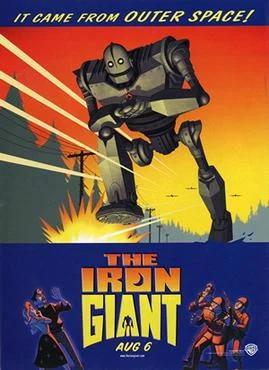
The Iron Giant
Maine, 1957. Young Hogarth Hughes discovers a colossal robot that fell from space, its memory wiped, hiding in the woods behind his house. As Hogarth teaches the Giant about the world — and about choice — a paranoid government agent closes in, convinced the visitor is a Cold War weapon that must be destroyed before it destroys them first.
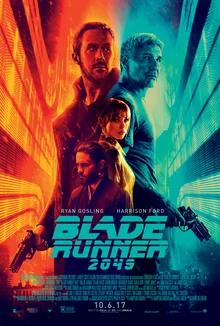
Blade Runner 2049
Thirty years after the original, K is a new-model replicant working as a blade runner for the LAPD, retiring older rogue models without complaint — until a routine job unearths a buried secret: evidence that a replicant once gave birth. The discovery could break the wall between the born and the built, and it sends K hunting for a child hidden decades ago, for a vanished blade runner named Deckard, and for an answer about himself he wants too badly to trust.
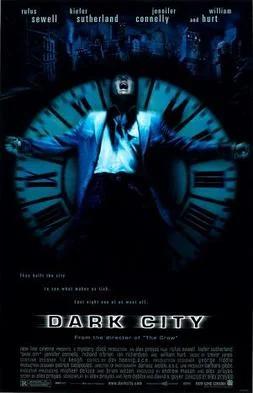
Dark City
John Murdoch wakes in a hotel bathtub with no memory, a dead woman in the next room, and detectives closing in for murders he can't remember committing. As he runs through a city where it is always midnight, he begins noticing what no one else does: at 12:00 exactly, the entire population falls asleep, the buildings physically rearrange themselves — and pale men in long coats move among the sleepers, injecting new memories into new lives.
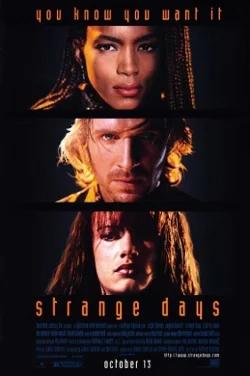
Strange Days
Los Angeles, the last two days of 1999. Lenny Nero, ex-cop turned black-market dealer, sells SQUID recordings — full sensory captures of other people's experiences, straight from their cerebral cortex to yours. Addicted to replaying tapes of his own lost relationship, Lenny is dragged out of his loop when a snuff recording lands in his hands: evidence of a murder that connects to his ex, a music-industry conspiracy, and a police killing that could set the burning city off entirely.
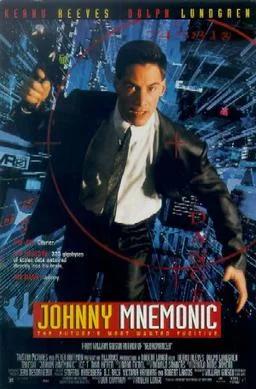
Johnny Mnemonic
2021: half the world suffers from a technology-induced plague, and the most valuable data travels not on networks — too easily hacked — but inside the heads of mnemonic couriers. Johnny is one of them, and his latest job stuffs his implanted memory far beyond safe capacity with data the Yakuza and a pharmaceutical giant will kill for. He has roughly a day to make delivery before the payload literally destroys his brain — the same brain he emptied of his own childhood to make room for cargo.
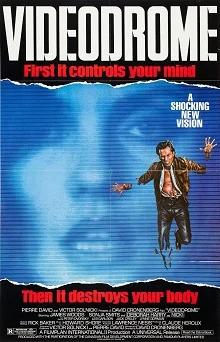
Videodrome
Max Renn, president of a sleazy Toronto UHF station always hunting for harder content, stumbles onto a pirate broadcast called Videodrome: plotless scenes of torture that appear to be real. As he chases the signal's source, his perception begins to warp — hallucinations bleed into reality, his body starts to change, and Max discovers the broadcast isn't entertainment at all, but a weapon that rewires whoever watches it.
Comments
Sign in to join the conversation
No comments yet. Be the first!
Advertisement