Akira (1988)
アキラ
Toho· Japan· 124 min· Japanese
Directed by Katsuhiro OtomoMusic by Shoji Yamashiro
Synopsis
Neo-Tokyo, 2019, thirty-one years after a psychic detonation leveled the old city. Teenage biker Kaneda's gang collides with a secret government program when his volatile friend Tetsuo awakens powers that could end the world — powers connected to a name the state buried underground: Akira.
Advertisement
Review
It's difficult to overstate how directly Akira is responsible for a shift in how Western audiences, critics and eventually filmmakers thought about animation as a medium. Before its release, "cartoon" and "serious cinema" existed, for most American and European viewers, in almost entirely separate categories; Akira arrived with enough technical ambition and thematic weight that it became impossible to maintain that separation with a straight face. Katsuhiro Otomo, adapting his own sprawling manga — a story he was still actively serializing in print even as he directed the film, forcing the adaptation to diverge from and eventually outpace its unfinished source material — committed a genuinely unprecedented amount of resources to the production. More than 160,000 individual cels were hand-painted for the finished film, using 327 distinct colors, roughly fifty of which were mixed specifically for this production because so much of the story takes place at night, where the standard commercial anime palette of the era simply failed to read correctly on screen. Neo-Tokyo, the film's setting, emerges from all of that labor as a fully realized place — stacked light, corroding infrastructure, elevated highways choking a city that's clearly still recovering from catastrophe — as complete and lived-in a fictional metropolis as Blade Runner's Los Angeles, and entirely hand-drawn, frame by frame, at a scale that made the film the most expensive anime production ever attempted at the time.
The story that unfolds inside that city moves with a headlong, occasionally disorienting momentum: biker gangs carving up the streets at night, a shadowy resistance movement, wrinkled psychic children being studied in a government facility, and a military establishment quietly guarding something — someone — kept in cryogenic stasis under a name the state has spent decades trying to erase from public memory. At the emotional core of all that plot machinery is a friendship the genre rarely bothers to render with this much specificity or this much ugliness: Kaneda, the swaggering, not-quite-as-tough-as-he-acts leader of his biker gang, and Tetsuo, the perpetually bullied, chronically overlooked kid brother figure of the group, whose sudden, uncontrollable psychic power gives him, for the first time in his life, the ability to make everyone who's ever condescended to him feel small in return. Tetsuo's escalating rampage isn't written as a simple villain turn. It's written as years of accumulated humiliation finally finding an outlet with no ceiling on how far it can go, and the film understands, with unusual psychological precision for an action-driven story, that the single most dangerous thing you can hand a wounded, resentful teenager is unlimited power with no one left who can tell him no.
That understanding pays off in a climax that pushed animated body horror further than the medium had previously attempted, and arguably further than most live-action films of the era were technically capable of depicting. Tetsuo's body, overwhelmed by power his nervous system was never built to contain, begins outgrowing his own will entirely, mutating in real time into an infant god assembled from flesh, cable and machinery, swelling to swallow an entire stadium before the film's ambiguous, cosmic final images. It's grotesque in a way that's clearly intentional rather than merely shocking — the horror isn't the mutation itself so much as watching a character lose every remaining trace of the person he used to be, one irreversible transformation at a time, while the friend who might have been able to reach him is left screaming his name into a void that no longer has ears to hear it.
Much of what makes the film's world feel this immediate and this alive comes down to two unusual production choices. Dialogue was recorded before animation rather than after, a reversal of the typical anime workflow at the time, which let animators match lip movement and physical performance to already-existing vocal takes with a precision that gives the characters an eerie, unscripted-feeling presence rather than the slightly disconnected quality dubbed or post-timed animation often has. And the score, composed by the large collective ensemble Geinoh Yamashirogumi, was recorded in its entirety before any animation existed, blending Indonesian gamelan, Japanese taiko drumming and Noh theater vocal styles into something that sounds like nothing else in film scoring; several key sequences were then animated to match the finished music rather than the other way around, and the propulsive, clattering percussion of the "Kaneda" theme has been sampled and referenced by musicians and other filmmakers for decades since.
There's a strange, almost prophetic footnote buried in the film's setting that fans have delighted in for years: Otomo's Neo-Tokyo is depicted preparing to host the 2020 Olympics, complete with countdown clocks and construction signage, more than three decades before Tokyo actually won and then held those very Olympic Games. When the real 2020 Tokyo Olympics were disrupted and delayed, images of the film's fictional "days remaining" graffiti, protesting the games amid civil unrest, circulated widely online as an uncanny piece of accidental prediction — a coincidence, certainly, but one that speaks to how thoroughly Otomo's vision of urban decay and institutional overreach anticipated real anxieties that hadn't fully materialized yet when the film was made.
The film's specific images — Kaneda's red motorcycle sliding sideways with its brake lights smearing across the frame, the shouted, half-affectionate insults the two leads throw at each other, the stark red capsule-pill logo — have been directly referenced or restaged in an enormous range of subsequent film, television and game productions, from Hollywood blockbusters to prestige streaming series, often by creators who grew up discovering the film on imported VHS and never entirely got its imagery out of their systems. Akira didn't just influence cyberpunk cinema. It gave the genre a second capital city to stand alongside Blade Runner's Los Angeles, entirely hand-painted, and it remains the moment animation as a medium proved, definitively, that it could carry the full emotional and thematic weight of any live-action science fiction the era had to offer.
Trivia & Color Notes
327 colors, 50 invented
Akira used 327 distinct paint colors — around fifty mixed exclusively for the film — largely because most of it takes place at night, where standard cel palettes failed. Over 160,000 cels were painted by hand.
The bike slide
Kaneda's red power-bike slide — brake lights smearing, body low — is the most homaged single shot in animation, restaged in Batman, Adventure Time, Ready Player One, Jordan Peele's Nope and dozens more.
It predicted the Tokyo 2020 Olympics
The film's Neo-Tokyo is preparing for the 2020 Olympics, stadium countdown and all — 32 years early. When the real Tokyo 2020 games were disrupted, the film's '147 days to go' graffiti went viral.
The score came first
Geinoh Yamashirogumi — a collective of hundreds of amateur and professional musicians — recorded the score before animation, so scenes were timed to music. Their 'Symphonic Suite Akira' stands alone as an album.
Dialogue before drawings
Unusually for anime, dialogue was recorded first and lips animated to match ('prescoring'), one reason Akira's characters feel eerily present. The film's budget made it the most expensive anime ever at the time.
Psychic powers and government ESP programs are fantasy — though Cold War powers really did fund (fruitless) psychic research programs, which the film mirrors knowingly. Its sharpest science is social and thematic: post-nuclear trauma, urban decay, corrupt technocracy and biological transcendence as body horror. Trivia for the calendar-minded: Akira's Neo-Tokyo hosts the 2020 Olympics — the film 'predicted' Tokyo 2020, countdown signage and all, including graffiti demanding cancellation.
🎵 Soundtrack
Music by Shoji Yamashiro
Geinoh Yamashirogumi's score — gamelan, taiko, Noh chanting and synthesizers, composed before animation began — remains unique in cinema. The 'Kaneda' theme's clattering jegog percussion is instantly recognizable and endlessly sampled.
🔗 This film connects to…
Cast & Crew
Advertisement
You Might Also Like
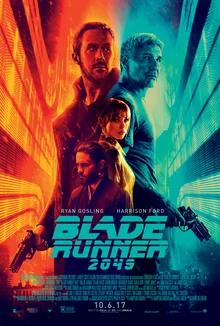
Blade Runner 2049
Thirty years after the original, K is a new-model replicant working as a blade runner for the LAPD, retiring older rogue models without complaint — until a routine job unearths a buried secret: evidence that a replicant once gave birth. The discovery could break the wall between the born and the built, and it sends K hunting for a child hidden decades ago, for a vanished blade runner named Deckard, and for an answer about himself he wants too badly to trust.
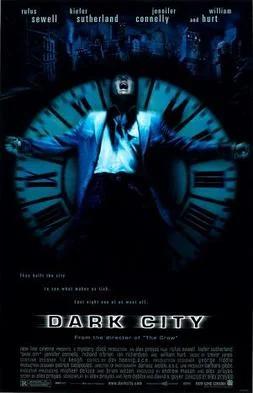
Dark City
John Murdoch wakes in a hotel bathtub with no memory, a dead woman in the next room, and detectives closing in for murders he can't remember committing. As he runs through a city where it is always midnight, he begins noticing what no one else does: at 12:00 exactly, the entire population falls asleep, the buildings physically rearrange themselves — and pale men in long coats move among the sleepers, injecting new memories into new lives.
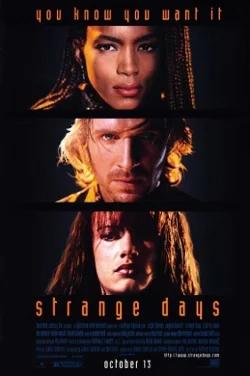
Strange Days
Los Angeles, the last two days of 1999. Lenny Nero, ex-cop turned black-market dealer, sells SQUID recordings — full sensory captures of other people's experiences, straight from their cerebral cortex to yours. Addicted to replaying tapes of his own lost relationship, Lenny is dragged out of his loop when a snuff recording lands in his hands: evidence of a murder that connects to his ex, a music-industry conspiracy, and a police killing that could set the burning city off entirely.
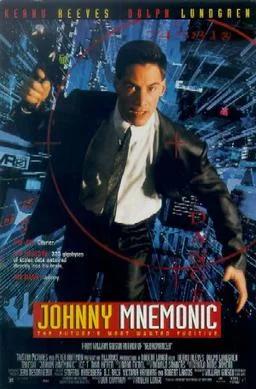
Johnny Mnemonic
2021: half the world suffers from a technology-induced plague, and the most valuable data travels not on networks — too easily hacked — but inside the heads of mnemonic couriers. Johnny is one of them, and his latest job stuffs his implanted memory far beyond safe capacity with data the Yakuza and a pharmaceutical giant will kill for. He has roughly a day to make delivery before the payload literally destroys his brain — the same brain he emptied of his own childhood to make room for cargo.
Ghost in the Shell
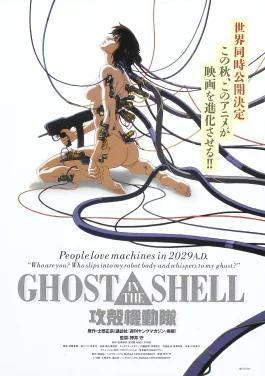
New Port City, 2029. Major Motoko Kusanagi, a cyborg security officer whose body is entirely artificial, hunts an elusive hacker known as the Puppet Master — an entity that ghost-hacks human minds and rewrites their memories. But the closer she gets, the more the case turns inward: if her body is manufactured and her memories can be edited, what exactly is the 'ghost' in her shell that makes her her?
Videodrome
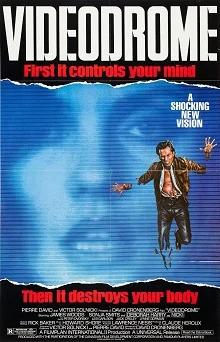
Max Renn, president of a sleazy Toronto UHF station always hunting for harder content, stumbles onto a pirate broadcast called Videodrome: plotless scenes of torture that appear to be real. As he chases the signal's source, his perception begins to warp — hallucinations bleed into reality, his body starts to change, and Max discovers the broadcast isn't entertainment at all, but a weapon that rewires whoever watches it.
Comments
Sign in to join the conversation
No comments yet. Be the first!
Advertisement