Jurassic Park (1993)
Universal Pictures· USA· 127 min· English
Directed by Steven SpielbergMusic by John WilliamsCinematography by Dean Cundey
Synopsis
Billionaire John Hammond has done the impossible: cloned dinosaurs from DNA preserved in amber, and built a theme park around them on a Costa Rican island. He invites two paleontologists, a chaos mathematician and his own grandchildren for a preview weekend — the same weekend a bribed employee shuts down the fences.
Advertisement
Review
Jurassic Park is routinely remembered as the film where movies learned to do the impossible convincingly, and that's true as far as it goes, but the more important achievement, and the one modern blockbusters have mostly forgotten how to replicate, is that Spielberg understood the impossible needed to be rationed rather than indulged. There are, by most careful counts, only around six minutes of actual computer-generated dinosaur footage across the entire film. For everything else, Spielberg alternates Industrial Light & Magic's genuinely revolutionary digital creatures with Stan Winston's full-size animatronic dinosaurs, cutting between the two so confidently that the audience's brain simply stitches them into a single, continuously living animal without ever consciously registering the switch. That discipline, more than the technology itself, is why the Tyrannosaurus rex's breakout during the film's central storm sequence — concentric ripples spreading across a cup of water on the dashboard, a goat's severed leg landing wetly on a sunroof, the animal's roar arriving before its face does — still outclasses effects assembled decades later with vastly more computing power behind them. Restraint, applied by someone who understands exactly when to show and when to withhold, remains harder to fake than raw processing capacity.
Michael Crichton's original novel supplied one of the strongest high-concept premises of its decade, and Spielberg and screenwriter David Koepp sharpen it, in adaptation, into something closer to a fable about commercial ambition outrunning basic caution. Jeff Goldblum's Ian Malcolm, a mathematician specializing in chaos theory, delivers the film's clearest thesis directly to camera: "Your scientists were so preoccupied with whether or not they could, they didn't stop to think if they should." It's a line simple enough to fit on a poster and precise enough to double as an actual critique of how the park's entire operation was assembled. Richard Attenborough's John Hammond, meanwhile, is written and performed with a warmth that keeps the film from curdling into simple condemnation; he's a showman genuinely besotted with the wonder of what he's built, sincerely convinced he's giving the world something miraculous rather than something reckless, and that grandfatherly sincerity makes his hubris sympathetic even as the story methodically proves him catastrophically wrong.
What ultimately keeps the film from being remembered as merely a very good monster movie is how completely it commits to awe as its actual emotional register, ahead of terror. John Williams's score treats the first full reveal of a living brachiosaur, standing in open daylight beside a herd of grazing dinosaurs, less like a horror cue than an outright hymn, brass and strings swelling with something closer to religious reverence than adventure-movie excitement. And Spielberg, rather than lingering on the animal itself in that moment, holds his camera instead on Sam Neill and Laura Dern's faces as they rise slowly out of their jeep seats, mouths open, glasses slipping — because the film understands, correctly, that wonder is best conveyed as a reaction shot rather than a spectacle shot. The audience feels the awe by watching two paleontologists feel it first.
The tonal opposite of that hymn arrives later, in the kitchen sequence, where two velociraptors stalk the film's children through stainless steel counters and swinging doors with a patience and evident intelligence that taught an entire generation of moviegoers what real suspense construction actually feels like: no jump scares, just the slow, awful realization that something smart is hunting you and knows exactly where you're about to go. Robert Muldoon's dry, admiring "clever girl," delivered in the seconds before his own death, entered the wider culture almost immediately as shorthand for being outmaneuvered by something you'd badly underestimated.
The technical decisions behind all of this are worth dwelling on specifically, because they explain why the effects still hold up. Spielberg had originally planned to use stop-motion animation for the dinosaurs, following the go-motion techniques pioneered by artists like Phil Tippett on earlier productions, until ILM produced a test shot of a digitally animated T. rex skeleton walking that reportedly left the entire crew, Tippett included, in stunned silence; Tippett has said his own reaction at the time was simply, "I think I'm extinct" — a joke that also happened to be a serious concession that the technology had just leapt past his own craft. Winston's full-size animatronic rex, meanwhile, weighed in the neighborhood of nine thousand pounds and reportedly absorbed enough water during the storm sequence's downpour that it would occasionally shudder unpredictably between takes, malfunctions the crew affectionately referred to as the dinosaur having nightmares.
Jurassic Park succeeds, ultimately, because it never loses track of the ratio between its component parts: real, patiently earned terror in the raptor and rex sequences; real, unforced wonder in its quieter character beats; a coherent ethical argument about commercial ambition that never feels bolted on; and effects work disciplined enough to know exactly how much of itself to show at any given moment. Very few blockbusters, before or since, have balanced all four of those elements this precisely, and it's the reason the film still plays, three decades on, less like a period piece and more like the standard every subsequent monster movie has been quietly measured against.
There's also a strange, unplanned bit of scientific timing embedded in the raptors' design that's worth remembering. Velociraptors, in reality, were roughly the size of a large turkey; the film's animators scaled their creature up to match a larger relative, Deinonychus, and then further still for dramatic effect. Partway through production, paleontologists formally described a newly discovered species, Utahraptor, that turned out to be even larger than the film's already-exaggerated raptors — leading Winston's own effects team to joke, once the discovery became public, that science had gone out and built the very animal they'd only guessed at for the sake of spectacle. It's a small, almost accidental vindication of Crichton and Spielberg's instincts, and one more reason the film's central premise, however scientifically impossible the amber-DNA mechanism itself eventually proved to be, still feels like it was reaching for something genuinely plausible rather than purely fantastical.
Trivia & Color Notes
DNA has an expiry date
Post-film research established DNA's half-life at roughly 521 years — meaning readable dinosaur DNA (66+ million years old) is impossible. Mosquitoes in amber from the right era are real, though; the film's premise was genuinely state-of-the-art speculation in 1990.
Six minutes of CG dinosaurs
Only ~63 effects shots contain digital dinosaurs — about six minutes. Spielberg scrapped planned go-motion animation after an ILM test of a walking T. rex skeleton reduced the crew to stunned silence; stop-motion master Phil Tippett: 'I think I'm extinct.'
The rex that feared rain
Stan Winston's full-size 9,000-pound animatronic T. rex absorbed water during the storm scenes and would shudder unpredictably — crew called the malfunctions 'the dinosaur having nightmares.' The paddock attack used the physical rex almost throughout.
The raptors got lucky
Velociraptors were turkey-sized; the film's were scaled to Deinonychus (and up). Mid-production, paleontologists described Utahraptor — a raptor even bigger than the film's exaggeration. Winston's team joked: 'We made it, then they discovered it.'
A hymn for a brachiosaur
Williams scored the first dinosaur reveal like a religious experience — deliberately, he said, to capture 'overwhelming happiness and excitement.' Play it near anyone born after 1980 and watch their posture change.
The amber-DNA premise was inspired by real (later retracted) research; we now know DNA has a half-life of ~521 years — dinosaur DNA cannot survive 66 million years, full stop. The frog-DNA gap-filling and sex-switching riff on real amphibian biology, and the film's raptors (scaled up, featherless) predate the feathered-dinosaur consensus. What it gets deeply right: dinosaurs as active, warm-blooded, bird-like animals — the 'Dinosaur Renaissance' view the film mainstreamed overnight — and a chaos-theory skepticism about complex-system control that any modern engineer will recognize.
🎵 Soundtrack
Music by John Williams
John Williams delivers two immortal themes — the reverent brachiosaur hymn and the adventurous island fanfare. It's the composer in full late-period majesty, treating genetic resurrection as something between a miracle and a warning.
🔗 This film connects to…
- E.T. the Extra-Terrestrial (1982)— Same director: Steven Spielberg
- Back to the Future (1985)— Same cinematographer: Dean Cundey
- Terminator 2: Judgment Day (1991)— Stan Winston creatures + the CGI revolution, back to back
- Westworld (1973)— Same creator: Michael Crichton — a theme park's technology fails, twice
Cast & Crew
Director
Composer
Cinematographer
Special Effects
Cast
- Sam Neill as Dr. Alan Grant
- Laura Dern as Dr. Ellie Sattler
- Jeff Goldblum as Dr. Ian Malcolm
Advertisement
You Might Also Like
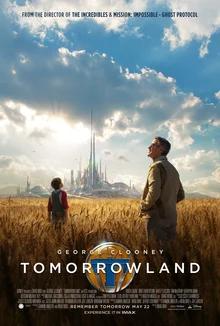
Tomorrowland
Optimistic teenager Casey Newton receives a mysterious pin that, when touched, drops her into a vision of Tomorrowland — a gleaming hidden city of impossible future technology. Tracking down the pin's origin leads her to Frank Walker, a disillusioned former boy-genius who was exiled from that city decades ago, and together they race to understand why humanity's brightest possible future has been sealed away and left to die.
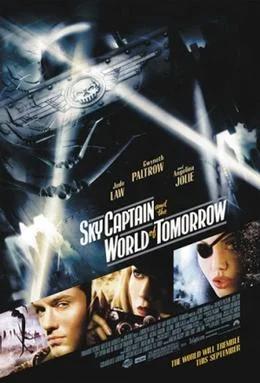
Sky Captain and the World of Tomorrow
1939, an alternate New York besieged by giant robots stomping through Manhattan. Mercenary pilot Joe 'Sky Captain' Sullivan and journalist Polly Perkins — his ex — race to uncover who is behind the attacks, chasing the trail across the globe to a hidden island fortress where a mad scientist's decades-old plan for 'the world of tomorrow' is finally coming to fruition.
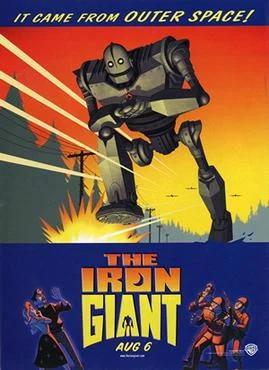
The Iron Giant
Maine, 1957. Young Hogarth Hughes discovers a colossal robot that fell from space, its memory wiped, hiding in the woods behind his house. As Hogarth teaches the Giant about the world — and about choice — a paranoid government agent closes in, convinced the visitor is a Cold War weapon that must be destroyed before it destroys them first.
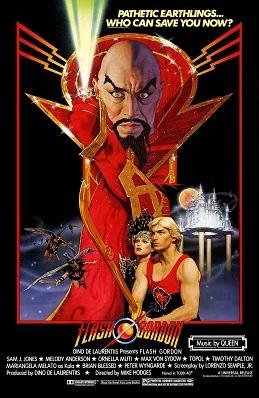
Flash Gordon
Football star Flash Gordon, travel agent Dale Arden and eccentric scientist Dr. Hans Zarkov are pulled through space to the planet Mongo, ruled by the tyrannical Ming the Merciless — who has set Earth in his crosshairs purely for sport. Flash must rally Mongo's warring kingdoms, the hawk-men of Sky City and the forest-dwelling Arboria, into a single rebellion before Ming's whim wipes out his home planet.
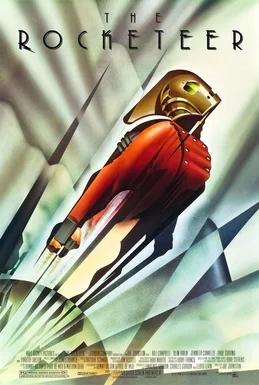
The Rocketeer
1938, Los Angeles. Stunt pilot Cliff Secord stumbles onto a prototype jetpack hidden in his hangar by gangsters — and straps it on. As word of a flying man spreads, Cliff finds himself hunted by Neville Sinclair, a matinee-idol movie star secretly working for Nazi agents desperate to recover the rocket before it reaches Germany, with only his mechanic Peevy and his girlfriend Jenny standing between the jetpack and the Third Reich.
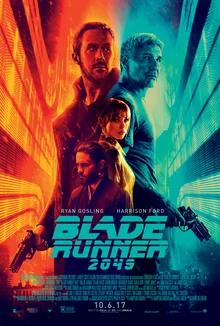
Blade Runner 2049
Thirty years after the original, K is a new-model replicant working as a blade runner for the LAPD, retiring older rogue models without complaint — until a routine job unearths a buried secret: evidence that a replicant once gave birth. The discovery could break the wall between the born and the built, and it sends K hunting for a child hidden decades ago, for a vanished blade runner named Deckard, and for an answer about himself he wants too badly to trust.
User Ratings
Comments
Sign in to join the conversation
No comments yet. Be the first!
Advertisement