E.T. the Extra-Terrestrial (1982)
Universal Pictures· USA· 115 min· English
Directed by Steven SpielbergMusic by John Williams
Synopsis
A gentle alien botanist is stranded in a California suburb when his ship leaves without him. Found by a lonely ten-year-old boy in the aftermath of his parents' divorce, the two form a bond so deep it becomes biological — while government agents close in and the visitor grows fatally homesick.
Advertisement
Review
Steven Spielberg has said in more than one interview that E.T. the Extra-Terrestrial grew out of an imaginary friend he invented for himself as a child, in the aftermath of his parents' divorce, and that history is legible in almost every choice the film makes. This is not really a story about visitors from another planet. It's a story about what it feels like to be a lonely ten-year-old whose family has just come apart, told with such total commitment to that child's perspective that the film becomes something closer to a first-contact story filtered entirely through a ten-year-old's actual field of vision. Spielberg and cinematographer Allen Daviau kept the camera at roughly Elliott's eye level for the vast majority of the runtime, which means adults, for most of the movie, exist only as belt buckles, badges and disembodied authority glimpsed from below — faceless until the story has earned the right to show us who they are. It's a formal decision so complete and so quietly radical that most audiences never consciously notice it, which is exactly the point.
The film's title character required solving an almost impossible design problem: build a creature that a child could love unconditionally, using nothing but foam rubber, cable rigs and, in a handful of shots, small performers and a young actor born without legs concealed inside a costume. Effects artist Carlo Rambaldi based E.T.'s face on a composite of Albert Einstein, Ernest Hemingway, the poet Carl Sandburg and, reportedly, a pug dog — an odd brief that somehow produces a face that reads simultaneously as ancient and utterly guileless. Twelve separate puppeteers operated the cable-controlled mechanisms in E.T.'s face for close-up work, and the character, despite being an assembly of foam and aluminum armature, remains one of the most fully realized non-human characters in film history: he gets drunk on discarded beer while Elliott, telepathically linked, experiences the effects at school; he learns language by watching Sesame Street; at one point he's dressed in a wig and floral dress for a game of pretend; he appears to die, and then doesn't. None of it would land emotionally if the human actors around the puppet weren't giving performances of total, unguarded sincerity. Henry Thomas, cast after an improvised audition in which he was asked to imagine his own dog dying and reduced the casting room to silence, plays every beat of the bond with E.T. as genuinely, physically real, and six-year-old Drew Barrymore, in one of the more remarkable child performances of the era, treats the alien with the same unselfconscious ease she might show a new puppy.
Spielberg made an unusual production decision that shows up directly in the quality of those performances: he shot the film largely in chronological story order, which is significantly more expensive and logistically complicated than the industry norm of shooting by location, specifically so his young cast would experience the emotional arc of the story as it actually happened to their characters rather than performing isolated, out-of-sequence beats. By the time the film reaches its farewell, the exhaustion and grief on Thomas's face is, by several accounts, the accumulated weight of an entire shoot's worth of genuine attachment to the puppet and to the fictional situation, not a single day's acting exercise. That choice is expensive in ways that rarely show up on screen this directly, and it's a large part of why the film's emotional beats read as earned rather than manufactured, even on a tenth viewing by adults who know exactly how the effect was constructed.
None of this happens by accident, and it's worth being honest about the fact that the film is, in the most literal sense, a machine engineered for maximum emotional effect. The chase through the forest and the flight past the moon on Elliott's bicycle — still one of the most reproduced single images from any film of its decade, silhouetted against a full moon in a shot the marketing team recognized as iconic before the film had even opened — exists purely to produce a feeling of pure, soaring transcendence, with nothing narratively necessary about the specific visual staging beyond its ability to make an audience gasp. John Williams's score, which won him his fourth Academy Award, does most of the actual emotional engineering in the film's final act; Spielberg has said that when Williams struggled to get his music to align precisely with the picture's edit, he told the composer to simply conduct the cue freely, as though performing a concert piece rather than scoring to a locked cut, and then recut the film's ending to follow the music instead of the other way around — an almost unheard-of concession from a director to a composer, and one that speaks to how completely Spielberg trusted Williams to find the emotional truth of the scene better than the edit alone could.
The film's most famous piece of product placement, meanwhile, has become an entire case study in marketing history almost by accident: Mars turned down an offer to have M&M's candies used as the trail E.T. follows to Elliott's house, on the theory that associating their brand with a strange alien creature carried more risk than reward, so Hershey's took the deal instead with the then-struggling Reese's Pieces. Sales of the candy reportedly jumped by roughly sixty-five percent in the months following the film's release, and the deal is still cited in business schools as the moment studios and brands realized how much a well-placed product inside a beloved film could be worth.
Cynics have called the film manipulative for as long as it's existed, and they're not wrong; it is, quite deliberately, an instrument built to produce tears, constructed with the same precision an engineer brings to a bridge. But manipulation is a strange complaint to level at a piece of music, and Beethoven was manipulative too, in exactly the same sense — he understood, with total technical command, which chord changes make a listener's chest tighten, and he used that understanding on purpose. E.T. does the same thing with images of childhood loneliness, adult indifference and a friendship that has to end because the friend has somewhere else he needs to be. Forty years on, it still works on airplanes, at home, in packed theaters at anniversary screenings, on audiences who have seen it a dozen times and know exactly which frame is coming next. Very few films manage that, no matter how sincerely they try.
Trivia & Color Notes
Shot in story order
Spielberg filmed largely in chronological order — rare and expensive — so his child actors would experience the story as it happened. Henry Thomas's grief in the final scenes is the accumulated weight of the whole shoot.
Einstein's eyes
Designer Carlo Rambaldi modeled E.T.'s face on Albert Einstein, Ernest Hemingway and Carl Sandburg, and a pug dog. Twelve operators worked the puppet's cable-controlled face; two little people and a boy born without legs performed the walking suit.
The candy that said no
Mars turned down having M&M's lure E.T., so Hershey's took the deal for the then-new Reese's Pieces. Sales jumped roughly 65% — the case study that built the product-placement industry.
Conducting the picture
When Williams struggled to sync the finale's music to picture, Spielberg told him to conduct it freely, as a concert — then recut the film's ending to match the music.
The audition that wept
Henry Thomas's improvised audition — imagining his dog's death — reduced the room to silence; Spielberg's voice on the tape says 'Okay kid, you got the job.' The tape is on YouTube and still devastating.
E.T. is a fable, and its science is warm-hearted hand-waving: an empathic-telepathic bond that links heartbeats and blood alcohol, telekinesis on demand, and a chest-light that glows with feeling. One lovely, defensible touch: E.T. is a botanist collecting specimens — a plausible mission profile for interstellar exploration — and his 'phone home' rig built from a Speak & Spell, umbrella and saw blade is a genuinely charming piece of improvised-engineering fiction.
🎵 Soundtrack
Music by John Williams
John Williams won his fourth Oscar for a score whose flying theme is second only to Star Wars in his songbook. For the fifteen-minute finale, Spielberg re-edited the film to Williams's music rather than the reverse — the rarest compliment in filmmaking.
🔗 This film connects to…
Cast & Crew
Advertisement
You Might Also Like
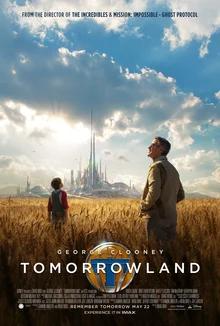
Tomorrowland
Optimistic teenager Casey Newton receives a mysterious pin that, when touched, drops her into a vision of Tomorrowland — a gleaming hidden city of impossible future technology. Tracking down the pin's origin leads her to Frank Walker, a disillusioned former boy-genius who was exiled from that city decades ago, and together they race to understand why humanity's brightest possible future has been sealed away and left to die.
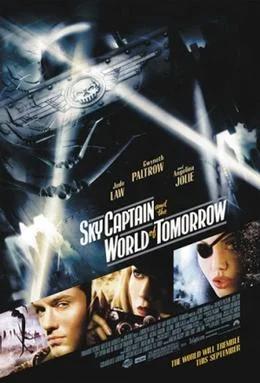
Sky Captain and the World of Tomorrow
1939, an alternate New York besieged by giant robots stomping through Manhattan. Mercenary pilot Joe 'Sky Captain' Sullivan and journalist Polly Perkins — his ex — race to uncover who is behind the attacks, chasing the trail across the globe to a hidden island fortress where a mad scientist's decades-old plan for 'the world of tomorrow' is finally coming to fruition.
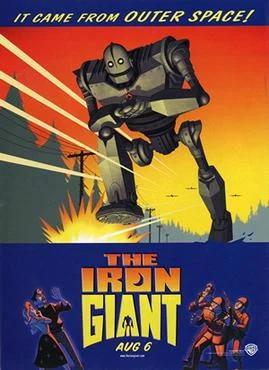
The Iron Giant
Maine, 1957. Young Hogarth Hughes discovers a colossal robot that fell from space, its memory wiped, hiding in the woods behind his house. As Hogarth teaches the Giant about the world — and about choice — a paranoid government agent closes in, convinced the visitor is a Cold War weapon that must be destroyed before it destroys them first.
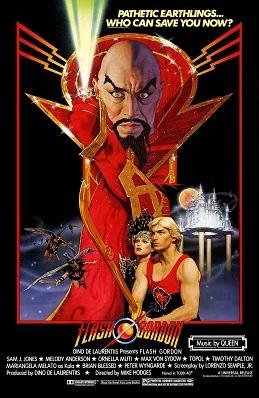
Flash Gordon
Football star Flash Gordon, travel agent Dale Arden and eccentric scientist Dr. Hans Zarkov are pulled through space to the planet Mongo, ruled by the tyrannical Ming the Merciless — who has set Earth in his crosshairs purely for sport. Flash must rally Mongo's warring kingdoms, the hawk-men of Sky City and the forest-dwelling Arboria, into a single rebellion before Ming's whim wipes out his home planet.
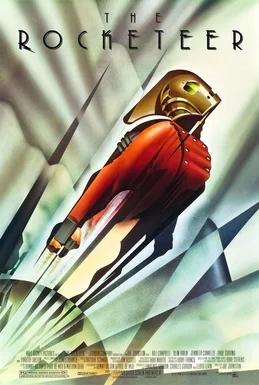
The Rocketeer
1938, Los Angeles. Stunt pilot Cliff Secord stumbles onto a prototype jetpack hidden in his hangar by gangsters — and straps it on. As word of a flying man spreads, Cliff finds himself hunted by Neville Sinclair, a matinee-idol movie star secretly working for Nazi agents desperate to recover the rocket before it reaches Germany, with only his mechanic Peevy and his girlfriend Jenny standing between the jetpack and the Third Reich.
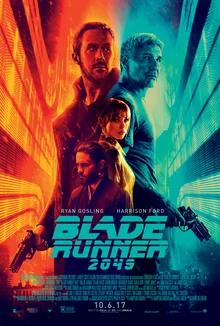
Blade Runner 2049
Thirty years after the original, K is a new-model replicant working as a blade runner for the LAPD, retiring older rogue models without complaint — until a routine job unearths a buried secret: evidence that a replicant once gave birth. The discovery could break the wall between the born and the built, and it sends K hunting for a child hidden decades ago, for a vanished blade runner named Deckard, and for an answer about himself he wants too badly to trust.
Comments
Sign in to join the conversation
No comments yet. Be the first!
Advertisement