Terminator 2: Judgment Day (1991)
TriStar Pictures· USA· 137 min· English
Directed by James CameronMusic by Brad Fiedel
Synopsis
Two terminators arrive in Los Angeles: a reprogrammed T-800 sent to protect ten-year-old John Connor, and the T-1000 — a liquid-metal prototype that can look like anyone — sent to kill him. With Sarah Connor institutionalized for telling the truth, the future's only hope is a boy, his mother, and the machine that once hunted her.
Advertisement
Review
Terminator 2: Judgment Day belongs to that small category of sequels built on a genuine structural idea rather than simply a larger budget, even though it had that too, reportedly becoming the most expensive film made up to that point in history. Cameron's inversion of the original's premise is elegant enough to function almost as a thesis statement on its own: the exact model of machine that hunted Sarah Connor to the edge of her sanity in the first film now returns reprogrammed as her son's protector, while the genuinely new nightmare is something with no fixed shape at all, capable of becoming anyone it touches. Underneath the escalating action, the film's real question isn't whether the good guys will win. It's whether anyone — a machine explicitly built to kill, or a mother who has spent a decade being consumed by visions of a war she can't stop thinking about — is capable of unlearning the purpose they were built or broken into. "If a machine can learn the value of human life, maybe we can too" is about as close as a summer action blockbuster has ever come to stating its own argument out loud, and the film mostly earns the right to say it.
The T-1000 is the reason this film gets discussed in film-history courses rather than just genre retrospectives. Industrial Light & Magic's morphing liquid-metal effects amount to something in the range of five minutes of actual screen time, the product of roughly eight months of work from dozens of artists and a substantial chunk of the film's overall budget, and the effect of seeing that checkerboard-floor transformation for the first time in 1991 is difficult to fully communicate to anyone who's grown up in a world where photorealistic digital effects are simply assumed. This was the moment an entire industry watched digital effects graduate from a novelty used sparingly to something that could believably carry the emotional and physical threat of a film's primary antagonist, and the confidence it gave studios in computer-generated imagery directly paved the way for the fully digital dinosaurs Spielberg would greenlight for Jurassic Park barely two years later.
Crucially, Cameron never lets the digital spectacle stand alone. Stan Winston's practical creature and effects work anchors nearly every sequence surrounding the T-1000's transformations, and the film's most purely thrilling set pieces — a motorcycle chase down a concrete storm drain, a helicopter forced beneath a freeway overpass, a tanker truck of liquid nitrogen exploding across a factory floor — were achieved, for the most part, with real vehicles, real stunt performers and real pyrotechnics rather than digital substitution. That grounding in tangible, photographed danger is a large part of why the film's spectacle still reads as visceral rather than weightless more than three decades later; audiences can sense, even without consciously analyzing it, when a stunt actually happened in front of the camera.
Linda Hamilton's Sarah Connor supplies the film's genuine dark heart. Institutionalized for years after insisting on the truth of what she witnessed in the first film, physically transformed into someone leaner and more feral than the frightened waitress audiences met in 1984, she spends much of the sequel edging so close to becoming exactly the kind of remorseless killer the machines represent that her own son has to talk her back from the brink. Her aborted assassination attempt on scientist Miles Dyson, the man whose research will eventually give rise to Skynet, functions as the film's real moral hinge: she gets as far as pointing a loaded weapon at a man in front of his family before her own humanity, the thing she's spent the whole film afraid she's lost, finally stops her. Opposite her, Schwarzenegger delivers arguably the best performance of his career precisely because it requires the opposite arc — a killing machine slowly, haltingly acquiring something like an emotional vocabulary it was never designed to have, learning to raise a tentative thumbs-up the way someone might practice an unfamiliar phrase in a second language.
The film's most harrowing sequence has nothing to do with either terminator directly. Sarah's recurring nightmare of Judgment Day itself — a chain-link playground, children's flesh flashing away from bone in the instant before a nuclear blast wave levels the city around them — was constructed with genuine physicist consultation on the mechanics of the detonation, and it remains one of the most carefully researched and quietly devastating depictions of nuclear war ever included in a mainstream studio film. Test audiences reportedly sat in near-total silence through the sequence during early screenings, a reaction unusual enough for a summer action blockbuster that Cameron and his editors apparently took it as confirmation the scene was working exactly as intended rather than as a sign to soften it.
Brad Fiedel's returning score deepens rather than simply repeats the original's mechanical pulse, upgrading the anvil-clang motif into something closer to full mythology, with the metal-on-metal percussion recorded, quite literally, by striking microphone-rigged pieces of metal together — machinery functioning as its own war drum. "Hasta la vista, baby" earned its place in the cultural lexicon almost instantly upon release. But it's a quieter image that tends to stay with people longest: a metal thumb, sinking slowly into molten steel at the very end, a machine choosing its own destruction so that the future it helped protect can exist without it. Few blockbusters have ever ended on a note that sad, or that earned.
The production's own scale mirrors the story's obsession with escalation. At a reported budget near a hundred million dollars, T2 was, at the time, the most expensive film ever produced, with roughly fifteen million of that going toward Schwarzenegger's salary, reportedly negotiated to include a personal Gulfstream jet as part of the compensation package. It earned that outlay back almost immediately, opening to the biggest debut of 1991 and going on to dominate the year at the global box office. Linda Hamilton's identical twin sister Leslie doubled her for several mirror shots and dual-Sarah compositions, and twin brothers were similarly cast to double a scene requiring the T-1000 to briefly impersonate a security guard — a reminder that even a film this focused on cutting-edge digital effects still leaned on old-fashioned practical solutions wherever they could get the job done more convincingly. More than three decades and several less successful sequels later, T2 remains the high-water mark the rest of the franchise keeps circling back toward, and rarely equals.
Trivia & Color Notes
Five minutes that changed movies
The T-1000's CGI totals roughly 5 minutes of screen time, took ILM 8 months with 35 artists, and consumed about $5.5M of the budget — and it convinced Hollywood digital effects were ready. Jurassic Park was greenlit into full CG confidence partly on this proof.
The most expensive film ever (briefly)
At ~$100M, T2 was the priciest movie made to that point — roughly $15M of it Arnold's salary, paid partly in a Gulfstream jet. It earned its money back with the biggest opening of 1991.
Twins in the steel mill
Linda Hamilton's identical twin Leslie doubled her for mirror and dual-Sarah shots; twin brothers likewise doubled the T-1000's guard-impersonation scene. Practical twin-casting beat CGI where it could.
The playground nightmare
Sarah's dream of Judgment Day — flesh flashing from bone, the blast wave leveling LA — was built with physicist consultation and is regularly cited as film's most accurate nuclear-strike depiction. Test audiences reportedly sat in stunned silence.
A real Harley off a real ledge
The canal jump was performed by stuntman Peter Kent on a Harley Fat Boy supported by (later digitally erased) cables — one of the first stunt-wire removals in history, marrying practical daredevilry with new digital tools.
The T-1000's 'mimetic polyalloy' — a liquid metal with programmable shape, color and texture — has no physical basis (where does its processing happen? its energy come from?), though it inspired real research fields in shape-memory alloys and programmable matter that cite it constantly. The film's nuclear-war depiction, by contrast, is horrifyingly accurate: Cameron consulted physicists on the Los Angeles blast sequence, and it's still shown in classrooms. Reprogramming Skynet's assets and 'no fate but what we make' causality are self-aware franchise metaphysics.
🎵 Soundtrack
Music by Brad Fiedel
Brad Fiedel returns with the anvil-clang theme upgraded to myth. The metal-on-metal percussion is literally that — recorded by striking microphone-rigged metal — machinery as war drum.
🔗 This film connects to…
- Jurassic Park (1993)— Stan Winston creatures + the CGI revolution, back to back
- Terminator 3: Rise of the Machines (2003)— Same franchise: Terminator
- Terminator: Dark Fate (2019)— Shared actors: Linda Hamilton & Arnold Schwarzenegger reunite decades later
- The Terminator (1984)— Same franchise: Terminator
- Aliens (1986)— Same director: James Cameron
- Total Recall (1990)— Shared actor: Arnold Schwarzenegger
Cast & Crew
Director
Writer
Composer
Special Effects
Cast
- Arnold Schwarzenegger as The Terminator (T-800)
- Linda Hamilton as Sarah Connor
- Robert Patrick as T-1000
Advertisement
You Might Also Like
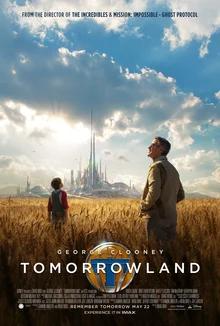
Tomorrowland
Optimistic teenager Casey Newton receives a mysterious pin that, when touched, drops her into a vision of Tomorrowland — a gleaming hidden city of impossible future technology. Tracking down the pin's origin leads her to Frank Walker, a disillusioned former boy-genius who was exiled from that city decades ago, and together they race to understand why humanity's brightest possible future has been sealed away and left to die.
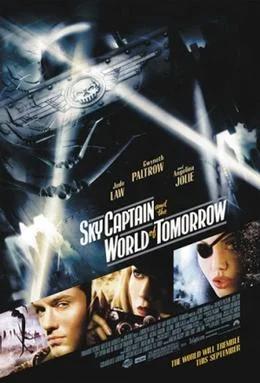
Sky Captain and the World of Tomorrow
1939, an alternate New York besieged by giant robots stomping through Manhattan. Mercenary pilot Joe 'Sky Captain' Sullivan and journalist Polly Perkins — his ex — race to uncover who is behind the attacks, chasing the trail across the globe to a hidden island fortress where a mad scientist's decades-old plan for 'the world of tomorrow' is finally coming to fruition.
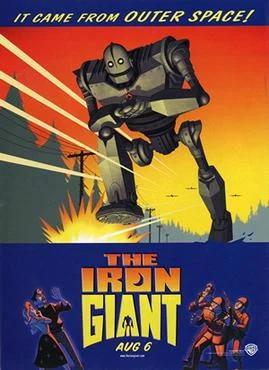
The Iron Giant
Maine, 1957. Young Hogarth Hughes discovers a colossal robot that fell from space, its memory wiped, hiding in the woods behind his house. As Hogarth teaches the Giant about the world — and about choice — a paranoid government agent closes in, convinced the visitor is a Cold War weapon that must be destroyed before it destroys them first.
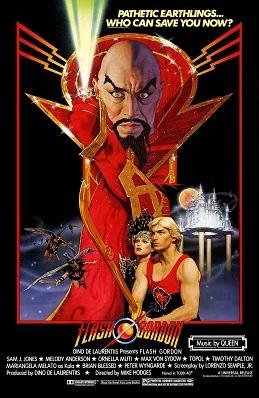
Flash Gordon
Football star Flash Gordon, travel agent Dale Arden and eccentric scientist Dr. Hans Zarkov are pulled through space to the planet Mongo, ruled by the tyrannical Ming the Merciless — who has set Earth in his crosshairs purely for sport. Flash must rally Mongo's warring kingdoms, the hawk-men of Sky City and the forest-dwelling Arboria, into a single rebellion before Ming's whim wipes out his home planet.
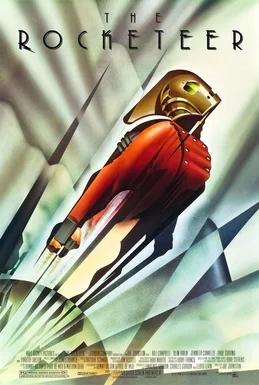
The Rocketeer
1938, Los Angeles. Stunt pilot Cliff Secord stumbles onto a prototype jetpack hidden in his hangar by gangsters — and straps it on. As word of a flying man spreads, Cliff finds himself hunted by Neville Sinclair, a matinee-idol movie star secretly working for Nazi agents desperate to recover the rocket before it reaches Germany, with only his mechanic Peevy and his girlfriend Jenny standing between the jetpack and the Third Reich.
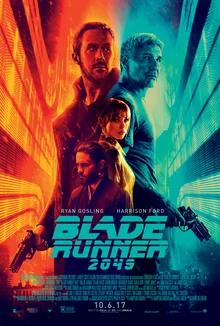
Blade Runner 2049
Thirty years after the original, K is a new-model replicant working as a blade runner for the LAPD, retiring older rogue models without complaint — until a routine job unearths a buried secret: evidence that a replicant once gave birth. The discovery could break the wall between the born and the built, and it sends K hunting for a child hidden decades ago, for a vanished blade runner named Deckard, and for an answer about himself he wants too badly to trust.
Comments
Sign in to join the conversation
No comments yet. Be the first!
Advertisement