The Terminator (1984)
Orion Pictures· USA· 107 min· English
Directed by James CameronMusic by Brad Fiedel
Synopsis
In 2029, the machines that exterminated most of humanity lose the war — so they send an unstoppable cyborg assassin back to 1984 to kill Sarah Connor, the mother of the resistance leader who beat them. The resistance sends one soldier to protect her. He has a photograph, a sawed-off shotgun, and no way home.
Advertisement
Review
James Cameron's only directing credit before this film was the critically savaged Piranha II: The Spawning, a production so troubled that he's said he was fired partway through and had to sneak into an editing suite at night to cut his own version. That's the résumé attached to a film that would go on to be recognized as one of the tightest, most efficiently constructed scripts in the entire history of genre filmmaking, and there's something worth sitting with in that gap: The Terminator isn't a triumph of resources or industry pedigree. It's a triumph of pure structural discipline, made on a budget so modest that entire stylistic choices — the shadowy, mostly-nighttime Los Angeles, the sparse dialogue, the absence of any scene that required money the production didn't have — were dictated as much by necessity as by taste, and it happens that necessity produced one of the most influential science fiction films ever made.
Cameron reportedly conceived the premise during a fever, while sick in Rome, in the form of a single, unshakeable image: a chrome torso, dragging itself out of an explosion, hauling kitchen knives behind it. That nightmare image became the emotional and structural spine of the entire script, which he sold for one dollar specifically in exchange for the guaranteed right to direct it himself — an almost unheard-of concession to demand from a studio, and one that turned out to be the best deal Cameron ever made. The plot itself operates as a closed causal loop with an almost mathematical elegance: a machine intelligence in a devastated 2029 sends an assassin back to 1984 to kill the mother of the resistance leader who will eventually defeat it, and the resistance sends one soldier back to protect her, a soldier who turns out, by the story's own internal logic, to be that leader's father. Every element that seems like exposition early in the film reveals itself, by the end, to have been a setup with a specific, mechanically necessary payoff; nothing in the script is wasted, and the loop clicks shut with the satisfaction of a lock finding its key.
The casting decision that made all of this work is now so obvious in hindsight that it's worth remembering how strange it initially was. Orion Pictures reportedly wanted Arnold Schwarzenegger for the heroic role of Kyle Reese, and O.J. Simpson was apparently floated at one point as a candidate to play the Terminator itself, on the theory that audiences wouldn't accept such a recognizable, likable public figure as a remorseless killing machine. Cameron has said that a single lunch meeting with Schwarzenegger convinced him he had the casting backward — that Arnold, talking through how the character would mechanically reload a weapon without needing to look at it, understood the Terminator's cold procedural logic better than anyone else being considered for either role. Everything that might read as a limitation for a conventional leading man — the accent, the deliberate bodybuilder's physicality, a performance built around stillness rather than charisma — becomes exactly correct for a machine wearing a human being's shape as camouflage. Schwarzenegger speaks a total of only twenty-eight lines across the entire film; he reportedly wanted to soften the contraction in "I'll be back" to the grammatically fuller "I will be back" because the shortened form was difficult for him to deliver convincingly, and Cameron refused, on the logic that a sufficiently advanced machine would simply be programmed to speak in natural contractions if that's what made it pass as human. The American Film Institute later ranked the line among the greatest in movie history, which is a strange kind of vindication for a piece of dialogue that very nearly didn't survive an actor's own discomfort with it.
Stan Winston's practical effects finish what the casting starts, most memorably in the finale, where the Terminator's damaged human disguise is stripped away entirely to reveal the chrome endoskeleton underneath, animated in key shots using stop-motion and cable-rig techniques descended directly from the Ray Harryhausen tradition of monster animation, walking through fire with the same implacable, joint-by-joint deliberateness it's shown the entire film. It remains one of the more genuinely unsettling images the genre has produced, not despite its obviously mechanical construction but because of it; there's something about watching a machine keep coming, expressionless and unhurried, through flame that damages everything around it but not the thing itself, that lands harder than almost any digitally rendered equivalent has managed since.
Underneath the chase structure, which never really lets up once it starts, there's a specific historical anxiety the film is channeling that's easy to miss on a casual viewing: Skynet, the film's genocidal military AI, is very much a Cold War nightmare wearing a robot's face, a fear about automated systems of mutual destruction that audiences in 1984 understood viscerally because the actual machinery of nuclear deterrence operated on uncomfortably similar logic. And running underneath even that is a genuinely moving, genuinely doomed romance: Linda Hamilton's Sarah Connor begins the film as a waitress who can't keep her own checkbook balanced, mocked gently by coworkers for her disorganization, and ends it pregnant, armed, driving alone into a gathering desert storm, having watched the father of her unborn child die to buy her the time to survive. That transformation, compressed into a hundred and seven efficient minutes, is one of the best character arcs the decade produced in any genre, and it's the emotional ballast that keeps the film from being just an extremely well-made chase. "Come with me if you want to live" is a good line delivered by a good actor in a good scene. The reason it's still quoted with total sincerity four decades later is that the film around it earned every word of it.
It's also worth noting how much of the film's tone was dictated by its budget rather than in spite of it. Cameron shot the vast majority of the Los Angeles scenes at night, partly because the film's tech-noir mood called for it — Cameron coined that exact term for the nightclub where several plot threads converge, and it stuck as a genre label for everything that followed in a similar vein — and partly because darkness is simply cheaper and more forgiving than daylight when your production can't afford elaborate art direction to sell a near-future setting. The result is a Los Angeles that feels genuinely dangerous and undersupervised, all sodium-lit parking structures and empty streets, and that atmosphere of scarcity ended up serving the story better than a bigger budget likely would have. Watching it again next to the sequels it eventually spawned, all vastly better funded and considerably less lean, it's a useful reminder that constraint, handled by someone who knows exactly what to prioritize, can produce a tighter and scarier film than abundance ever does.
Trivia & Color Notes
Born from a fever dream
Cameron conceived the Terminator while sick in Rome: a nightmare image of a chrome torso dragging itself from fire with kitchen knives. He sold the script for one dollar in exchange for the right to direct it.
Arnold was almost Reese
Orion wanted Schwarzenegger as the hero and O.J. Simpson was floated as the Terminator. After one lunch, Cameron realized Arnold understood the machine better than anyone — he talked about how it would reload without looking.
'I'll be back' — 28 lines total
The Terminator speaks 28 lines. Arnold wanted to say 'I will be back' because he struggled with the contraction; Cameron refused — machines use contractions if they're programmed to. The AFI later ranked it among cinema's greatest quotes.
The grandfather paradox, weaponized
Kyle Reese is sent back to protect Sarah Connor and becomes John Connor's father — a perfectly closed 'bootstrap' causal loop. Physicists call these self-consistent histories; screenwriters call it the tightest twist of the decade.
Tech-noir on a budget
The film's LA is shot almost entirely at night — partly for mood, partly because night shoots hid the $6.4M budget. The club where Sarah is cornered is literally named 'Tech Noir'; Cameron coined the genre label himself.
The time travel is paradox-embracing fantasy — a closed causal loop where the future creates its own past (John's father is the soldier John sends) — closer to Greek tragedy than physics, though 'consistent-histories' loops are at least discussed in serious relativity literature. Skynet, however, has aged from pulp premise to policy concern: an autonomous military network that starts a war when humans try to unplug it is now a standard scenario in AI-safety debates. The endoskeleton's power source and 1984-era 'living tissue over metal' remain pure cyber-myth.
🎵 Soundtrack
Music by Brad Fiedel
Brad Fiedel's synth score — that hammering, off-kilter 13/16 main theme — is the sound of machinery pretending to have a heart. Made entirely on synthesizers because the budget allowed nothing else, and perfect for exactly that reason.
🔗 This film connects to…
- Terminator 2: Judgment Day (1991)— Same franchise: Terminator
- Aliens (1986)— Same director: James Cameron
- Predator (1987)— Shared actor: Arnold Schwarzenegger
- Terminator: Dark Fate (2019)— Direct sequel: Dark Fate ignores every other sequel and continues straight from here
- Terminator 3: Rise of the Machines (2003)— Shared actor: Arnold Schwarzenegger
- Mad Max 2: The Road Warrior (1981)— Same theme: civilization after the fall
- Twelve Monkeys (1995)— Same theme: fatalistic time loops
- Starship Troopers (1997)— Same composer: Basil Poledouris (RoboCop link) meets a shared war-against-machines theme
- Strange Days (1995)— Written & produced by James Cameron
Cast & Crew
Director
Writer
Composer
Special Effects
Cast
- Arnold Schwarzenegger as The Terminator
- Linda Hamilton as Sarah Connor
- Michael Biehn as Kyle Reese
Advertisement
You Might Also Like
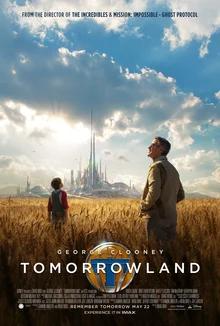
Tomorrowland
Optimistic teenager Casey Newton receives a mysterious pin that, when touched, drops her into a vision of Tomorrowland — a gleaming hidden city of impossible future technology. Tracking down the pin's origin leads her to Frank Walker, a disillusioned former boy-genius who was exiled from that city decades ago, and together they race to understand why humanity's brightest possible future has been sealed away and left to die.
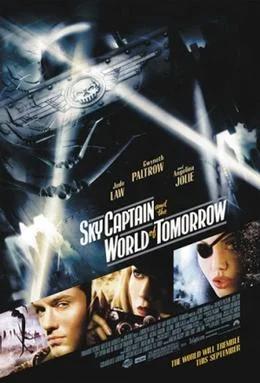
Sky Captain and the World of Tomorrow
1939, an alternate New York besieged by giant robots stomping through Manhattan. Mercenary pilot Joe 'Sky Captain' Sullivan and journalist Polly Perkins — his ex — race to uncover who is behind the attacks, chasing the trail across the globe to a hidden island fortress where a mad scientist's decades-old plan for 'the world of tomorrow' is finally coming to fruition.
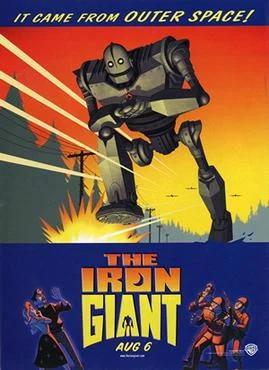
The Iron Giant
Maine, 1957. Young Hogarth Hughes discovers a colossal robot that fell from space, its memory wiped, hiding in the woods behind his house. As Hogarth teaches the Giant about the world — and about choice — a paranoid government agent closes in, convinced the visitor is a Cold War weapon that must be destroyed before it destroys them first.
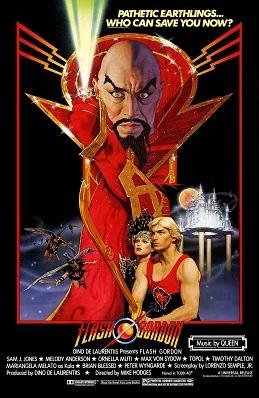
Flash Gordon
Football star Flash Gordon, travel agent Dale Arden and eccentric scientist Dr. Hans Zarkov are pulled through space to the planet Mongo, ruled by the tyrannical Ming the Merciless — who has set Earth in his crosshairs purely for sport. Flash must rally Mongo's warring kingdoms, the hawk-men of Sky City and the forest-dwelling Arboria, into a single rebellion before Ming's whim wipes out his home planet.
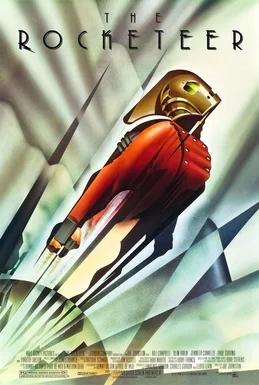
The Rocketeer
1938, Los Angeles. Stunt pilot Cliff Secord stumbles onto a prototype jetpack hidden in his hangar by gangsters — and straps it on. As word of a flying man spreads, Cliff finds himself hunted by Neville Sinclair, a matinee-idol movie star secretly working for Nazi agents desperate to recover the rocket before it reaches Germany, with only his mechanic Peevy and his girlfriend Jenny standing between the jetpack and the Third Reich.
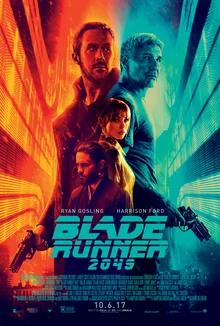
Blade Runner 2049
Thirty years after the original, K is a new-model replicant working as a blade runner for the LAPD, retiring older rogue models without complaint — until a routine job unearths a buried secret: evidence that a replicant once gave birth. The discovery could break the wall between the born and the built, and it sends K hunting for a child hidden decades ago, for a vanished blade runner named Deckard, and for an answer about himself he wants too badly to trust.
Comments
Sign in to join the conversation
No comments yet. Be the first!
Advertisement