Aliens (1986)
20th Century Fox· USA· 137 min· English
Directed by James Cameron
Synopsis
Ellen Ripley, sole survivor of the Nostromo, is found drifting after 57 years in hypersleep — and nobody believes her story. When contact is lost with a colony on the very world where her crew found the derelict ship, she returns with a unit of cocky Colonial Marines. This time it isn't one alien.
Advertisement
Review
Sequelizing a film as tightly constructed and widely revered as Alien is, on paper, close to a no-win assignment: match the original's tone too closely and you're accused of repetition; diverge too far and you're accused of betrayal. James Cameron's solution, arrived at with a confidence that reads as almost reckless in hindsight, was to abandon the horror-film chassis entirely and rebuild the story as a combat picture — something closer in structure to a Vietnam War film relocated to a distant moon than to a haunted-house movie with a bigger budget. He's said his entire pitch to studio executives amounted to writing "ALIEN" on a whiteboard, adding an "S," and drawing two lines through the middle, a gesture that supposedly communicated everything they needed to greenlight the project: same universe, same threat, entirely different genre grammar layered on top.
What that genre shift actually accomplishes, structurally, is a film built almost entirely on escalation rather than surprise. Where the first film worked by concealing its monster and letting isolation and unfamiliarity do the frightening, Aliens shows you the threat almost immediately and then spends its runtime steadily removing every advantage the human characters believe they have. A squad of Colonial Marines arrives loaded with heavy weaponry, motion trackers, sentry guns and swaggering overconfidence, and the film systematically dismantles all of it, piece by piece, until the survivors are reduced to running through corridors with whatever's left in their hands. The escalation engine that would come to define Cameron's later career — each scene raising the stakes just past what the previous scene established as the ceiling — runs at full throttle here for the first time at this scale, from the rising ping of the motion trackers to the sentry guns' ammunition counters ticking toward zero to the increasingly desperate radio chatter as the marines realize they've walked into something far larger than a rescue mission.
What keeps the film from being pure military spectacle, though, is that its actual emotional center is maternal rather than tactical. Ripley's arc in this film bends almost entirely around Newt, the sole child survivor of the colony, a relationship the script builds with real patience before the action ramps up in earnest. By the time the film reaches its climax, the story has quietly reframed itself: this was never really about killing aliens for the Weyland-Yutani corporation's benefit, or even about survival in the abstract. It's about one woman's refusal to lose another child to the same horror that already cost her everything once. The finale stages what might be the purest distillation of that theme the genre has ever attempted — Ripley, suited into the cargo-loading exosuit she's used throughout the film for manual labor, squaring off directly against the Alien Queen, herself fighting to protect an entire chamber of unhatched eggs, in a fight that's explicitly one mother defending her young against another. "Get away from her, you bitch" has become one of the most quoted lines in action cinema not because it's clever but because the entire film has spent two hours earning the pure, uncomplicated fury behind it.
Sigourney Weaver's performance carrying that arc earned her a Best Actress Academy Award nomination, an almost unthinkable recognition for a science fiction action film in 1986 and one that remains, decades later, one of the more genre-friendly gestures the Academy has ever made toward this kind of material. Around her, Cameron assembled a supporting cast whose specific chemistry has aged remarkably well: Bill Paxton's Private Hudson, a braggart who collapses into panicked hysteria the moment the marines' overwhelming firepower stops being overwhelming, delivers most of the film's most quotable lines and somehow makes cowardice funny without undercutting the genuine tension of the scenes he's in; Lance Henriksen's android Bishop, introduced as a source of suspicion given the first film's history with synthetic crew members, gradually earns a quiet, understated heroism that recontextualizes what an artificial person's loyalty can actually mean in this universe.
None of the Queen's presence in the film's back half was achieved digitally. Stan Winston's effects team built a roughly fourteen-foot hydraulic-and-puppetry creature requiring more than a dozen crew members to operate simultaneously, including two performers working from inside the rig to control its arms directly — every shot of her on screen is a physical object that existed in real space, lit by the same lights as the actors reacting to her, which is a large part of why the confrontation still reads as genuinely threatening rather than as a composited effect. James Horner, meanwhile, reportedly composed the entire score in a punishingly compressed six-week window while feuding openly with Cameron over the schedule and creative direction, and still produced what's widely regarded as the definitive military science fiction score of its era — cues so effective at conveying dread-tinged momentum that trailers borrowed them, sometimes uncredited, for the better part of two subsequent decades.
What Aliens ultimately achieves, and what makes it worth discussing on its own terms rather than simply as "the good sequel," is a nearly complete reinvention that somehow never feels like a betrayal of what came before. It respects the original's world, its central character, its corporate villainy, and its creature biology, while refusing to simply restage the same haunted-house beats at a larger scale. Very few sequels in any genre have managed that particular balancing act, standing confidently on their own ground while still honoring the film they followed, and Aliens remains one of the clearest examples of how to do it right.
The production itself was reportedly no less contentious than the fictional chain of command depicted on screen. Shot at Pinewood Studios with a largely British crew initially skeptical of an American director whose most recent credit had been a critically savaged piranha sequel, the production apparently came close to open mutiny at points over Cameron's demanding pace and his willingness to push past traditional union break schedules. Whatever friction that produced didn't show up as compromise in the finished film; if anything, the atmosphere of genuine exhaustion and short tempers among the crew seems to have fed directly into the marines' own fraying discipline on screen. Watched today, next to the considerably larger-budgeted, more overtly polished sequels that followed later in the franchise, Aliens still reads as the leaner, hungrier film — proof that a production under real strain, led by a director with total conviction about what he was building, can produce something more lasting than money alone ever guarantees.
Trivia & Color Notes
The Power Loader
The P-5000 exosuit was a working practical effect: a stuntman stood inside behind Weaver while a crane took the weight. Real powered exoskeletons for cargo handling — directly inspired by this design — are now an active robotics industry.
The Queen: 14 puppeteers
Stan Winston's Alien Queen was a 14-foot hydraulic-and-puppetry rig operated by up to 16 crew, including two men inside working the arms. No CGI: every shot of her is a physical object on set.
An Oscar nomination for shooting aliens
Sigourney Weaver's Best Actress nomination was the first ever for a sci-fi action performance — unheard of in 1987 and still one of the Academy's most genre-friendly moments.
Game over, man!
Bill Paxton improvised much of Hudson's panic, including 'Game over, man! Game over!' — which became so iconic it was later licensed as an actual game-over voice line in video games.
Tea, guns and the English crew
Shot at Pinewood with a British crew skeptical of the 'piranha movie' director, production nearly mutinied over Cameron's pace and canceled tea breaks. He answered by making arguably the best action film of the decade.
Cameron sweats details other action films ignore: 57 years of hypersleep drift is consistent with sublight travel between systems; the dropship/APC combat doctrine feels like real military procurement; and the xenomorph hive — queen, workers, egg chamber — maps cleanly onto eusocial insects like ants and termites, which is why it feels biologically coherent. Artificial gravity everywhere and conveniently breathable terraformed atmosphere are the usual cheats; exosuit power loaders, meanwhile, have since become a real robotics research category.
🎵 Soundtrack
James Horner scored the film in a brutal six weeks, feuding with Cameron the entire time — and still produced the definitive military sci-fi score. Its combat cues were reused in movie trailers for two decades.
🔗 This film connects to…
Cast & Crew
Advertisement
You Might Also Like
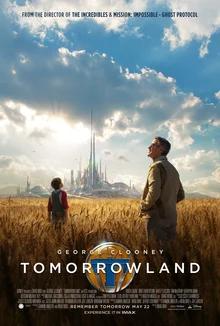
Tomorrowland
Optimistic teenager Casey Newton receives a mysterious pin that, when touched, drops her into a vision of Tomorrowland — a gleaming hidden city of impossible future technology. Tracking down the pin's origin leads her to Frank Walker, a disillusioned former boy-genius who was exiled from that city decades ago, and together they race to understand why humanity's brightest possible future has been sealed away and left to die.
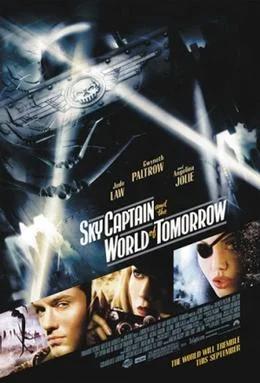
Sky Captain and the World of Tomorrow
1939, an alternate New York besieged by giant robots stomping through Manhattan. Mercenary pilot Joe 'Sky Captain' Sullivan and journalist Polly Perkins — his ex — race to uncover who is behind the attacks, chasing the trail across the globe to a hidden island fortress where a mad scientist's decades-old plan for 'the world of tomorrow' is finally coming to fruition.
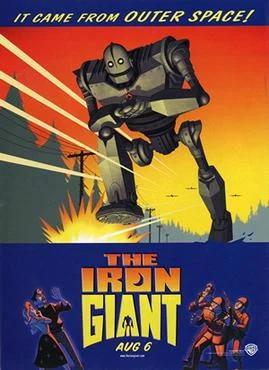
The Iron Giant
Maine, 1957. Young Hogarth Hughes discovers a colossal robot that fell from space, its memory wiped, hiding in the woods behind his house. As Hogarth teaches the Giant about the world — and about choice — a paranoid government agent closes in, convinced the visitor is a Cold War weapon that must be destroyed before it destroys them first.
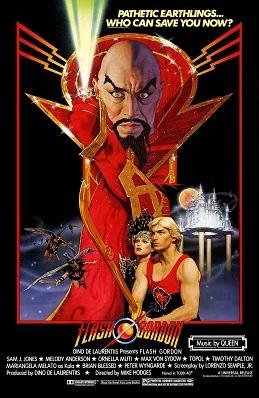
Flash Gordon
Football star Flash Gordon, travel agent Dale Arden and eccentric scientist Dr. Hans Zarkov are pulled through space to the planet Mongo, ruled by the tyrannical Ming the Merciless — who has set Earth in his crosshairs purely for sport. Flash must rally Mongo's warring kingdoms, the hawk-men of Sky City and the forest-dwelling Arboria, into a single rebellion before Ming's whim wipes out his home planet.
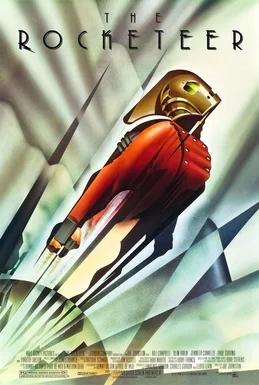
The Rocketeer
1938, Los Angeles. Stunt pilot Cliff Secord stumbles onto a prototype jetpack hidden in his hangar by gangsters — and straps it on. As word of a flying man spreads, Cliff finds himself hunted by Neville Sinclair, a matinee-idol movie star secretly working for Nazi agents desperate to recover the rocket before it reaches Germany, with only his mechanic Peevy and his girlfriend Jenny standing between the jetpack and the Third Reich.
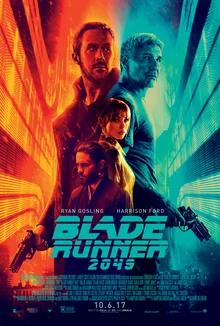
Blade Runner 2049
Thirty years after the original, K is a new-model replicant working as a blade runner for the LAPD, retiring older rogue models without complaint — until a routine job unearths a buried secret: evidence that a replicant once gave birth. The discovery could break the wall between the born and the built, and it sends K hunting for a child hidden decades ago, for a vanished blade runner named Deckard, and for an answer about himself he wants too badly to trust.
Comments
Sign in to join the conversation
No comments yet. Be the first!
Advertisement