Alien (1979)
20th Century Fox· UK· 117 min· English
Directed by Ridley ScottMusic by Jerry Goldsmith
Synopsis
The commercial towing vessel Nostromo, hauling ore between stars, is diverted by company order to investigate a signal from a dead world. What the crew brings back aboard has a life cycle perfectly designed to use them — and their employer knew.
Advertisement
Review
Take away the chestburster, the acid blood and the H.R. Giger creature design, and what's left of Alien is still, structurally, a haunted-house movie — a small group of people trapped in an enclosed space with something that wants to kill them one at a time. That's not a criticism. It's the reason the film works as well as it does nearly half a century later. Dan O'Bannon's script, developed over years and through several earlier drafts under different titles, deliberately strips the setup down to something almost banal: seven employees of a commercial mining company, hauling ore between star systems, get diverted by a corporate order buried in the fine print of their contracts to investigate a distress signal on a dead moon. Before anything monstrous happens, the film spends a genuinely unusual amount of time on the crew simply being annoyed with each other — arguing about pay shares, complaining about the food, needling one another with the tired familiarity of people who've been stuck on the same ship together for too long. Ridley Scott insisted on this texture, and it's what makes everything that follows land as hard as it does. You're not watching archetypal astronaut-heroes. You're watching underpaid transport workers, and the film never lets you forget it.
Scott's direction is the other half of why the film still holds up against fifty years of imitators who copied its surface without understanding its patience. He shoots the Nostromo less like a spaceship than like a cathedral crossed with a submarine — vaulted, dripping, mechanical in a way that feels genuinely industrial rather than futuristic, full of chains, steam and conduit that looks like it's been maintained on a budget for years. Into that lived-in, unglamorous space, the film introduces H.R. Giger's creature design, adapted from the Swiss surrealist's existing paintings after Scott encountered a book of his work and realized he'd found something no other film monster had ever managed: a design that genuinely looks like it evolved somewhere else, under alien biochemistry and alien evolutionary pressure, rather than looking like a man in a suit or a rubber puppet built to a human performer's proportions. Giger's creature was performed by Bolaji Badejo, a design student well over six feet tall who was spotted by a casting agent in a London pub specifically because his unusual proportions would make the suit's silhouette read as genuinely inhuman rather than as an actor in makeup.
The film's most famous scare depends entirely on the patience Scott shows everywhere else. Nothing attacks for nearly the first half of the runtime; the crew eats together, jokes, argues, investigates the derelict ship and its horrifying cargo of fossilized eggs, and slowly, without the audience quite noticing it happening, becomes a group of specific, differentiated people you have some investment in rather than seven interchangeable astronaut-victims. So when the chestburster sequence finally arrives — at a dinner table, under harsh overhead light, with no music cue warning the audience it's about to happen — the violation lands as total, and famously, some of the cast's shocked reactions on camera are reportedly genuine, since the production kept the specifics of the effect a secret even from actors who knew broadly what the scene involved. Monster movies had shown creatures attacking people for decades by 1979. None of them had shown a creature being born, out of a human body, at a shared meal, in a scene that plays less like an attack than like witnessing a violation of the most basic biological boundary a person has.
Jerry Goldsmith's score deserves more credit than it usually gets for how deliberately unconventional it is. Goldsmith wrote a comparatively warm, even romantic main theme for the film, and Scott, in the edit, largely discarded it in favor of the cold, sparse, atonal cues that surround the horror sequences — a decision that reportedly frustrated the composer at the time but that gives the finished film a genuinely unsettling sonic identity, closer to environmental dread than to conventional thriller scoring. There are long stretches with barely any music at all, just the hum of the ship and the crew's own breathing, and the effect is that when the score does arrive, it feels less like emotional guidance and more like the film itself losing its composure.
And then there's Ripley, whose existence in this film is quietly one of the more radical casting decisions in the genre's history. O'Bannon's original screenplay specified that the entire crew was written unisex, with a note that any role could be played by a man or a woman without altering a line of dialogue — an unusual instruction for a 1970s genre script, and one the production actually honored, casting Sigourney Weaver, then a Yale-trained stage actress with essentially no film experience, quite late in preproduction. Ripley survives not through combat prowess or heroic speechmaking but through stubbornness, procedural competence, and a refusal to break quarantine protocol even when her crewmates override her — a version of leadership the genre had rarely, if ever, given to a woman on screen before, and had rarely given to anyone at all without wrapping it in visible heroics. The film's final stretch, one woman alone in an escape shuttle with a cat and a stowaway nightmare she thought she'd left behind, doesn't resolve with a clever tactical victory so much as with sheer nerve, and it created a template — the "final girl" reconceived as a professional adult rather than a terrified teenager — that horror and science fiction have been drawing on for the entirety of the decades since.
What's easy to lose, watching Alien now through the lens of everything it spawned, is how genuinely strange and small-scale it must have felt on release: a film with almost no action in the conventional sense, built around dread and patience rather than spectacle, that trusted an audience to sit with silence and grime and a slowly accumulating sense that something has already gone terribly wrong before anyone on screen realizes it. Every subsequent entry in its own franchise, and dozens of films that have nothing to do with the franchise at all, are still trying to recapture that specific, uncomfortable stillness. Very few have managed it.
Trivia & Color Notes
The dinner scene surprise
The cast knew the chestburster scene was coming — but not how it would work. The geyser of blood when it erupted from John Hurt's prosthetic chest was a genuine shock; Veronica Cartwright's horrified stumble is real.
A 7-foot Nigerian design student
The alien was played by Bolaji Badejo, a 6'10" graphic design student spotted in a London pub. His proportions made the suit's silhouette impossible to read as a man in a costume.
Parasitoid nightmare fuel
The xenomorph life cycle — egg, host-implanted larva, erupting adult — is real biology: parasitoid wasps do exactly this to caterpillars. Darwin himself wrote that their existence troubled his faith.
MOTHER's future is analog
The Nostromo's computer speaks via green text on CRTs and its 'interface' room is lined with blinking incandescent bulbs — retro-futurism so tactile it defined the 'cassette futurism' aesthetic named after this very era.
Ripley was written unisex
O'Bannon's script noted 'The crew is unisex and all parts are interchangeable for men or women.' Casting Weaver as Ripley — days before shooting — quietly created the modern action heroine.
Unusually rigorous for its era: travel is slower than light with the crew in hypersleep, the Nostromo is a working industrial vessel rather than a warship, and space is silent and indifferent. The xenomorph's biology — parasitoid life cycle, host-dependent gestation — mirrors real parasitoid wasps, which is why it feels so plausible. Concentrated molecular acid for blood and the creature's explosive growth rate without food are where biology gives way to nightmare.
🎵 Soundtrack
Music by Jerry Goldsmith
Jerry Goldsmith's score is famously sparse and eerie — he wrote a romantic main theme Scott largely discarded in favor of the cold, atonal cues. The tension between composer and cut produced one of horror's most unsettling soundscapes.
🔗 This film connects to…
Cast & Crew
Advertisement
You Might Also Like
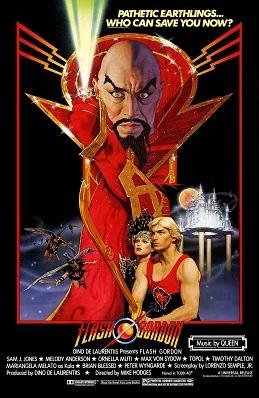
Flash Gordon
Football star Flash Gordon, travel agent Dale Arden and eccentric scientist Dr. Hans Zarkov are pulled through space to the planet Mongo, ruled by the tyrannical Ming the Merciless — who has set Earth in his crosshairs purely for sport. Flash must rally Mongo's warring kingdoms, the hawk-men of Sky City and the forest-dwelling Arboria, into a single rebellion before Ming's whim wipes out his home planet.
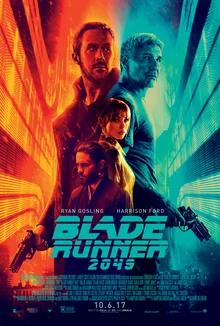
Blade Runner 2049
Thirty years after the original, K is a new-model replicant working as a blade runner for the LAPD, retiring older rogue models without complaint — until a routine job unearths a buried secret: evidence that a replicant once gave birth. The discovery could break the wall between the born and the built, and it sends K hunting for a child hidden decades ago, for a vanished blade runner named Deckard, and for an answer about himself he wants too badly to trust.
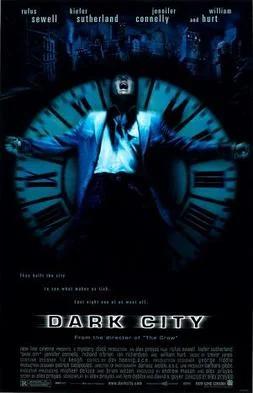
Dark City
John Murdoch wakes in a hotel bathtub with no memory, a dead woman in the next room, and detectives closing in for murders he can't remember committing. As he runs through a city where it is always midnight, he begins noticing what no one else does: at 12:00 exactly, the entire population falls asleep, the buildings physically rearrange themselves — and pale men in long coats move among the sleepers, injecting new memories into new lives.
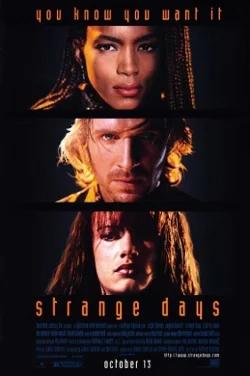
Strange Days
Los Angeles, the last two days of 1999. Lenny Nero, ex-cop turned black-market dealer, sells SQUID recordings — full sensory captures of other people's experiences, straight from their cerebral cortex to yours. Addicted to replaying tapes of his own lost relationship, Lenny is dragged out of his loop when a snuff recording lands in his hands: evidence of a murder that connects to his ex, a music-industry conspiracy, and a police killing that could set the burning city off entirely.
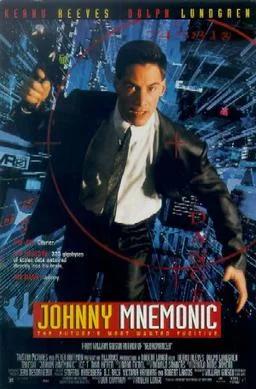
Johnny Mnemonic
2021: half the world suffers from a technology-induced plague, and the most valuable data travels not on networks — too easily hacked — but inside the heads of mnemonic couriers. Johnny is one of them, and his latest job stuffs his implanted memory far beyond safe capacity with data the Yakuza and a pharmaceutical giant will kill for. He has roughly a day to make delivery before the payload literally destroys his brain — the same brain he emptied of his own childhood to make room for cargo.

Ghost in the Shell
New Port City, 2029. Major Motoko Kusanagi, a cyborg security officer whose body is entirely artificial, hunts an elusive hacker known as the Puppet Master — an entity that ghost-hacks human minds and rewrites their memories. But the closer she gets, the more the case turns inward: if her body is manufactured and her memories can be edited, what exactly is the 'ghost' in her shell that makes her her?
Comments
Sign in to join the conversation
No comments yet. Be the first!
Advertisement