The Thing (1982)
Universal Pictures· USA· 109 min· English
Directed by John CarpenterMusic by Ennio MorriconeCinematography by Dean Cundey
Synopsis
An American research station in Antarctica takes in a dog fleeing a Norwegian helicopter crew trying to kill it. The dog is not a dog. It is something that imitates — perfectly, cell by cell — and by the time the twelve men understand that, any of them could already be it.
Advertisement
Review
John Carpenter's The Thing opened two weeks after E.T., in the summer of 1982, and it is difficult to imagine two films less suited to competing for the same audience's attention. Where Spielberg was selling wonder and reconciliation, Carpenter was selling total, unresolvable paranoia at the bottom of the world, and contemporary critics punished him for it — one prominent reviewer at the time reportedly dismissed it as "instant junk," and the film underperformed badly enough at the box office that it briefly threatened Carpenter's standing as a bankable studio director. It has since undergone one of the more complete critical reversals in the genre's history, regularly appearing on lists of the greatest horror films ever made, and the reason isn't nostalgia. It's that the film has aged into exactly the shape modern horror keeps trying and mostly failing to replicate: dread built entirely on the collapse of trust between people who have no way of verifying anything about each other anymore.
The premise is almost embarrassingly simple, and that simplicity is the whole engine. A dog, fleeing a Norwegian helicopter crew who are inexplicably trying to shoot it, arrives at an American research station in Antarctica. It is not a dog. It is something that copies, perfectly, down to the cellular level, whatever it encounters, and by the time the twelve men stationed there understand what they're dealing with, there is no reliable way for any of them to prove to any of the others that they haven't already been replaced. Carpenter strands his cast in a location with no rescue possible until spring, strips away every external threat except each other, and then simply lets suspicion do the work that a conventional monster would otherwise be doing. The creature itself barely needs to appear on screen for most of the runtime for the film to be terrifying, because the real horror is watching twelve exhausted, isolated men try and fail to figure out who they can still trust.
When the creature does appear, though, it appears through some of the most extraordinary practical effects work ever committed to film. Rob Bottin was only twenty-two years old when he took charge of the effects, and by his own account and that of people who worked alongside him, he essentially lived at the studio for well over a year building the film's transformations, sustaining himself on almost no sleep and reportedly requiring hospitalization for exhaustion once production wrapped. What he and his team produced still holds up against four decades of subsequent CGI in a way that's genuinely rare: a sled dog that blossoms open into wet, tentacled, unrecognizable horror in a kennel; a man's chest that becomes a set of biting jaws around the arms trying to defibrillate it; a severed head that sprouts spider legs and scuttles away while another character, staring at it, delivers the line that has become the film's most quoted moment of pure disbelief. Bottin farmed the dog-kennel transformation out to Stan Winston's effects studio as a professional favor when his own crew ran out of time, a detail that speaks to how much labor an effects sequence this convincing actually required. None of it was achieved with a single frame of digital assistance, and the tactile, wrongly-lit, occupying-real-space quality of practical creature work is exactly what gives these scenes their staying power; CGI monsters, however sophisticated, rarely produce the same instinctive physical revulsion, because some part of the audience's brain always knows, correctly, that nothing was actually in the room.
The film's structural masterpiece, though, isn't any individual transformation. It's the blood-test scene roughly two-thirds of the way through, in which MacReady, played by Kurt Russell with a haggard, half-drunk authority that anchors the whole film, ties his surviving crewmates to a couch and tests each of their blood samples with a heated wire, on the theory that every part of the creature is its own independent organism that will react to protect itself if threatened. It's pure Hitchcockian suspense construction, one man methodically working down a line of potential monsters while a room full of desperate, armed people watch and second-guess him, and it plays as tensely on a tenth viewing as it does on a first, because Carpenter never once tips his hand about who's safe. Ennio Morricone, brought in specifically because Carpenter — who usually scored his own films — wanted something outside his own instincts, delivered a score so sparse and so close to Carpenter's own minimalist synth style that many viewers assume Carpenter wrote it himself; the main heartbeat motif, a slow, mechanical pulse, functions almost as the creature's own vital sign, present under scenes where nothing visibly monstrous is happening at all.
What separates The Thing from nearly every other horror film of its era, and what critics in 1982 seem to have genuinely held against it, is Carpenter's refusal to give the audience anything resembling comfort at the end. The film closes on two exhausted, half-frozen survivors sharing a bottle in the ruins of the burned research station, both aware that either one of them could already be the creature, both too tired and too resigned to keep fighting about it. There's no reveal, no final twist that clarifies who was human all along. Carpenter has said in interviews since that he genuinely doesn't know the answer himself and considers the ambiguity the entire point — the film ends not when the threat is defeated but when the characters, and by extension the audience, run out of the energy required to keep trusting anyone. That refusal to resolve is a much harder sell to a mainstream 1982 audience already primed by that summer's more comforting alien-visitor picture, but it's exactly what has made the film endure. Very few studio horror films have ever been this genuinely, deliberately bleak, and fewer still have made that bleakness feel this carefully constructed rather than simply nihilistic.
Production itself mirrored the isolation on screen more than most behind-the-scenes accounts usually admit. Exterior sequences were shot in Stewart, British Columbia, in genuinely brutal winter conditions, while the "Antarctic" interior sets built back in Los Angeles were artificially refrigerated to around forty degrees so that the actors' breath would show correctly on camera even indoors — a physically uncomfortable production choice that likely fed the cast's authentically weary, short-tempered chemistry rather than working against it. Dean Cundey's cinematography, already sharpened by years of collaboration with Carpenter on lower-budget features, gives the station's cramped corridors and blizzard-scoured exteriors a consistent, oppressive geography; you always know how far help is, which is to say you always know it isn't coming. Decades on, with an entire modern horror subgenre built around exactly this kind of claustrophobic, trust-nobody premise, it's worth remembering that this film did it first, did it with almost no CGI safety net, and still hasn't been matched for how completely it commits to leaving its audience with nothing to hold onto by the credits.
Trivia & Color Notes
Bottin's hospital bill
Rob Bottin, 22 years old, lived at the studio for over a year building the film's creatures and was hospitalized for exhaustion when production wrapped. The dog-kennel transformation was farmed out to Stan Winston's shop as a favor.
The loneliest shoot
Exterior scenes were shot in Stewart, British Columbia in genuine sub-zero conditions, while interior 'Antarctic' sets in Los Angeles were refrigerated to 40°F so the actors' breath would show.
Beaten by a friendlier alien
The Thing opened two weeks after E.T. — an alien audiences could love — and was called 'instant junk' by one prominent critic. It has since appeared on more 'greatest horror' lists than almost any film of its decade.
The blood test
The hot-needle blood test scene was achieved with a hidden nozzle and a real (small) flame jet; the actors' flinches are partly genuine. It's now taught in film schools as a master class in suspense geometry.
An ending with no answer
Carpenter has never confirmed whether Childs or MacReady is the Thing at the end — and has said even he treats it as unknowable. The ambiguity was deliberate: the film ends when trust does.
The setting is authentically brutal — Antarctic isolation, no rescue until spring, the psychology of confinement — and the premise of an organism assimilating and imitating hosts has real (if far humbler) analogues in parasites that alter host behavior and in horizontal gene transfer among microbes. The Thing's speed and fidelity of imitation are fantasy, but the film's most quoted 'test' logic — that every part of the creature is an independent organism with a survival instinct — is internally consistent enough that physicists and biologists still write playful papers about it.
🎵 Soundtrack
Music by Ennio Morricone
Carpenter, who usually scores his own films, hired Ennio Morricone — who delivered a minimal, dread-soaked pulse so Carpenter-like that many assume it is Carpenter. The main heartbeat motif is horror minimalism at its finest.
🔗 This film connects to…
- They Live (1988)— Same director: John Carpenter
- Aliens (1986)— Carpenter's crew meets Cameron's — shared DNA of siege horror
- They Live (1988)— Shared actor: Keith David
- Alien (1979)— Same theme: isolated crew vs. perfect organism
- The Thing from Another World (1951)— The original — Carpenter's 1982 film is a direct remake
- Escape from New York (1981)— Same director: John Carpenter
- Videodrome (1983)— Same theme: the body betraying its owner — peak practical body horror
Cast & Crew
Director
Composer
Cinematographer
Special Effects
Cast
- Kurt Russell as R.J. MacReady
- Keith David as Childs
Advertisement
You Might Also Like
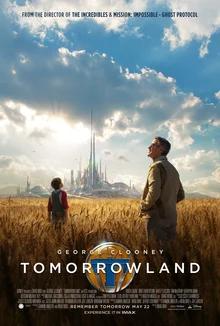
Tomorrowland
Optimistic teenager Casey Newton receives a mysterious pin that, when touched, drops her into a vision of Tomorrowland — a gleaming hidden city of impossible future technology. Tracking down the pin's origin leads her to Frank Walker, a disillusioned former boy-genius who was exiled from that city decades ago, and together they race to understand why humanity's brightest possible future has been sealed away and left to die.
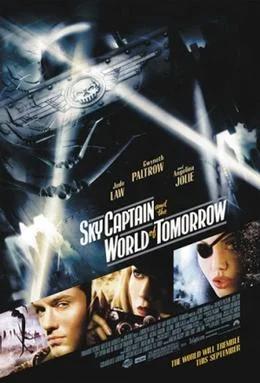
Sky Captain and the World of Tomorrow
1939, an alternate New York besieged by giant robots stomping through Manhattan. Mercenary pilot Joe 'Sky Captain' Sullivan and journalist Polly Perkins — his ex — race to uncover who is behind the attacks, chasing the trail across the globe to a hidden island fortress where a mad scientist's decades-old plan for 'the world of tomorrow' is finally coming to fruition.
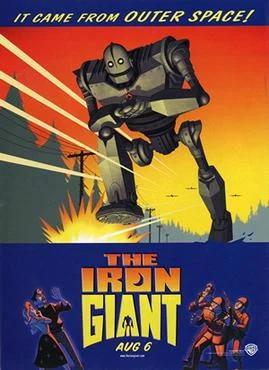
The Iron Giant
Maine, 1957. Young Hogarth Hughes discovers a colossal robot that fell from space, its memory wiped, hiding in the woods behind his house. As Hogarth teaches the Giant about the world — and about choice — a paranoid government agent closes in, convinced the visitor is a Cold War weapon that must be destroyed before it destroys them first.
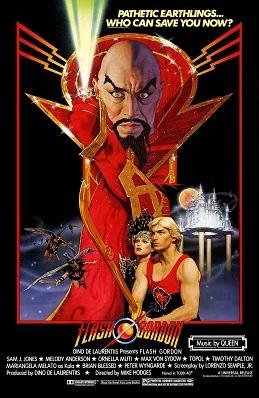
Flash Gordon
Football star Flash Gordon, travel agent Dale Arden and eccentric scientist Dr. Hans Zarkov are pulled through space to the planet Mongo, ruled by the tyrannical Ming the Merciless — who has set Earth in his crosshairs purely for sport. Flash must rally Mongo's warring kingdoms, the hawk-men of Sky City and the forest-dwelling Arboria, into a single rebellion before Ming's whim wipes out his home planet.
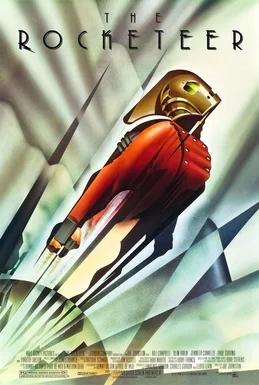
The Rocketeer
1938, Los Angeles. Stunt pilot Cliff Secord stumbles onto a prototype jetpack hidden in his hangar by gangsters — and straps it on. As word of a flying man spreads, Cliff finds himself hunted by Neville Sinclair, a matinee-idol movie star secretly working for Nazi agents desperate to recover the rocket before it reaches Germany, with only his mechanic Peevy and his girlfriend Jenny standing between the jetpack and the Third Reich.
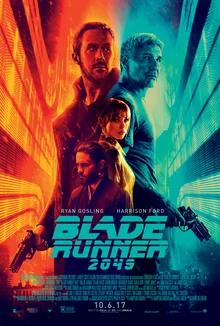
Blade Runner 2049
Thirty years after the original, K is a new-model replicant working as a blade runner for the LAPD, retiring older rogue models without complaint — until a routine job unearths a buried secret: evidence that a replicant once gave birth. The discovery could break the wall between the born and the built, and it sends K hunting for a child hidden decades ago, for a vanished blade runner named Deckard, and for an answer about himself he wants too badly to trust.
Comments
Sign in to join the conversation
No comments yet. Be the first!
Advertisement