They Live (1988)
Universal Pictures· USA· 94 min· English
Directed by John CarpenterMusic by John Carpenter
Synopsis
A drifter looking for work in Los Angeles finds a box of sunglasses that reveal the truth: the billboards say OBEY, the money says THIS IS YOUR GOD, and the ruling class are skull-faced aliens running Earth as a third-world franchise. He responds the only way an American hero can — with a shotgun and a one-liner.
Advertisement
Review
John Carpenter has been candid in interviews that They Live was conceived, quite deliberately, as an open counterattack on the economic policy of the Reagan era, and the disguise he chose for that argument is part of what makes the film so effective decades after its specific political moment has passed. It presents itself, on the surface, as a fairly modest drive-in alien-invasion picture, complete with a drifter protagonist, a mysterious box of sunglasses and a plot that could be summarized in a single sentence on a video-store shelf. What it actually delivers is considerably stranger: the invasion in this story isn't coming. It already happened, some unspecified time ago, and the invaders aren't hiding in ships overhead — they're running the economy, appearing on television, sitting on the boards of the companies that own the media telling you everything is fine. Their weapon of choice isn't a death ray. It's a mortgage, a media diet, and a culture trained to associate ambition with obedience.
The film's single most famous sequence, in which Nada first puts on the sunglasses that let him see the world as it actually is, remains one of the more striking images produced by any political film of its decade, genre or otherwise. Shot in stark black and white, every billboard and magazine cover in frame is revealed to be carrying a single blunt subliminal command hidden underneath its ordinary advertising copy: OBEY. CONSUME. MARRY AND REPRODUCE. NO INDEPENDENT THOUGHT. Money, examined closely, reads simply THIS IS YOUR GOD. It's about as subtle as a punch to the jaw, and that bluntness is entirely the point — Carpenter has said he wanted the metaphor legible to anyone, not layered in the kind of ambiguity that lets an audience talk themselves out of the argument being made.
Casting "Rowdy" Roddy Piper, a professional wrestler with essentially no film-acting experience, rather than an established movie star in the lead role turned out to be one of Carpenter's shrewdest decisions. Piper plays Nada as a genuinely working-class drifter, baffled, exhausted and slow-burning toward fury rather than heroic from the outset, and his delivery of the film's most quoted line — "I have come here to chew bubblegum and kick ass, and I'm all out of bubblegum" — carries the specific, practiced comic timing of a wrestling promo, because that's more or less exactly what it was; Piper has said the line came from a notebook of his own wrestling catchphrases rather than the shooting script, and Carpenter simply let him run with it.
The film's most notorious sequence, though, has nothing to do with aliens at all. Roughly midway through, Nada tries to convince his friend Frank, played by Keith David, to simply put on a pair of the sunglasses, and Frank's refusal escalates into a brawl in a back alley that runs nearly six full minutes of screen time — an absurd, exhausting length for a fistfight in any studio film, let alone one about a fairly modest B-movie premise. Reportedly scripted at only twenty seconds, the sequence expanded dramatically after Piper and David spent roughly three weeks rehearsing choreography together, and Carpenter kept nearly all of what they generated, trimming only genuinely accidental hits. It's simultaneously ridiculous, genuinely funny and a remarkably precise metaphor for how physically exhausting it can be to force someone you care about to actually look at something they'd rather not see; the fight isn't really about the sunglasses, it's about how much effort it sometimes takes to make another person confront an uncomfortable truth, and the film trusts the audience to sit with that discomfort for the entire six minutes rather than cutting away.
Critics at the time mostly shrugged the film off as a minor genre curiosity, and it did modest business on release. What's happened since is a slow, steady critical and cultural reappraisal that's rare for a film this cheaply made: street artist Shepard Fairey has said directly that his OBEY campaign and the substantial clothing brand that grew out of it are a deliberate lift from this film's billboard imagery, an odd bit of commercial irony given the source material's subject matter; the film's imagery and specific lines now surface regularly at political protests across a wide range of causes; and each successive decade of increasingly saturated, algorithmically optimized media seems to make the film's central metaphor read less like satire and more like a documentary that arrived a few decades early. Its scientific premise — literal, effective subliminal mind control — doesn't hold up; genuine research into subliminal messaging has consistently found only weak, short-lived effects, nothing close to what the film depicts. But that's almost beside the point, since the film's real target was never the mechanism of persuasion so much as the system built around it: media saturation, manufactured consent, and an economy designed to keep people too exhausted and distracted to look closely at who benefits.
What makes They Live worth revisiting isn't nostalgia for its cheap effects or its drive-in trappings. It's that a film this blunt, this inexpensively made, working entirely within B-movie genre conventions, managed to say something about media, capital and complicity that considerably more expensive and more prestigious dystopian films have circled without ever landing as directly. Cheap, angry and unsubtle by design, it remains more genuinely subversive than a hundred glossier science fiction films that came after it.
Carpenter's own score, co-written with longtime collaborator Alan Howarth, matches that unpretentious ethos exactly: a loping, bluesy synthesizer-and-harmonica theme that sounds less like a warning siren than the sound of a tired drifter's long walk into an unfamiliar town, minimal enough that it never oversells the film's ambitions and hypnotic enough that it's stuck with viewers for decades. That's the film's whole method in miniature — never reach for more polish or grandeur than the material needs, trust the metaphor to do the heavy lifting, and let a pair of cheap sunglasses become one of the most quietly radical props American genre cinema has ever produced.
Trivia & Color Notes
The six-minute alley fight
The Piper–David brawl was scripted at twenty seconds; the two rehearsed for three weeks and Carpenter kept nearly all of it, cutting only real accidental hits. South Park's 'Cripple Fight' restages it almost shot-for-shot.
OBEY conquered streetwear
Artist Shepard Fairey has said his OBEY campaign — and the clothing empire that followed — is directly lifted from They Live's billboards. The film's props became one of the most successful art-brands on Earth, which is either irony or proof.
Bubblegum, improvised
'I have come here to chew bubblegum and kick ass — and I'm all out of bubblegum' was Roddy Piper's own line, pulled from a notebook of wrestling promos he kept. Duke Nukem later borrowed it wholesale.
Subliminal panic, real history
America's fear of hidden persuasion was real: 1957's infamous 'eat popcorn' subliminal-ad experiment (later admitted to be fabricated) triggered actual FCC concern. Carpenter weaponized a moral panic that marketing had invented about itself.
Hoffman lenses
The truth-revealing sunglasses are cheap black Wayfarer-style frames dubbed 'Hoffman lenses' in the film — replicas are now standard-issue protest wear and one of cult cinema's most affordable cosplays.
Subliminal messaging as depicted — full mind-control via hidden commands — is fiction; decades of research show subliminal stimuli have only weak, short-lived effects. But the film's real mechanism isn't the signal, it's the system: media saturation, manufactured consent and economic capture are sociology, not sci-fi, and the film's critique tracks closely with real theories of ideology (Carpenter cites consumerism directly). Count the signal-jamming broadcast tower as pulp, and the rest as unusually honest social science.
🎵 Soundtrack
Music by John Carpenter
Carpenter's own score (with Alan Howarth) is a loping, bluesy synth-harmonica riff — the sound of a drifter's long walk into town. Minimal, hypnotic and completely inseparable from the film's deadpan tone.
🔗 This film connects to…
- The Thing (1982)— Shared actor: Keith David
- The Thing (1982)— Same director: John Carpenter
- A Clockwork Orange (1971)— Same theme: engineered obedience
- Escape from New York (1981)— Same director: John Carpenter
- Invasion of the Body Snatchers (1956)— Same theme: conformity and hidden invaders among us
- Videodrome (1983)— Same theme: broadcast media as mind control
Cast & Crew
Advertisement
You Might Also Like
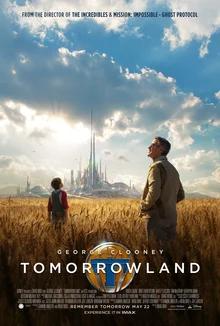
Tomorrowland
Optimistic teenager Casey Newton receives a mysterious pin that, when touched, drops her into a vision of Tomorrowland — a gleaming hidden city of impossible future technology. Tracking down the pin's origin leads her to Frank Walker, a disillusioned former boy-genius who was exiled from that city decades ago, and together they race to understand why humanity's brightest possible future has been sealed away and left to die.
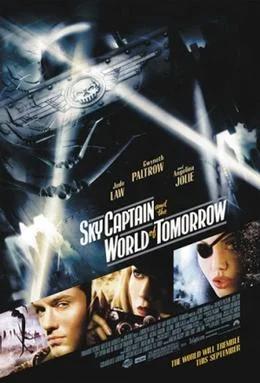
Sky Captain and the World of Tomorrow
1939, an alternate New York besieged by giant robots stomping through Manhattan. Mercenary pilot Joe 'Sky Captain' Sullivan and journalist Polly Perkins — his ex — race to uncover who is behind the attacks, chasing the trail across the globe to a hidden island fortress where a mad scientist's decades-old plan for 'the world of tomorrow' is finally coming to fruition.
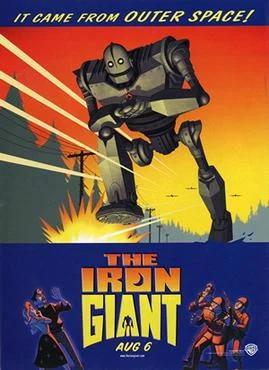
The Iron Giant
Maine, 1957. Young Hogarth Hughes discovers a colossal robot that fell from space, its memory wiped, hiding in the woods behind his house. As Hogarth teaches the Giant about the world — and about choice — a paranoid government agent closes in, convinced the visitor is a Cold War weapon that must be destroyed before it destroys them first.
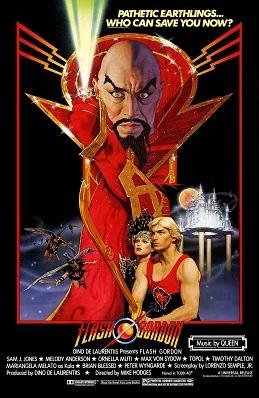
Flash Gordon
Football star Flash Gordon, travel agent Dale Arden and eccentric scientist Dr. Hans Zarkov are pulled through space to the planet Mongo, ruled by the tyrannical Ming the Merciless — who has set Earth in his crosshairs purely for sport. Flash must rally Mongo's warring kingdoms, the hawk-men of Sky City and the forest-dwelling Arboria, into a single rebellion before Ming's whim wipes out his home planet.
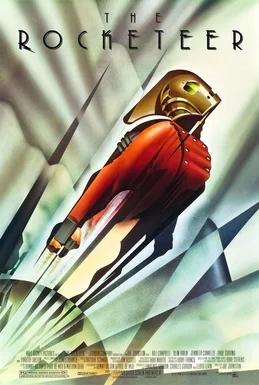
The Rocketeer
1938, Los Angeles. Stunt pilot Cliff Secord stumbles onto a prototype jetpack hidden in his hangar by gangsters — and straps it on. As word of a flying man spreads, Cliff finds himself hunted by Neville Sinclair, a matinee-idol movie star secretly working for Nazi agents desperate to recover the rocket before it reaches Germany, with only his mechanic Peevy and his girlfriend Jenny standing between the jetpack and the Third Reich.
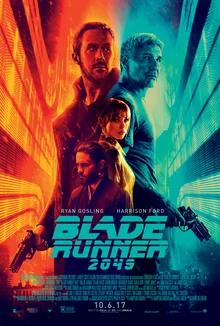
Blade Runner 2049
Thirty years after the original, K is a new-model replicant working as a blade runner for the LAPD, retiring older rogue models without complaint — until a routine job unearths a buried secret: evidence that a replicant once gave birth. The discovery could break the wall between the born and the built, and it sends K hunting for a child hidden decades ago, for a vanished blade runner named Deckard, and for an answer about himself he wants too badly to trust.
Comments
Sign in to join the conversation
No comments yet. Be the first!
Advertisement