A Clockwork Orange (1971)
Warner Bros.· UK· 136 min· English
Directed by Stanley KubrickMusic by Wendy Carlos
Synopsis
In a brutalist near-future Britain, charismatic delinquent Alex DeLarge leads his droogs through nights of 'ultra-violence' — until the state captures him and volunteers him for an experimental treatment that removes his ability to choose evil, and with it, his ability to choose at all.
Advertisement
Review
There is a particular kind of quiet that falls over a room the first time someone watches the opening shot of A Clockwork Orange: a slow pull-back from Malcolm McDowell's face, one eye ringed in false lashes, milk-white light on his cheekbones, while a synthesizer plays a funeral march for a symphony that hasn't died yet. Nothing has happened. Nobody has spoken. And already the film has told you everything about how it intends to operate on you — from very close, very patiently, and without asking your permission.
Stanley Kubrick's adaptation of Anthony Burgess's 1962 novel arrived in 1971 already carrying a reputation it hadn't fully earned yet, and left theaters with one it never entirely shook. It is routinely filed alongside 1984 and Brave New World as a work of dystopian science fiction, and it qualifies on the strictest terms: a near-future authoritarian Britain, a state apparatus willing to rewire a citizen's nervous system rather than reform his character, a population sedated by television and milk-plus and the promise that someone else is handling the violence problem. But Kubrick's future looks almost defiantly unfuturistic. There are no gleaming towers, no flying cars, no gadgetry beyond a hypodermic needle and a film projector. Production designer John Barry and Kubrick himself built this world almost entirely out of things that already existed in early-1970s Britain — housing estates that had just gone up in Thamesmead, furniture showrooms, thrift-shop leather, a milk bar decorated with fiberglass women contorted into tables. That's the film's first and most durable trick: it never lets you file the horror under science fiction and relax. This isn't a warning about the future. It's a portrait of a present with the safety catch removed.
The performance at the center of it is the reason the film still unsettles people who've seen every extreme cinema has to offer since. McDowell's Alex DeLarge narrates the film in Nadsat, Burgess's invented slang — a blend of Cockney rhyming slang, Russian loanwords and pure adolescent bravado — and Kubrick lets him charm us shamelessly for the first forty minutes. He loves Beethoven with genuine, uncomplicated passion. He's funny, quick, self-aware, and delighted with himself in a way that's uncomfortably recognizable. Then he and his droogs beat a homeless man, terrorize a writer, and commit an assault so cruelly choreographed to Gene Kelly's "Singin' in the Rain" that Kubrick permanently altered how audiences hear that song. The film doesn't ask you to condemn Alex from a safe distance. It makes you complicit in finding him entertaining first, and only afterward asks what that says about the appetite of an audience — which is really to say, what it says about the appetite of a society that has elected to be titillated by exactly this kind of story for centuries.
Then, at roughly its halfway point, the film performs a structural sleight of hand that most viewers don't notice until a second watch: it stops being a horror show about a monster and becomes a courtroom argument about free will. Once Alex is captured and volunteers for the experimental Ludovico technique — an aversion-therapy regimen that conditions him to feel violent nausea at the mere thought of violence, or of Beethoven, which happens to score the atrocity footage he's forced to watch — the tone doesn't shift so much as curdle. Kubrick's camera, previously so mobile and voyeuristically alive during the violence, goes cold and clinical during the treatment scenes, all lidlock clamps and dripping saline, shot with the same detachment a surgical documentary might use. The prison chaplain, the one character in the film who articulates a coherent moral position, warns that a man who cannot choose to do evil has also lost the capacity to choose good, and that goodness has to be chosen to mean anything at all. It's a genuinely difficult argument, not a rhetorical one, and Kubrick refuses to resolve it for you. Every other authority figure in the film — the prison governor, the Minister of the Interior, the writer whose wife Alex assaulted, now cast as a resistance figure using Alex's suffering for his own political ends — is revealed to be as morally compromised as Alex ever was, just with better manners and more institutional cover.
Contemporary critics split badly on all of this, and the split has never fully closed. Pauline Kael's review at the time accused Kubrick of pornographic complicity with the violence he claimed to be critiquing, and there's still something to that reading; the film is genuinely, deliberately seductive about Alex's early rampages in a way that makes some viewers' skin crawl for reasons that have nothing to do with the atrocity footage in the Ludovico sessions. That discomfort was potent enough in Britain that Kubrick — after tabloid reports linked the film to a string of copycat crimes and after his family received direct threats — personally asked Warner Bros. to withdraw it from UK distribution entirely. It stayed effectively unavailable in British cinemas until after his death nearly three decades later, a self-imposed ban almost unheard of for a director of his stature, and one that only deepened the film's mystique for the generation that grew up unable to legally see it.
What keeps drawing people back, decade after decade, isn't shock value; shock value ages fast and this film hasn't. It's the precision. Every visual idea in it is doing real argumentative work: the wide-angle lenses that make interiors feel subtly wrong, like a fishbowl you're trapped inside with Alex; the classical music that keeps getting weaponized, first by the state and then, devastatingly, back against Alex himself; the fact that Wendy Carlos's synthesized Beethoven sounds simultaneously grander and colder than any orchestra, ecstasy rendered slightly inhuman. This isn't a film that offers comfort, resolution, or a villain you can safely hate from a distance while feeling good about yourself afterward. It hands you a genuinely unresolved philosophical problem, dressed in the ugliest possible clothes, and refuses to let you look away from your own reaction to it. That is an uncomfortable kind of achievement, and it is exactly the one Kubrick was after.
Trivia & Color Notes
The scratched cornea
Malcolm McDowell's corneas were repeatedly scratched by the lid-lock apparatus in the Ludovico scenes; the doctor dripping saline beside him was a real physician on standby. McDowell also cracked ribs during the stage-humiliation scene.
Singin' in the Rain
The use of 'Singin' in the Rain' during the home-invasion scene was improvised — Kubrick asked McDowell to dance, and it was the only song he could remember all the words to. Kubrick bought the rights days later.
The droog uniform
The white boiler suit, bowler hat, bovver boots and single false eyelash came largely from McDowell's own cricket whites — Kubrick saw the costume potential when McDowell arrived with the gear and moved the codpiece outside the trousers.
Banned by its own director
After press reports of copycat crimes and threats to his family, Kubrick himself asked Warner Bros. to withdraw the film from UK distribution. It stayed effectively banned in Britain until after his death in 1999.
A real concrete future
Nearly everything was shot on location: the Ludovico centre is Brunel University's lecture centre, and the droogs stroll the Thamesmead South housing estate — real brutalist Britain, no sets required.
The Ludovico technique — aversion therapy pairing nausea-inducing drugs with violent imagery — is an exaggeration of real behaviorist conditioning research of the 1950s–60s. Classical conditioning can create aversions, but nothing as total or as permanent as the film depicts, and 'curing' criminality this way has never been demonstrated. The film's real scientific insight is psychological: the debate about behavioral control it dramatizes was a live controversy when B.F. Skinner's Beyond Freedom and Dignity was published the very same year.
🎵 Soundtrack
Music by Wendy Carlos
Wendy Carlos's Moog-synthesized Beethoven and Purcell was revolutionary — classical grandeur rendered inhuman and ironic. The Ninth Symphony becomes both Alex's ecstasy and his torture, one of cinema's cruelest musical jokes.
🔗 This film connects to…
Cast & Crew
Advertisement
You Might Also Like
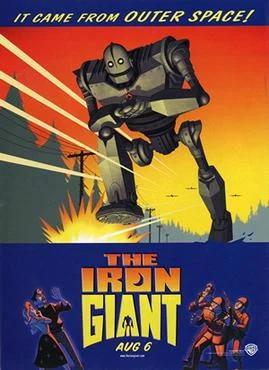
The Iron Giant
Maine, 1957. Young Hogarth Hughes discovers a colossal robot that fell from space, its memory wiped, hiding in the woods behind his house. As Hogarth teaches the Giant about the world — and about choice — a paranoid government agent closes in, convinced the visitor is a Cold War weapon that must be destroyed before it destroys them first.
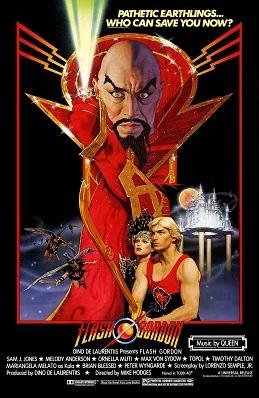
Flash Gordon
Football star Flash Gordon, travel agent Dale Arden and eccentric scientist Dr. Hans Zarkov are pulled through space to the planet Mongo, ruled by the tyrannical Ming the Merciless — who has set Earth in his crosshairs purely for sport. Flash must rally Mongo's warring kingdoms, the hawk-men of Sky City and the forest-dwelling Arboria, into a single rebellion before Ming's whim wipes out his home planet.
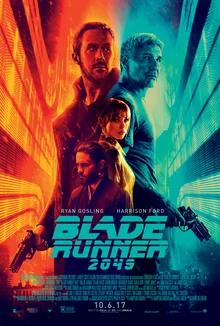
Blade Runner 2049
Thirty years after the original, K is a new-model replicant working as a blade runner for the LAPD, retiring older rogue models without complaint — until a routine job unearths a buried secret: evidence that a replicant once gave birth. The discovery could break the wall between the born and the built, and it sends K hunting for a child hidden decades ago, for a vanished blade runner named Deckard, and for an answer about himself he wants too badly to trust.
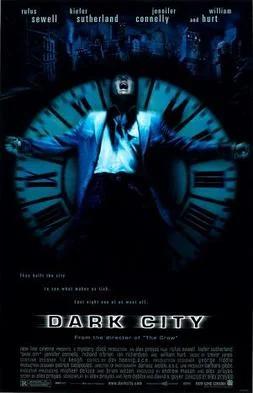
Dark City
John Murdoch wakes in a hotel bathtub with no memory, a dead woman in the next room, and detectives closing in for murders he can't remember committing. As he runs through a city where it is always midnight, he begins noticing what no one else does: at 12:00 exactly, the entire population falls asleep, the buildings physically rearrange themselves — and pale men in long coats move among the sleepers, injecting new memories into new lives.
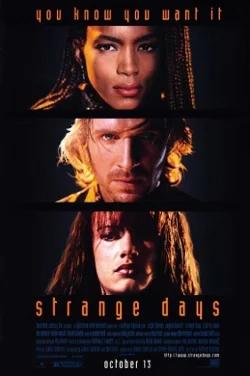
Strange Days
Los Angeles, the last two days of 1999. Lenny Nero, ex-cop turned black-market dealer, sells SQUID recordings — full sensory captures of other people's experiences, straight from their cerebral cortex to yours. Addicted to replaying tapes of his own lost relationship, Lenny is dragged out of his loop when a snuff recording lands in his hands: evidence of a murder that connects to his ex, a music-industry conspiracy, and a police killing that could set the burning city off entirely.
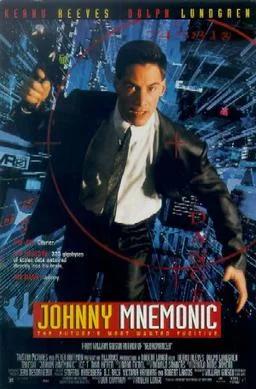
Johnny Mnemonic
2021: half the world suffers from a technology-induced plague, and the most valuable data travels not on networks — too easily hacked — but inside the heads of mnemonic couriers. Johnny is one of them, and his latest job stuffs his implanted memory far beyond safe capacity with data the Yakuza and a pharmaceutical giant will kill for. He has roughly a day to make delivery before the payload literally destroys his brain — the same brain he emptied of his own childhood to make room for cargo.
Comments
Sign in to join the conversation
No comments yet. Be the first!
Advertisement