RoboCop (1987)
Orion Pictures· USA· 102 min· English
Directed by Paul VerhoevenMusic by Basil Poledouris
Synopsis
In a near-future Detroit run by mega-corporation OCP, officer Alex Murphy is executed by a gang on his first day in the worst precinct — then resurrected as RoboCop, a corporate-owned cyborg law-enforcement product. But fragments of Murphy remain, and they remember everything.
Advertisement
Review
There's a genuinely funny production story buried underneath RoboCop's reputation as a stone-cold classic: Paul Verhoeven, a respected Dutch art-house director with a string of acclaimed and controversial dramas already behind him, reportedly received the script, read a few pages, and threw it directly in the trash, convinced it was exactly the mindless action fodder it appeared to be on the surface. His wife, by his own later account, fished the pages back out and told him to look again more carefully at what the satire underneath the shootouts was actually doing. That second reading produced one of the most vicious, coherent critiques of Reagan-era corporate capitalism a major American studio has ever financed, disguised so completely as a toyetic action movie that it spawned a genuine children's cartoon spin-off within a few years of release. Verhoeven's trick, and it's a difficult one to execute without the whole thing collapsing into either empty spectacle or toothless parody, is playing the ultraviolence and the media satire at exactly the same hysterical pitch, so that a fake commercial for a nuclear-powered family sedan getting eight miles to the gallon sits comfortably next to a boardroom execution scene without either one puncturing the other's credibility.
What almost nobody expects walking in for the action is how genuinely sad the film turns out to be underneath all of it. Peter Weller plays Alex Murphy's resurrection as something closer to a haunting than a triumph: a corporate product that still dreams, a corpse in armor walking through the rooms of a life that has already moved on without him. The film's quietest and most devastating scene has almost nothing to do with action at all — Murphy, alone, visits his old house, now occupied by strangers, and simply stands in the empty rooms replaying fragmented memories of a family he can no longer reach in any meaningful sense. Later, when he finally removes his helmet and asks to see what's left of his own face, the film produces one of science fiction's most complete answers to the Frankenstein myth: the monster and its maker occupying a single body, corporate property that still, somehow, retains a soul underneath the plating. When his former partner recognizes what's left of him and says simply, "Murphy, it's you," the line carries more genuine weight than any of the film's considerable gunfire.
Rob Bottin's suit design deserves particular credit for making that emotional register possible at all, given how physically punishing it reportedly was to wear. Early versions of the costume took Weller upwards of ten hours to get into, and he's said in interviews that he lost several pounds of water weight through sweat during a typical day's shooting inside it. Unable to rely on facial expression for much of the film, Weller worked with a mime coach to develop a precise, deliberate, servo-like quality of movement that communicates character entirely through posture and gesture — the way RoboCop turns his entire torso rather than just his head, the specific mechanical hitch in how he holsters his weapon. It's a masterclass in physical performance under severe constraint, and it's a large part of why the character reads as a person trapped inside hardware rather than simply as a stuntman in a costume.
The satire surrounding all of this got the film into serious trouble with American censors before release: the MPAA reportedly rejected the film's violence eleven separate times before finally granting an R rating, and Verhoeven has said the extremity was entirely intentional — the boardroom execution scene and Murphy's own death sequence were both conceived as corporate splatter, gore pitched so far past realism that it curdles into pointed comedy about how casually institutions treat expendable employees. The fake advertisements scattered throughout the film, along with the chirpy game show "It's Not My Problem," function as a kind of Trojan horse; Verhoeven has said his core thesis was that American audiences would watch, and buy, almost anything if it was packaged with enough confidence, and the 6000 SUX car commercial ("8.2 miles to the gallon!") reads today less like parody and more like an accurate prediction of how thoroughly irony-proof marketing eventually became.
ED-209, the film's other major mechanical presence, was designed deliberately to look like a consumer product rather than a piece of military hardware — reportedly described during development as something like a cross between a fighter jet and a Detroit muscle car — and its chirpy, corporate-friendly warning voice giving suspects twenty seconds to comply before opening fire plays like a talking elevator that happens to also be a lethal weapons platform. The boardroom demonstration scene where it malfunctions and guns down an employee in front of horrified executives, who then calmly discuss the incident as a minor product setback, remains one of the more precise metaphors science fiction has produced for the modern practice of shipping under-tested autonomous systems and treating the resulting casualties as an acceptable cost of doing business.
Basil Poledouris's score threads a similarly divided needle, giving Murphy's human remnant a full orchestral, almost tragic heroic theme while surrounding the machinery around him with cold synthesizer textures, letting the two registers audibly compete for the same character the way the plot itself does. Detroit, largely shot on location in Dallas for its mirrored-glass downtown corridors, has since embraced the film as a piece of local mythology rather than an insult, eventually erecting a crowdfunded RoboCop statue of its own. Nearly four decades on, with privatized policing, corporate media consolidation and casual institutional indifference to collateral damage all considerably closer to daily reality than they were in 1987, the film's satire hasn't dulled with age so much as it's caught up to the headlines. Dead or alive, it's still coming with you.
It's worth stressing, too, how much of the film's staying power comes from refusing to let either half of its identity win outright. A version of this story that leaned fully into straight-faced tragedy would lose the gleeful, gonzo comic-book energy that makes the violence bearable to sit through; a version that played entirely for laughs would forfeit the genuine ache underneath Murphy's resurrection. Verhoeven, working from a script he'd initially dismissed, found the exact ratio that lets both registers coexist without one undercutting the other, and that balancing act remains far harder to pull off than the film's pulpy reputation usually gives it credit for. Plenty of films have tried to replicate it in the years since. Very few have located the same precise mixture of sincerity and mockery that makes this one work as well as it still does.
Trivia & Color Notes
The suit nearly broke its actor
Rob Bottin's RoboCop suit initially took over 10 hours to get into (later about an hour) and caused Weller to lose pounds of water weight daily. A mime coach helped him invent the character's precise, servo-like movement.
Rated X — eleven times
The MPAA rejected the film's violence eleven times before granting an R. The over-the-top gore was the point: Verhoeven shot the boardroom scene and Murphy's death as corporate splatter satire.
ED-209's designer voice
ED-209 was designed to look like a product — 'a cross between a fighter jet and a Detroit muscle car.' Its chirpy warning voice ('You have 20 seconds to comply') was deliberately corporate-friendly, like a talking elevator that kills you.
Detroit, played by Dallas
Old Detroit was mostly shot in Dallas, Texas — its mirrored-glass downtown reading as 'the future' in 1987. Detroit itself later erected a real crowdfunded RoboCop statue.
'I'd buy that for a dollar!'
The film's fake ads and catchphrase-spouting TV shows were Verhoeven's Trojan horse: America, he said, was a country that would watch anything. The 6000 SUX ad ('8.2 MPG!') predicted irony-proof marketing decades early.
Full-body cyborg conversion with retained memory is far beyond real neuroscience — but the film's questions are the serious ones bioethicists actually ask about identity, memory and personhood in brain-machine interfaces. Its directives-based behavior control (including a hidden corporate override) is a sharp, early depiction of what AI researchers now call alignment and objective-hacking. ED-209's boardroom malfunction, meanwhile, remains the definitive parable of shipping an under-tested autonomous weapon.
🎵 Soundtrack
Music by Basil Poledouris
Basil Poledouris scores the man with orchestra and the machine with synthesizers, letting the two fight for the theme just as they fight for Murphy. The main march is one of the great heroic themes of the decade — with a metallic heart.
🔗 This film connects to…
Cast & Crew
Advertisement
You Might Also Like
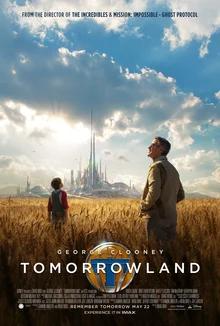
Tomorrowland
Optimistic teenager Casey Newton receives a mysterious pin that, when touched, drops her into a vision of Tomorrowland — a gleaming hidden city of impossible future technology. Tracking down the pin's origin leads her to Frank Walker, a disillusioned former boy-genius who was exiled from that city decades ago, and together they race to understand why humanity's brightest possible future has been sealed away and left to die.
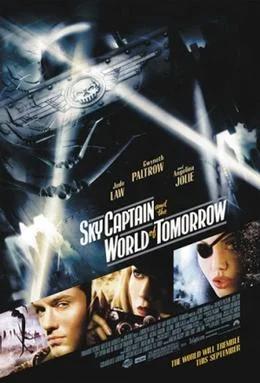
Sky Captain and the World of Tomorrow
1939, an alternate New York besieged by giant robots stomping through Manhattan. Mercenary pilot Joe 'Sky Captain' Sullivan and journalist Polly Perkins — his ex — race to uncover who is behind the attacks, chasing the trail across the globe to a hidden island fortress where a mad scientist's decades-old plan for 'the world of tomorrow' is finally coming to fruition.
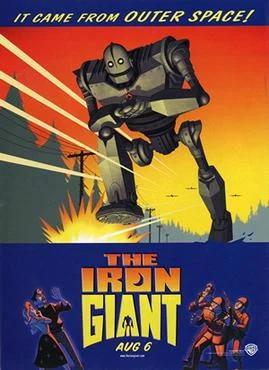
The Iron Giant
Maine, 1957. Young Hogarth Hughes discovers a colossal robot that fell from space, its memory wiped, hiding in the woods behind his house. As Hogarth teaches the Giant about the world — and about choice — a paranoid government agent closes in, convinced the visitor is a Cold War weapon that must be destroyed before it destroys them first.
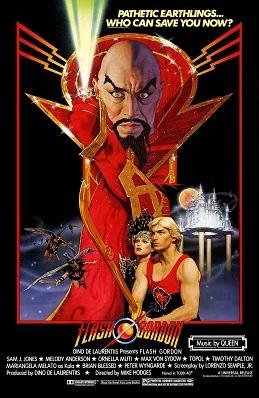
Flash Gordon
Football star Flash Gordon, travel agent Dale Arden and eccentric scientist Dr. Hans Zarkov are pulled through space to the planet Mongo, ruled by the tyrannical Ming the Merciless — who has set Earth in his crosshairs purely for sport. Flash must rally Mongo's warring kingdoms, the hawk-men of Sky City and the forest-dwelling Arboria, into a single rebellion before Ming's whim wipes out his home planet.
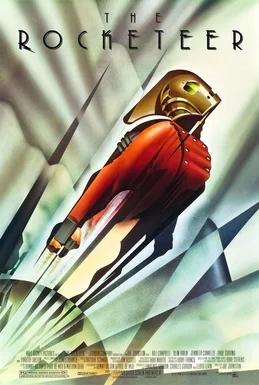
The Rocketeer
1938, Los Angeles. Stunt pilot Cliff Secord stumbles onto a prototype jetpack hidden in his hangar by gangsters — and straps it on. As word of a flying man spreads, Cliff finds himself hunted by Neville Sinclair, a matinee-idol movie star secretly working for Nazi agents desperate to recover the rocket before it reaches Germany, with only his mechanic Peevy and his girlfriend Jenny standing between the jetpack and the Third Reich.
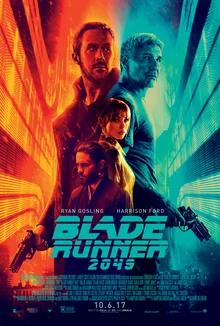
Blade Runner 2049
Thirty years after the original, K is a new-model replicant working as a blade runner for the LAPD, retiring older rogue models without complaint — until a routine job unearths a buried secret: evidence that a replicant once gave birth. The discovery could break the wall between the born and the built, and it sends K hunting for a child hidden decades ago, for a vanished blade runner named Deckard, and for an answer about himself he wants too badly to trust.
Comments
Sign in to join the conversation
No comments yet. Be the first!
Advertisement