Mad Max 2: The Road Warrior (1981)
Mad Max 2
Warner Bros.· Australia· 96 min· English
Directed by George Miller
Synopsis
In the fuel-starved wasteland after civilization's collapse, burnt-out ex-cop Max Rockatansky stumbles into a war between a besieged refinery community and a marauder army — and reluctantly becomes the driver of their one chance at escape.
Advertisement
Review
Somewhere around minute fifteen of Mad Max 2 — released in the U.S. simply as The Road Warrior, for reasons that say a great deal about how badly Hollywood misjudged its predecessor — it becomes clear that George Miller has made something closer to a silent film than a conventional action picture, and that this is entirely deliberate. Mel Gibson's Max speaks something like sixteen lines across the entire runtime. Whole stretches of the plot are conveyed purely through blocking, montage and the specific way a truck's shadow falls across sand. The story itself, when you strip away the vehicles, is a classical western in almost every particular: homesteaders under siege, a marauder army circling, a reluctant gunslinger who wants no part of anyone's cause until he's given a reason to care. Miller has said he wasn't consciously building a western when he made it, but the bones are unmistakable, right down to the framing device — the entire film is narrated from a distant, unspecified future by a now-elderly former child who was there, turning Max's story into something closer to oral legend than eyewitness account before the opening scene has even finished.
The film's reputation rests, deservedly, on its stunt work, and it's worth being specific about what that actually means rather than just gesturing at "great action." Miller trained and practiced as an emergency-room doctor before moving into filmmaking, and colleagues and biographers have noted that his firsthand, clinical familiarity with what a human body actually does when it collides with metal at speed shows up directly in how he stages vehicular carnage: it's chaotic and physically plausible at once, rarely cartoonish, always legible in terms of who's where and what's about to happen to them. The production shot on and around a genuine closed stretch of highway outside Broken Hill, in the New South Wales outback, using largely practical stunts performed by a crew willing to take real risks with real cars on real asphalt — one stunt performer, thrown over the cab of a moving tanker truck during the climactic chase, genuinely broke his leg on impact, and the footage of the crash stayed in the finished film because it was, simply, the best take they had. That specific commitment to tangible, photographed-for-real danger is part of why the film's centerpiece sequence still reads as viscerally convincing in a way that CGI-heavy modern equivalents, for all their polish, often don't.
That centerpiece is the roughly twenty-minute tanker chase that closes out the film, an escalating siege of vehicular combat that has been studied, storyboarded and directly imitated by action filmmakers for over four decades since. Every subsequent "convoy under attack" sequence in the genre, across science fiction, war films and straightforward action pictures alike, is in some way quoting this one, whether its makers are conscious of the debt or not. What makes the sequence work isn't just the scale of the stunts but the clarity of the editing: even at its most chaotic, with a dozen vehicles converging and crew members leaping between moving trucks, you always know exactly where Max is, where the tanker is, and what the stakes of the next five seconds are. That's an editing discipline that's harder to achieve than it looks, and it's the reason the sequence remains legible and thrilling on a rewatch rather than dissolving into noise the way many less carefully constructed action climaxes do.
What elevates the film past pure vehicular spectacle, though, is the specific quality of myth-making Miller layers over the top of it. Max himself functions less as a traditional protagonist than as a ghost who has to be gradually, reluctantly talked back into the world of the living — he wants nothing to do with the refinery community's cause, agrees to help only under duress and for personal gain, and only comes to care about their survival once the film has spent real time establishing exactly what and whom he's lost. Gibson, still a relative unknown outside Australia at this point in his career, plays that arc almost entirely through posture and eyes rather than dialogue, which suits the film's larger commitment to visual storytelling over exposition. Around him, costume designer Norma Moriceau invented the entire visual vocabulary of "post-apocalyptic fashion" more or less from scratch, building the marauders' look out of bondage gear, football shoulder pads, feathers and salvaged leather — a design language so complete and so thoroughly absorbed into popular culture in the decades since that it's now almost impossible to picture "the wasteland" any other way. Music, games, other films, entire subcultures have borrowed directly from what Moriceau assembled here on what was, relative to a major studio production, a genuinely modest budget.
It's worth remembering, too, just how precarious this film's very existence was. The original Mad Max had performed poorly in its American theatrical release, partly because U.S. distributors, apparently doubting mainstream audiences could parse the actors' Australian accents, dubbed the entire film over with American voices — a decision that stripped the performances of much of their texture and contributed to a muted reception. Warner Bros., bringing the sequel to America, retitled it The Road Warrior specifically to distance it from that underperforming predecessor, marketing it in some territories with barely any acknowledgment that it was a sequel at all. That the film not only overcame this handicap but went on to become one of the most influential action films ever made, cited by directors across multiple genres and generations as a formative influence, says something about how completely it succeeded on pure craft, independent of franchise goodwill it was actively denied.
Watching it now, what's most striking isn't the scale of the mayhem, though that remains genuinely impressive, but the discipline behind it: a filmmaker who understood that spectacle without geography is just noise, that a hero doesn't need dialogue if his face and his choices are doing the talking, and that a wasteland becomes genuinely mythic only when the camera treats it with the same gravity a western gives its frontier. Lean, savage, oddly melancholy underneath all the chrome and fire, it remains the rare action sequel that improved on its predecessor in every conceivable respect and then went on to define an entire aesthetic language for the genre that followed it.
Trivia & Color Notes
The last of the V8 Interceptors
Max's Pursuit Special is a 1973 Ford Falcon XB GT coupe — an Australian-market muscle car never sold in the US, which is why it looked so alien to American audiences. Replicas now tour car shows worldwide.
A real 80-kph crash
The stuntman thrown over the truck cab during the tanker battle genuinely broke his leg — the shot stayed in the film. Stunt crews worked with minimal padding on an outback highway closed for months.
Wasteland couture from a rugby shop
Costume designer Norma Moriceau built the marauders' look from fetish gear, football pads and feathers — inventing the visual dictionary every post-apocalyptic film, game and music video has borrowed since.
Broken Hill wasteland
Shot around the mining town of Broken Hill, New South Wales — the same ochre desert Miller returned to scout for Fury Road decades later before rains turned it green and forced a move to Namibia.
Renamed for America
Because the original Mad Max had flopped in US release (badly dubbed over the Australian accents), the sequel was retitled 'The Road Warrior' in North America and marketed with no mention it was a sequel at all.
The film's premise — global collapse triggered by oil shocks and resource war — was extrapolated directly from the 1970s energy crises, and its economics are grimly plausible: in a fuel-scarce world, gasoline really would be worth killing for. Details wobble (refined petrol degrades within months, so a years-later wasteland would be fighting over refineries and crude, which the film half-acknowledges), but as social science fiction its logic holds disturbingly well.
🎵 Soundtrack
Australian composer Brian May (no relation to the Queen guitarist) delivers a slashing, Herrmann-esque orchestral score — all stabbing brass and hurtling strings, the sound of civilization's last engine redlining.
🔗 This film connects to…
Cast & Crew
Advertisement
You Might Also Like
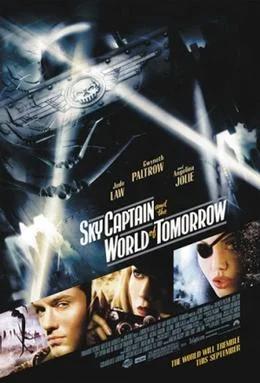
Sky Captain and the World of Tomorrow
1939, an alternate New York besieged by giant robots stomping through Manhattan. Mercenary pilot Joe 'Sky Captain' Sullivan and journalist Polly Perkins — his ex — race to uncover who is behind the attacks, chasing the trail across the globe to a hidden island fortress where a mad scientist's decades-old plan for 'the world of tomorrow' is finally coming to fruition.
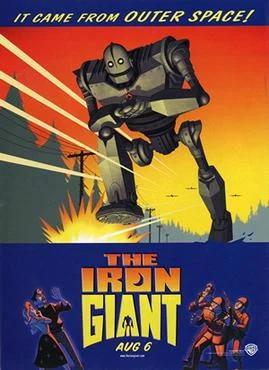
The Iron Giant
Maine, 1957. Young Hogarth Hughes discovers a colossal robot that fell from space, its memory wiped, hiding in the woods behind his house. As Hogarth teaches the Giant about the world — and about choice — a paranoid government agent closes in, convinced the visitor is a Cold War weapon that must be destroyed before it destroys them first.
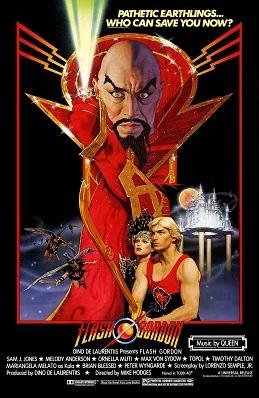
Flash Gordon
Football star Flash Gordon, travel agent Dale Arden and eccentric scientist Dr. Hans Zarkov are pulled through space to the planet Mongo, ruled by the tyrannical Ming the Merciless — who has set Earth in his crosshairs purely for sport. Flash must rally Mongo's warring kingdoms, the hawk-men of Sky City and the forest-dwelling Arboria, into a single rebellion before Ming's whim wipes out his home planet.
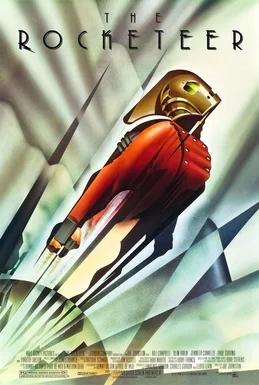
The Rocketeer
1938, Los Angeles. Stunt pilot Cliff Secord stumbles onto a prototype jetpack hidden in his hangar by gangsters — and straps it on. As word of a flying man spreads, Cliff finds himself hunted by Neville Sinclair, a matinee-idol movie star secretly working for Nazi agents desperate to recover the rocket before it reaches Germany, with only his mechanic Peevy and his girlfriend Jenny standing between the jetpack and the Third Reich.
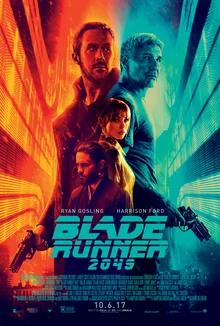
Blade Runner 2049
Thirty years after the original, K is a new-model replicant working as a blade runner for the LAPD, retiring older rogue models without complaint — until a routine job unearths a buried secret: evidence that a replicant once gave birth. The discovery could break the wall between the born and the built, and it sends K hunting for a child hidden decades ago, for a vanished blade runner named Deckard, and for an answer about himself he wants too badly to trust.
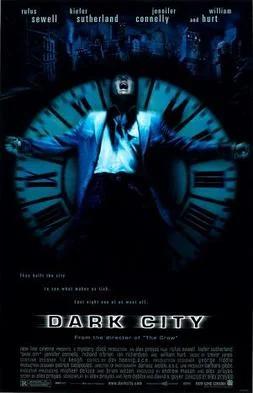
Dark City
John Murdoch wakes in a hotel bathtub with no memory, a dead woman in the next room, and detectives closing in for murders he can't remember committing. As he runs through a city where it is always midnight, he begins noticing what no one else does: at 12:00 exactly, the entire population falls asleep, the buildings physically rearrange themselves — and pale men in long coats move among the sleepers, injecting new memories into new lives.
Comments
Sign in to join the conversation
No comments yet. Be the first!
Advertisement