Terminator: Dark Fate (2019)
Paramount Pictures· USA· 128 min· English
Directed by Tim MillerMusic by Junkie XL
Synopsis
Decades after stopping Judgment Day, Sarah Connor is still hunting Terminators alone — and still grieving the future she thought she'd saved. When a new machine, the shape-splitting Rev-9, is sent back to kill a young factory worker in Mexico City, Sarah crosses paths with Grace, an augmented super-soldier from a future that was never supposed to exist, and with an old, unexpected face who has spent years quietly living with what he did.
Advertisement
Review
Produced by James Cameron and directed by Tim Miller, fresh off reinventing Deadpool for a new generation, Terminator: Dark Fate makes a decisive editorial choice that earlier sequels had only ever gestured toward without fully committing to. It discards every installment released between 1991 and the present as non-canon and picks the story back up directly in the aftermath of Judgment Day, decades later, with Sarah Connor exactly as bitter, unfinished and quietly ruined as that earlier film's ending always implied she'd eventually become. Linda Hamilton, who had reportedly turned down every previous Terminator sequel for close to three decades, agreed to return specifically because Cameron himself was producing and personally promised her a genuine character arc rather than a nostalgic cameo appearance, and that promise shows up directly in the finished film. Hamilton isn't a legacy fixture wheeled out for fan service here. She's the film's actual emotional and narrative spine: a woman who saved the world once and lost nearly everything else in the process of doing it, still hunting Terminators alone decades later because she genuinely doesn't know how to be anything else anymore.
Mackenzie Davis's Grace supplies the film's best new conceptual creation, and a genuinely clever variation on a role the franchise has now revisited several times. Rather than another synthetic protector, Grace is a fully human soldier from a devastated future war, augmented with enhanced strength and reflexes that run on a battery she has to physically stop and recharge mid-combat — a detail that introduces real, tangible physical stakes into her action sequences in a way earlier "unstoppable protector" characters, whether Michael Biehn's Kyle Reese or Schwarzenegger's various Terminator models, never quite had to contend with. Davis trained extensively and performed the vast majority of her own demanding physical stunt work to sell that vulnerability convincingly. Opposite her, Gabriel Luna's Rev-9 pushes the franchise's core visual concept further than it's gone since the T-1000, capable of fully separating its flexible liquid-metal exterior from its rigid metal endoskeleton so both halves can move, fight and pursue targets independently before recombining — arguably the single nastiest hardware escalation the saga has produced across its entire history.
What the film is ultimately building toward, though, is the moment Hamilton and Schwarzenegger finally share the screen again for the first time since 1991, and the screenplay uses that reunion for something considerably more interesting than simple fan-service nostalgia. Schwarzenegger's character, now living quietly under the name Carl, has spent years since his last mission grappling directly with the moral weight of what "protecting" someone by killing on their behalf actually costs the person doing the killing, and the film's startlingly blunt final act lets both Sarah and this particular machine reckon honestly with guilt, grief and complicity in a way the earlier films, focused more on pure survival, rarely had the space to explore in this much depth.
Junkie XL, fresh off his acclaimed work on Mad Max: Fury Road, delivers a pounding, industrial score built around a reharmonized version of Brad Fiedel's original theme, engineered for maximum menace and closer in spirit to 1984's cold, minimal synths than any installment released between Judgment Day and this one had dared to return to. That musical choice mirrors the film's larger strategy: a deliberate rejection of the increasingly maximalist, increasingly convoluted direction the franchise had drifted toward, in favor of something leaner, meaner, and considerably more R-rated in its violence than the intervening sequels had generally allowed themselves to be.
Dark Fate didn't earn the box office performance it needed to launch the new trilogy Cameron and Miller had reportedly envisioned building around this specific continuation, and its own timeline-cleansing gambit — erasing three prior sequels to get back to a version of the story worth telling — turned out to be as commercially risky as it was narratively bold. But taken purely on its own terms, as a direct, R-rated continuation of the two films that actually made this franchise matter in the first place, it stands as the most purely satisfying Terminator sequel produced since Cameron himself stepped away from the series, and one of the only follow-ups in the saga's history to treat its returning characters' pain as seriously as it treats its action.
Natalia Reyes, playing the ordinary factory worker whose life is upended when the Rev-9 arrives to kill her, gives the franchise its first Latin American lead — a deliberate broadening of the story's central perspective that the production and press coverage were explicit about at the time, and one that recasts the original 1984 template of an unremarkable young woman discovering she matters to history in a genuinely new cultural context rather than simply repeating it. Between her, Davis's Grace and Hamilton's Sarah, the film assembles a female-led core that carries the entire back half of the story on its own terms, with the male leads — Schwarzenegger included — largely orbiting around decisions the women make rather than the reverse. That's a meaningful structural inversion for a franchise that, however progressive Sarah Connor's own arc always was, had rarely built an entire ensemble around it this deliberately.
Whatever the franchise does next, Dark Fate is likely to be remembered as the version of this story that finally let its two original leads grow old on screen together, unglamorously, with the exhaustion and moral compromise that decades of this particular war would actually leave behind. That's a rarer and more valuable achievement than another trilogy launch would have been, even one the box office never allowed to happen.
Trivia & Color Notes
Every other sequel, erased
Dark Fate is a direct sequel to Terminator 2 only — Cameron and the writers deliberately wrote Rise of the Machines, Salvation and Genisys out of continuity, picking the story back up as if none of them had happened.
Hamilton's return, on her terms
Linda Hamilton had turned down every Terminator sequel for nearly three decades. She agreed to Dark Fate specifically because Cameron was producing and promised Sarah Connor a genuine arc rather than a nostalgia cameo.
A soldier, not a robot
Mackenzie Davis's Grace is the franchise's first major protector character who is fully human rather than machine — an augmented super-soldier whose enhanced strength depletes over the course of a fight, forcing genuine physical stakes into her action scenes.
A Terminator that splits in two
The Rev-9 can separate its flexible liquid-metal exterior from its rigid metal endoskeleton, allowing both halves to move, fight and pursue targets independently before recombining — the franchise's most dangerous single design since the T-1000.
Grace's design — a human, not a robot, augmented with subdermal armor plating, boosted strength and battery-dependent stamina that has to be manually recharged — is a genuinely fresh and more scientifically groundable idea than earlier fully-synthetic protector models, tracking with real (if far more modest) military exoskeleton and human-augmentation research. The Rev-9's ability to fully separate its liquid-metal shell from its rigid metal endoskeleton and operate both halves as independent, coordinated threats remains firmly in science-fantasy territory, extending the T-1000's already-impossible material science rather than explaining it.
🎵 Soundtrack
Music by Junkie XL
Junkie XL (Tom Holkenborg), fresh off Mad Max: Fury Road, delivers a pounding, industrial score built around Brad Fiedel's original theme reharmonized for maximum menace — closer in spirit to 1984's cold synths than any sequel had dared return to since.
🔗 This film connects to…
- Terminator Genisys (2015)— Same franchise: Terminator
- The Terminator (1984)— Direct sequel: Dark Fate ignores every other sequel and continues straight from here
- Terminator 2: Judgment Day (1991)— Shared actors: Linda Hamilton & Arnold Schwarzenegger reunite decades later
- Terminator Genisys (2015)— Shared actor: Arnold Schwarzenegger
Cast & Crew
Director
Producer
Composer
Cast
- Linda Hamilton as Sarah Connor
- Arnold Schwarzenegger as Carl
- Mackenzie Davis as Grace
- Natalia Reyes as Dani Ramos
- Gabriel Luna as Rev-9
Advertisement
You Might Also Like
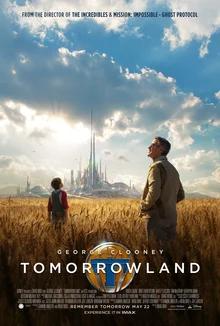
Tomorrowland
Optimistic teenager Casey Newton receives a mysterious pin that, when touched, drops her into a vision of Tomorrowland — a gleaming hidden city of impossible future technology. Tracking down the pin's origin leads her to Frank Walker, a disillusioned former boy-genius who was exiled from that city decades ago, and together they race to understand why humanity's brightest possible future has been sealed away and left to die.
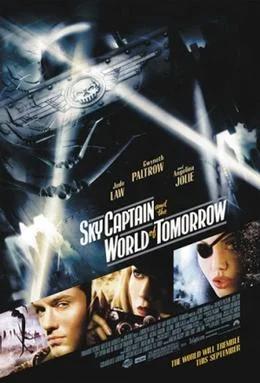
Sky Captain and the World of Tomorrow
1939, an alternate New York besieged by giant robots stomping through Manhattan. Mercenary pilot Joe 'Sky Captain' Sullivan and journalist Polly Perkins — his ex — race to uncover who is behind the attacks, chasing the trail across the globe to a hidden island fortress where a mad scientist's decades-old plan for 'the world of tomorrow' is finally coming to fruition.
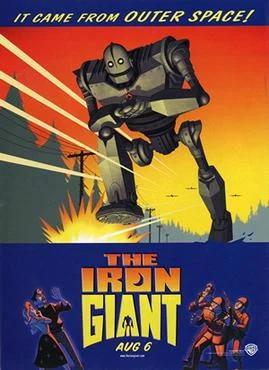
The Iron Giant
Maine, 1957. Young Hogarth Hughes discovers a colossal robot that fell from space, its memory wiped, hiding in the woods behind his house. As Hogarth teaches the Giant about the world — and about choice — a paranoid government agent closes in, convinced the visitor is a Cold War weapon that must be destroyed before it destroys them first.
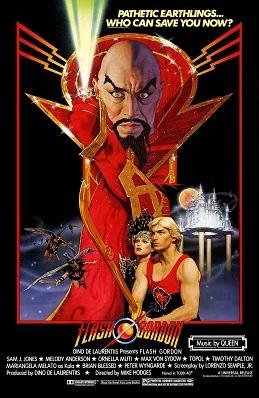
Flash Gordon
Football star Flash Gordon, travel agent Dale Arden and eccentric scientist Dr. Hans Zarkov are pulled through space to the planet Mongo, ruled by the tyrannical Ming the Merciless — who has set Earth in his crosshairs purely for sport. Flash must rally Mongo's warring kingdoms, the hawk-men of Sky City and the forest-dwelling Arboria, into a single rebellion before Ming's whim wipes out his home planet.
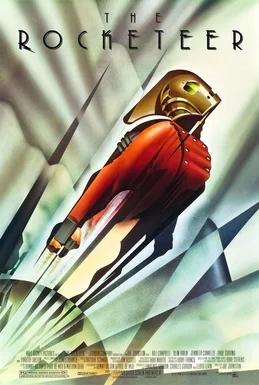
The Rocketeer
1938, Los Angeles. Stunt pilot Cliff Secord stumbles onto a prototype jetpack hidden in his hangar by gangsters — and straps it on. As word of a flying man spreads, Cliff finds himself hunted by Neville Sinclair, a matinee-idol movie star secretly working for Nazi agents desperate to recover the rocket before it reaches Germany, with only his mechanic Peevy and his girlfriend Jenny standing between the jetpack and the Third Reich.
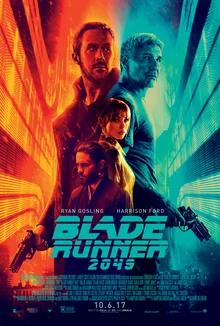
Blade Runner 2049
Thirty years after the original, K is a new-model replicant working as a blade runner for the LAPD, retiring older rogue models without complaint — until a routine job unearths a buried secret: evidence that a replicant once gave birth. The discovery could break the wall between the born and the built, and it sends K hunting for a child hidden decades ago, for a vanished blade runner named Deckard, and for an answer about himself he wants too badly to trust.
Comments
Sign in to join the conversation
No comments yet. Be the first!
Advertisement