Terminator Salvation (2009)
Warner Bros.· USA· 115 min· English
Directed by McGMusic by Danny Elfman
Synopsis
2018. Judgment Day has happened, and John Connor is a field commander in humanity's war against Skynet's machines — not yet the prophesied leader of legend. When Marcus Wright, a death-row inmate who doesn't understand what he's become, walks out of the wasteland searching for a future he doesn't remember signing away, Connor's hunt for a teenage Kyle Reese collides with the truth about what Skynet is really building.
Advertisement
Review
For the first and, so far, only time across the entire franchise, Terminator Salvation steps fully into the future war that every earlier film had only ever shown in fragmentary flash-forward nightmares, and the movie is at its most confident precisely when it commits fully to realizing that world in physical, tactile detail. Its 2018 is scorched, sand-blasted and dust-choked, patrolled by Hunter-Killer aircraft and towering Harvester machines that capture living humans rather than simply exterminating them, with a resistance running on scavenged diesel, salvaged weapons and pure stubbornness rather than anything resembling a functioning supply chain. Director McG, primarily known before this for glossy studio comedies and music videos, shoots the wasteland with a war-photography grit that draws more visibly from Black Hawk Down's handheld urban-combat aesthetic than from the earlier films' tighter, more tech-noir chase sequences, and that stylistic pivot mostly serves the material well. Much of the production was reportedly shot on location in dust-choked New Mexico, favoring real desert and practical sets over green-screen substitution specifically to keep the future war grounded and physically tangible rather than digitally weightless.
The film's genuine gamble, and the choice that mostly justifies its existence, is Marcus Wright. Sam Worthington plays him with real, escalating anguish as a man who gradually and horribly comes to understand that his own body is a Skynet prototype — a hybrid built around a genuine human brain and cardiovascular system, engineered specifically to infiltrate the human resistance from the inside without arousing suspicion. It's the franchise's most interesting variation yet on the question that's run underneath every prior installment, about how much of a person survives once the machine parts start to dominate, and Worthington sells Marcus's dawning self-disgust, his horror at what he's unknowingly become, and his eventual choice to sacrifice himself for Connor with more conviction than the script around him strictly earns on the page.
Christian Bale's John Connor, by contrast, spends much of the film functioning as a supporting player within a franchise that bears his character's name — barking orders over radio static, present in nearly every major sequence but rarely given the emotional throughline the story's own mythology seems to promise him. That structural choice drew real criticism on release, and it still reads today as something of a missed opportunity; the film seems more interested in Marcus's identity crisis than in Connor's own psychology at the exact moment the character is supposedly transforming into the legendary resistance leader the earlier films spent decades building up. The production also became briefly notorious for reasons unrelated to the finished film itself: an audio recording of Bale furiously berating a crew member for walking through a shot mid-take leaked publicly before release, generating a wave of media coverage that, for a stretch, threatened to overshadow the marketing entirely.
Anton Yelchin's Kyle Reese, glimpsed here as a scavenging teenager years before his eventual mission back through time, gives the film one of its more quietly poignant threads — the only entry in the entire saga to show Reese's life before he becomes the desperate, half-starved soldier of the original 1984 film, a young man who has no idea yet that he's destined to become both a father and a martyr in a story he can't currently see the shape of.
Danny Elfman's score, working well outside the gothic, Tim Burton-adjacent register most associated with his name, delivers scorched-earth brass and war-drum percussion built for an actual sustained battlefield rather than a chase film's shorter bursts of tension, with Brad Fiedel's original theme surfacing only in brief, half-remembered fragments — a signal from before the war that the characters, and the audience, can barely still make out. Skynet's Harvester machines, engineered to capture humans alive for processing rather than simply killing them outright, dramatize a genuinely chilling escalation that tracks closely with real, still-unresolved debates over autonomous weapons systems built to select and pursue human targets without a person directly in the decision loop.
Taken as a whole, Salvation is a film whose individual set pieces — the Terminator factory reveal, the six-story Harvester assault, Reese's first true glimpse of the man he'll one day be sent back to protect — often land as some of the most striking future-war imagery the entire saga has produced, even as the story surrounding them never quite locates the emotional center it needed. It's the rare Terminator sequel where the world-building outpaces the storytelling, ambitious enough in its craft to make you wish the script had trusted its most interesting character, rather than its most famous one, to actually carry the film.
It's also worth acknowledging how genuinely difficult a proposition this installment represented from the outset. Every earlier Terminator film had built its tension around the gap between our own recognizable present and a machine-ruled future glimpsed only in brief, disorienting flashes; removing that contrast entirely, and setting the whole story inside the ruined aftermath, meant sacrificing one of the franchise's most reliable dramatic tools. Salvation deserves credit for attempting that harder version of the story rather than another safer variation on the original's time-travel chase structure, even if the finished film doesn't fully cash in on the ambition. Later series entries would retreat from this approach entirely, returning to the more familiar past-versus-future structure audiences had responded to previously — which makes Salvation, for all its flaws, the one genuine formal experiment in an otherwise fairly conservative sequel history.
Whatever its shortcomings as a piece of storytelling, it remains worth revisiting for exactly that willingness to gamble, and for a handful of images — the silhouette of a Hunter-Killer banking low over a dead city, a factory floor full of half-assembled endoskeletons hanging in rows like slaughtered livestock — that linger longer in memory than the plot mechanics connecting them ever quite manage to.
Trivia & Color Notes
New Mexico as the wasteland
Production built the ruined Los Angeles resistance base and Skynet complex largely on location in dust-choked New Mexico, favoring practical sets and real desert over green-screen work to keep the future war grounded and tactile.
The leaked on-set meltdown
An audio recording of Christian Bale furiously berating a crew member for walking through a shot mid-take leaked publicly before release and briefly overshadowed the film's marketing — one of the most-discussed behind-the-scenes incidents in the franchise's history.
A teenage Kyle Reese, cast forward
Anton Yelchin plays Kyle Reese as a scavenging teenager years before he'll be sent back in time to become John Connor's father — the only film in the saga to show Reese's life before his fateful mission.
Harvesters and the ethics of capture-not-kill
Skynet's Harvester machines are designed to capture humans alive for processing rather than simply exterminating them — a chilling escalation the film uses to dramatize real present-day debates over autonomous weapons systems built to select and pursue human targets without a person in the loop.
Autonomous "Harvester" and "Hydrobot" machines built to capture rather than simply kill humans mirror real ethical debates around lethal autonomous weapons systems that were just beginning in earnest around 2009 and have only intensified since. The film's central idea — a machine intelligence built around a genuine human brain and cardiovascular system as an infiltration strategy — is speculative bioengineering with no real-world analogue, though it dramatizes a genuine and ongoing debate in AI safety research about where the line between tool and person actually sits.
🎵 Soundtrack
Music by Danny Elfman
Danny Elfman, far from his gothic Tim Burton comfort zone, delivers scorched-earth brass and war-drum percussion — a score built for a battlefield rather than a chase, with Brad Fiedel's original theme surfacing only in fragments, like a half-remembered signal from before the war.
🔗 This film connects to…
Cast & Crew
Director
Composer
Cast
- Christian Bale as John Connor
- Sam Worthington as Marcus Wright
- Anton Yelchin as Kyle Reese
Advertisement
You Might Also Like
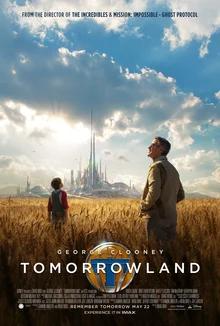
Tomorrowland
Optimistic teenager Casey Newton receives a mysterious pin that, when touched, drops her into a vision of Tomorrowland — a gleaming hidden city of impossible future technology. Tracking down the pin's origin leads her to Frank Walker, a disillusioned former boy-genius who was exiled from that city decades ago, and together they race to understand why humanity's brightest possible future has been sealed away and left to die.
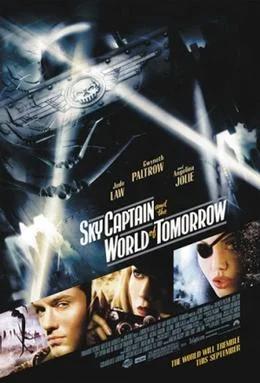
Sky Captain and the World of Tomorrow
1939, an alternate New York besieged by giant robots stomping through Manhattan. Mercenary pilot Joe 'Sky Captain' Sullivan and journalist Polly Perkins — his ex — race to uncover who is behind the attacks, chasing the trail across the globe to a hidden island fortress where a mad scientist's decades-old plan for 'the world of tomorrow' is finally coming to fruition.
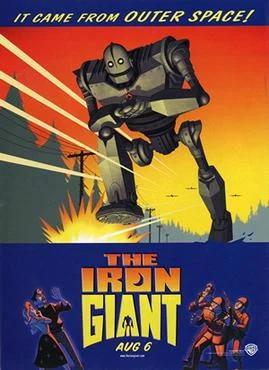
The Iron Giant
Maine, 1957. Young Hogarth Hughes discovers a colossal robot that fell from space, its memory wiped, hiding in the woods behind his house. As Hogarth teaches the Giant about the world — and about choice — a paranoid government agent closes in, convinced the visitor is a Cold War weapon that must be destroyed before it destroys them first.
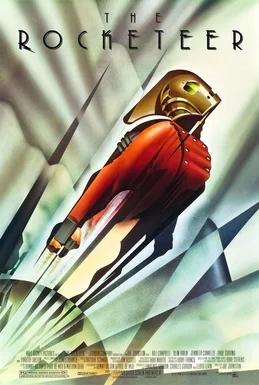
The Rocketeer
1938, Los Angeles. Stunt pilot Cliff Secord stumbles onto a prototype jetpack hidden in his hangar by gangsters — and straps it on. As word of a flying man spreads, Cliff finds himself hunted by Neville Sinclair, a matinee-idol movie star secretly working for Nazi agents desperate to recover the rocket before it reaches Germany, with only his mechanic Peevy and his girlfriend Jenny standing between the jetpack and the Third Reich.
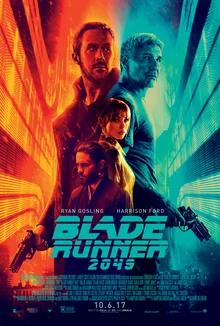
Blade Runner 2049
Thirty years after the original, K is a new-model replicant working as a blade runner for the LAPD, retiring older rogue models without complaint — until a routine job unearths a buried secret: evidence that a replicant once gave birth. The discovery could break the wall between the born and the built, and it sends K hunting for a child hidden decades ago, for a vanished blade runner named Deckard, and for an answer about himself he wants too badly to trust.
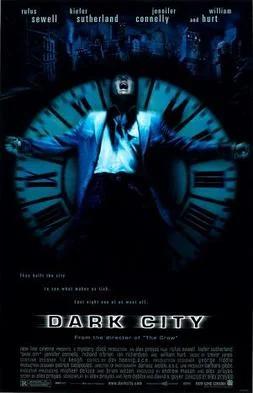
Dark City
John Murdoch wakes in a hotel bathtub with no memory, a dead woman in the next room, and detectives closing in for murders he can't remember committing. As he runs through a city where it is always midnight, he begins noticing what no one else does: at 12:00 exactly, the entire population falls asleep, the buildings physically rearrange themselves — and pale men in long coats move among the sleepers, injecting new memories into new lives.
Comments
Sign in to join the conversation
No comments yet. Be the first!
Advertisement