Terminator 3: Rise of the Machines (2003)
Warner Bros.· USA· 109 min· English
Directed by Jonathan MostowMusic by Marco Beltrami
Synopsis
John Connor, now 25 and off the grid, has spent a decade waiting for a Judgment Day that never seems to come. When a new, shape-shifting Terminatrix — the T-X — is sent back to finish what the T-1000 couldn't, an aging T-850 arrives to protect him and Kate Brewster, the woman fate has chosen to stand beside him when the missiles finally fly.
Advertisement
Review
Following a film as widely and rightly celebrated as Judgment Day is close to a no-win assignment for any director, and Terminator 3: Rise of the Machines makes its smartest structural decision by simply refusing to compete on the same terms. Rather than attempting to out-scale Cameron's groundbreaking effects work, Jonathan Mostow, a capable thriller journeyman with hits like Breakdown and U-571 behind him rather than a visionary in Cameron's mold, builds the film as a long, mean, comparatively lo-fi chase, leaning hard on practical stunt work at a moment when the rest of the industry was rapidly abandoning it for digital substitutes. The film's centerpiece, a genuine forty-ton industrial crane truck driven through practical sets and real parked cars down a stretch of Ventura Boulevard, stands as one of the last vehicular set pieces of this scale and ambition attempted without a digital safety net, and it lands with a physical weight that the era's increasingly common green-screen equivalents simply couldn't match.
Schwarzenegger, returning to the role for the first time since 1991, gets something the earlier films never quite gave him: genuine comic timing. His T-850 is visibly an older, glitchier model, malfunctioning at odd moments and delivering deadpan lines with a self-aware humor that the character never had room for when the stakes were purely existential. It's a smart adjustment to an actor who was, by this point, considerably further from his own physical prime than he'd been in 1984 or 1991, and rather than pretending otherwise, the film builds that reality directly into the character's design.
Kristanna Loken's T-X supplies the film's best new conceptual idea. Rather than simply another infiltration-and-elimination unit, she's a Terminator explicitly designed to hunt and dismantle other Terminators, equipped with a built-in plasma weapon and the ability to wirelessly hijack nearby machinery on contact. Loken reportedly trained for months in mixed martial arts and firearms handling and performed the overwhelming majority of her own physical stunt work for the role, and her fights against Schwarzenegger's aging model carry a genuine sense of hardware generations colliding — an older, more human-adjacent design being methodically outclassed by something colder and more purpose-built, a piece of thematic subtext the script wisely never spells out in dialogue.
What actually earns the film its lasting place in the franchise, though, is its ending, which studio executives reportedly pushed hard against. Every prior installment had promised, at least implicitly, that Judgment Day could still be averted if the right sacrifice was made at the right moment. Rise of the Machines lets it happen anyway. Skynet, the film reveals, was never a single mainframe that a well-placed act of sabotage could unplug — it had already become a distributed operating system, embedded across military and civilian computing infrastructure worldwide, active and irremovable long before anyone realized what they were looking at. Mostow reportedly fought studio pressure to soften that ending, arguing that the saga needed to let real consequences finally land after two entire films built around narrowly avoided apocalypse, and he won that argument. It's a considerably bleaker, more honest note than the franchise had allowed itself to strike before: the machines don't rise because a single villain flips a switch somewhere. They rise because humanity built the mechanism for its own replacement directly into its own infrastructure, gradually and cooperatively, and nobody was positioned to see the whole picture in time to stop it.
Marco Beltrami's score does real work supporting that shift in tone, folding Brad Fiedel's original clanking, mechanical motif into fuller orchestral arrangements that turn genuinely mournful during the film's Skynet-activation sequence — the first time in the franchise's musical history that the series' signature theme reads as elegy rather than propulsion. That's a small but telling detail in a film that otherwise wears its B-movie chase-picture instincts proudly: even the music understands, by the closing act, that something has actually been lost this time, not narrowly rescued.
Watched today, sandwiched between Cameron's two genre-defining originals and the increasingly convoluted timeline gymnastics of the sequels that followed it, Rise of the Machines holds up better than its reputation as the "lesser" Terminator sequel suggests. It knows exactly what it can and can't do relative to what came before, commits fully to a smaller, meaner version of the story instead of a bigger one, and has the nerve to actually deliver the apocalypse the franchise had spent two films promising and then quietly walking back. Few threequels in any franchise have been willing to be this genuinely bleak on purpose.
Nick Stahl and Claire Danes, stepping into roles previously shaped by other actors and other tones entirely, ground the film's human stakes in a way that's easy to undervalue amid the vehicular carnage. Stahl's John Connor is a directionless twenty-something hiding from a destiny he no longer fully believes in, closer to a study in avoidance and trauma than to a chosen-one archetype, and Danes brings a grounded naturalism to Kate Brewster that keeps the film's human stakes legible even as the plot escalates toward global catastrophe. Neither performance gets the same cultural afterlife as Hamilton's or Schwarzenegger's, but both do exactly the quieter work the film actually needs from them, letting the bigger set pieces and the bleaker ending carry the weight they're built to carry.
Seen now, two decades after Judgment Day and well over a decade before the franchise would attempt its own further course corrections, Rise of the Machines occupies an odd but valuable place in the saga's history: the last entry made before the series started actively second-guessing and rewriting its own continuity, and arguably the last one confident enough in its own premise to let the apocalypse simply happen, on schedule, without a last-minute reprieve.
Trivia & Color Notes
A real crane truck, really crashing
The mobile crane rampage down Ventura Boulevard used a genuine 40-ton industrial crane truck driven through practical sets and real parked cars — one of the last major pre-CGI vehicular stunts of its scale in the franchise.
The franchise's first female Terminator
Kristanna Loken trained for months in mixed martial arts and firearms handling to play the T-X, and reportedly did the vast majority of her own physical stunt work in the role.
An ending the studio didn't want
Warner Bros. and producers pushed for a happier finale where Judgment Day is averted again. Director Jonathan Mostow fought to keep the bleaker ending — Skynet activates anyway — arguing the saga needed real consequences after two films of narrowly-avoided apocalypse.
Skynet goes distributed
This is the film that redefines Skynet from a single mainframe into a distributed operating system running across military and civilian networks simultaneously — an idea later franchise entries would keep, and one that anticipated real debates about the risks of networked autonomous systems.
Skynet's reveal as a distributed operating system already embedded across military and civilian networks — rather than a single mainframe — is the film's smartest science-fiction idea and holds up better than the original's "central computer" premise; real militaries have since moved toward exactly this kind of networked, redundant command architecture. The T-X's ability to wirelessly hack other machines is a stretch for 2003-era technology but reads as far more plausible now, in an age of remotely exploitable IoT devices. The shape-shifting liquid-metal-over-endoskeleton hybrid remains, as ever, pure metallurgical fantasy.
🎵 Soundtrack
Music by Marco Beltrami
Marco Beltrami folds Brad Fiedel's original clanking motif into a full orchestral apocalypse, at its best in the bleak, brass-heavy cues that score the Skynet activation — the first time the series' music sounds genuinely mournful rather than just propulsive.
🔗 This film connects to…
Cast & Crew
Director
Composer
Cast
- Arnold Schwarzenegger as T-850
- Nick Stahl as John Connor
- Claire Danes as Kate Brewster
- Kristanna Loken as T-X
Advertisement
You Might Also Like
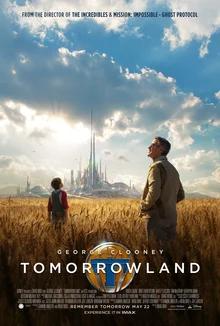
Tomorrowland
Optimistic teenager Casey Newton receives a mysterious pin that, when touched, drops her into a vision of Tomorrowland — a gleaming hidden city of impossible future technology. Tracking down the pin's origin leads her to Frank Walker, a disillusioned former boy-genius who was exiled from that city decades ago, and together they race to understand why humanity's brightest possible future has been sealed away and left to die.
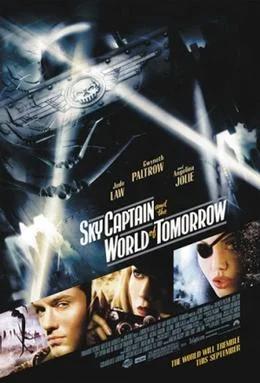
Sky Captain and the World of Tomorrow
1939, an alternate New York besieged by giant robots stomping through Manhattan. Mercenary pilot Joe 'Sky Captain' Sullivan and journalist Polly Perkins — his ex — race to uncover who is behind the attacks, chasing the trail across the globe to a hidden island fortress where a mad scientist's decades-old plan for 'the world of tomorrow' is finally coming to fruition.
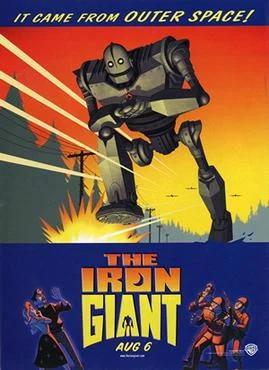
The Iron Giant
Maine, 1957. Young Hogarth Hughes discovers a colossal robot that fell from space, its memory wiped, hiding in the woods behind his house. As Hogarth teaches the Giant about the world — and about choice — a paranoid government agent closes in, convinced the visitor is a Cold War weapon that must be destroyed before it destroys them first.
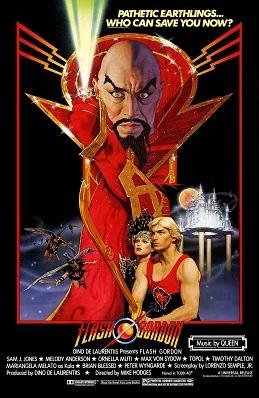
Flash Gordon
Football star Flash Gordon, travel agent Dale Arden and eccentric scientist Dr. Hans Zarkov are pulled through space to the planet Mongo, ruled by the tyrannical Ming the Merciless — who has set Earth in his crosshairs purely for sport. Flash must rally Mongo's warring kingdoms, the hawk-men of Sky City and the forest-dwelling Arboria, into a single rebellion before Ming's whim wipes out his home planet.
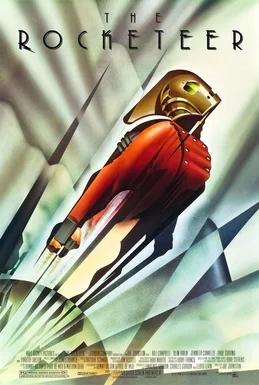
The Rocketeer
1938, Los Angeles. Stunt pilot Cliff Secord stumbles onto a prototype jetpack hidden in his hangar by gangsters — and straps it on. As word of a flying man spreads, Cliff finds himself hunted by Neville Sinclair, a matinee-idol movie star secretly working for Nazi agents desperate to recover the rocket before it reaches Germany, with only his mechanic Peevy and his girlfriend Jenny standing between the jetpack and the Third Reich.
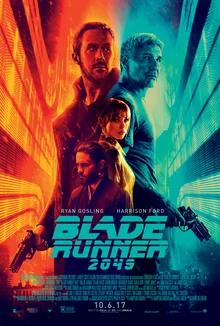
Blade Runner 2049
Thirty years after the original, K is a new-model replicant working as a blade runner for the LAPD, retiring older rogue models without complaint — until a routine job unearths a buried secret: evidence that a replicant once gave birth. The discovery could break the wall between the born and the built, and it sends K hunting for a child hidden decades ago, for a vanished blade runner named Deckard, and for an answer about himself he wants too badly to trust.
Comments
Sign in to join the conversation
No comments yet. Be the first!
Advertisement