Sky Captain and the World of Tomorrow (2004)
Paramount Pictures· USA· 106 min· English
Directed by Kerry ConranMusic by Edward Shearmur
Synopsis
1939, an alternate New York besieged by giant robots stomping through Manhattan. Mercenary pilot Joe 'Sky Captain' Sullivan and journalist Polly Perkins — his ex — race to uncover who is behind the attacks, chasing the trail across the globe to a hidden island fortress where a mad scientist's decades-old plan for 'the world of tomorrow' is finally coming to fruition.
Advertisement
Review
Sky Captain and the World of Tomorrow is retrofuturism's most literal act of resurrection: a film built to look exactly like a lost 1939 pulp serial, using technology that didn't exist until the 21st century to do it. Every frame's background — the robot-ravaged Manhattan skyline, the art-deco airships, the tropical hidden fortress — was generated digitally, with Jude Law, Gwyneth Paltrow and Angelina Jolie acting almost entirely alone in front of blue screens; director Kerry Conran, working from a proof-of-concept short he'd animated himself over years, built the whole world around them afterward.
The film's deliberately desaturated sepia-and-blue color grading and its robot and set designs lean directly on the 1941 Fleischer Studios Superman cartoons — several shots are near shot-for-shot homages — filtered through the pulp-adventure serials and the 1939 New York World's Fair's own vision of "the world of tomorrow." It's a film about a future imagined by the past, made using a future its own characters could never have imagined, and the layered irony is very much the point.
Conran's route to the director's chair is nearly as remarkable as anything on screen. A former animator with no feature directing credits, he spent roughly four years building a six-minute black-and-white proof-of-concept short essentially alone on a home computer, refining the robots, the skyline and the mood until the footage was polished enough to take to studios. That short is the reason the film exists at all — it convinced producers to gamble an unusually large visual-effects budget on a first-time director with an entirely unproven production method, a bet that would look considerably safer today than it did in 2004.
The shoot itself was almost eerily minimal by blockbuster standards: twenty-nine days on a single soundstage, actors working against blue screen with little more than a few practical props and stand-in lighting rigs, with every environment, vehicle and extra composited in afterward across roughly two years of post-production. Jude Law and Gwyneth Paltrow have both described the experience as closer to voice acting with your whole body than traditional filmmaking, performing entire dialogue scenes with essentially nothing to look at or react to but tape marks and a director's verbal description of what would eventually surround them.
Commercially, it flopped hard against its considerable visual-effects budget, and critics were split on whether the story and characters matched the sheer craft on display — a fair criticism, since the film's plotting is closer to a loose assembly of pulp-serial incidents than a tightly constructed narrative, and it clearly knows this about itself. What it lacks in narrative drive it makes up for in sustained conviction: every frame commits fully to its adopted era's visual grammar rather than modernizing any of it for contemporary audiences.
Laurence Olivier's posthumous appearance as the villainous Dr. Totenkopf, built from digitally reconstructed archival footage and photographs with his estate's blessing, now reads as an early and unusually respectful ancestor of the digital-resurrection performances that have since become common, and considerably more contested, in modern blockbusters.
As a pure feat of virtual-production filmmaking — an entire feature shot on a soundstage with nothing but actors and props, everything else built afterward — it remains a genuine landmark, one that the entire modern volume-stage and LED-wall production industry can trace a direct lineage back to, even if the industry it helped inspire rarely remembers to credit it.
Angelina Jolie's extended cameo as eyepatch-wearing squadron commander Franky Cook, filmed in only a handful of days between other commitments, has outsized presence in the film's marketing and cultural memory relative to her actual screen time — a testament to how efficiently the production sketched a fully realized pulp-adventure character in what amounts to a glorified guest appearance.
Edward Shearmur's score plays a similarly outsized supporting role. Rather than underlining the film's digital artifice, his brassy, unabashedly romantic orchestral writing works to disguise it, giving the entirely synthetic world a lived-in emotional warmth that the visuals, for all their technical achievement, occasionally struggle to generate on their own.
Giovanni Ribisi's supporting turn as a conspiracy-minded engineer, one of the few characters afforded genuine comic relief amid the film's determinedly straight-faced pulp seriousness, provides a welcome release valve in a picture that otherwise commits to its 1939 register without a single ironic wink.
The film's post-production schedule stretched across roughly two years after principal photography wrapped in under a month, an inversion of typical blockbuster proportions that left Paramount marketing a finished cast performance for far longer than usual before a single completed frame of the world around them existed to show anyone.
Trivia & Color Notes
A film with almost no real sets
Every background in the film — skylines, interiors, vehicles — was generated digitally after the fact; the actors performed almost entirely alone against blue screens in a single warehouse, making it one of the first features shot this way and a direct forerunner of today's virtual-production stages.
Built from a one-man proof of concept
Director Kerry Conran spent roughly four years animating a six-minute black-and-white proof-of-concept short essentially by himself on a home computer before the footage convinced a studio to fund the feature.
A villain played by a dead man
Laurence Olivier's Dr. Totenkopf appears via digitally reconstructed archival footage and photographs, assembled with his estate's permission — a performance built entirely from material shot decades before Olivier's 1989 death.
Homage down to the frame
The film's color palette and several specific shots directly recreate the 1941 Fleischer Studios Superman theatrical cartoons, treating that series' Art Deco robot designs as the visual blueprint for the whole picture.
City-flattening robots, a hidden Himalayan-adjacent island base and Laurence Olivier's villain reconstructed from archival footage and photographs are pure pulp-serial fantasy — but the film's actual production technique was genuinely groundbreaking science: shooting every actor in isolation against blue screen with virtually no physical sets, then compositing 100% digital backgrounds, was one of the first times a feature film had been made this way, directly anticipating the volume-stage virtual-production techniques used industry-wide today.
🎵 Soundtrack
Music by Edward Shearmur
Edward Shearmur's orchestral score plays it entirely straight — brassy, romantic 1930s adventure-serial music with no ironic distance, matching the film's total commitment to its pulp source material.
🔗 This film connects to…
Cast & Crew
Director
Composer
Cast
- Jude Law as Joe 'Sky Captain' Sullivan
- Gwyneth Paltrow as Polly Perkins
- Angelina Jolie as Franky Cook
Advertisement
You Might Also Like
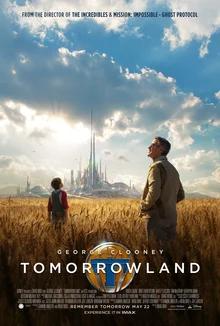
Tomorrowland
Optimistic teenager Casey Newton receives a mysterious pin that, when touched, drops her into a vision of Tomorrowland — a gleaming hidden city of impossible future technology. Tracking down the pin's origin leads her to Frank Walker, a disillusioned former boy-genius who was exiled from that city decades ago, and together they race to understand why humanity's brightest possible future has been sealed away and left to die.
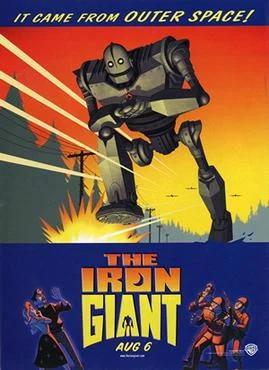
The Iron Giant
Maine, 1957. Young Hogarth Hughes discovers a colossal robot that fell from space, its memory wiped, hiding in the woods behind his house. As Hogarth teaches the Giant about the world — and about choice — a paranoid government agent closes in, convinced the visitor is a Cold War weapon that must be destroyed before it destroys them first.
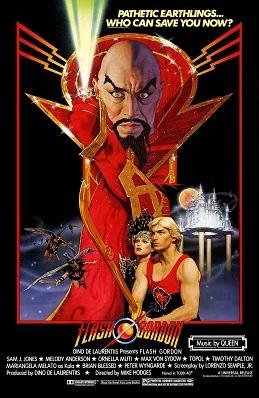
Flash Gordon
Football star Flash Gordon, travel agent Dale Arden and eccentric scientist Dr. Hans Zarkov are pulled through space to the planet Mongo, ruled by the tyrannical Ming the Merciless — who has set Earth in his crosshairs purely for sport. Flash must rally Mongo's warring kingdoms, the hawk-men of Sky City and the forest-dwelling Arboria, into a single rebellion before Ming's whim wipes out his home planet.
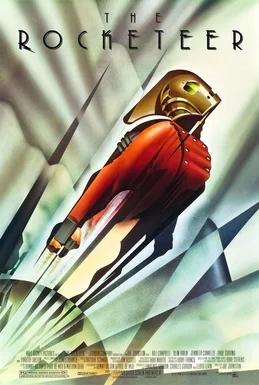
The Rocketeer
1938, Los Angeles. Stunt pilot Cliff Secord stumbles onto a prototype jetpack hidden in his hangar by gangsters — and straps it on. As word of a flying man spreads, Cliff finds himself hunted by Neville Sinclair, a matinee-idol movie star secretly working for Nazi agents desperate to recover the rocket before it reaches Germany, with only his mechanic Peevy and his girlfriend Jenny standing between the jetpack and the Third Reich.
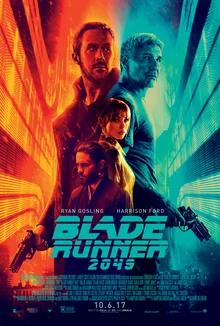
Blade Runner 2049
Thirty years after the original, K is a new-model replicant working as a blade runner for the LAPD, retiring older rogue models without complaint — until a routine job unearths a buried secret: evidence that a replicant once gave birth. The discovery could break the wall between the born and the built, and it sends K hunting for a child hidden decades ago, for a vanished blade runner named Deckard, and for an answer about himself he wants too badly to trust.
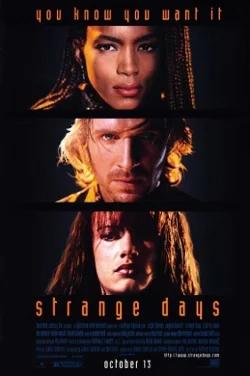
Strange Days
Los Angeles, the last two days of 1999. Lenny Nero, ex-cop turned black-market dealer, sells SQUID recordings — full sensory captures of other people's experiences, straight from their cerebral cortex to yours. Addicted to replaying tapes of his own lost relationship, Lenny is dragged out of his loop when a snuff recording lands in his hands: evidence of a murder that connects to his ex, a music-industry conspiracy, and a police killing that could set the burning city off entirely.
Comments
Sign in to join the conversation
No comments yet. Be the first!
Advertisement