Flash Gordon (1980)
Universal Pictures· UK· 111 min· English
Directed by Mike HodgesMusic by Howard Blake
Synopsis
Football star Flash Gordon, travel agent Dale Arden and eccentric scientist Dr. Hans Zarkov are pulled through space to the planet Mongo, ruled by the tyrannical Ming the Merciless — who has set Earth in his crosshairs purely for sport. Flash must rally Mongo's warring kingdoms, the hawk-men of Sky City and the forest-dwelling Arboria, into a single rebellion before Ming's whim wipes out his home planet.
Advertisement
Review
If cyberpunk's founding image is neon rain, Flash Gordon's is chrome-and-velvet space opera drawn straight from a 1930s newspaper page — the definitive raygun-gothic film, unapologetically camp and gorgeous in equal measure. Adapted from Alex Raymond's Depression-era comic strip (and its beloved Buster Crabbe movie serials), the 1980 film had every opportunity to play its space-Roman kingdoms and lightning-bolt costumes straight. Instead, producer Dino De Laurentiis and director Mike Hodges leaned all the way into gleeful, knowing spectacle, and the film has been vindicated by five decades of adoration since.
Max von Sydow's Ming the Merciless is the film's secret weapon — a performance of total, bone-dry menace inside a costume that could not be less naturalistic, somehow making Ming's casual genocide of Earth "for sport" genuinely unsettling. Around him, Sam J. Jones's Flash, Melody Anderson's Dale and Timothy Dalton's proud rebel prince Barin play everything at maximum pulp-serial sincerity, which is precisely why it works: the film never winks at its own absurdity, it simply commits.
That commitment was very nearly a different film entirely. De Laurentiis had originally hoped to secure a far bigger name behind the camera and reportedly considered a considerably more straight-faced, Star Wars-adjacent take on the material before settling on Hodges, a British director best known at the time for gritty crime pictures rather than space opera. It was Hodges, alongside screenwriter Lorenzo Semple Jr. (who had cut his teeth on the winkingly campy 1960s Batman television series), who pushed the production toward knowing theatricality rather than straight adventure — a gamble that could easily have produced an unwatchable mess and instead produced one of the most purely enjoyable films of its decade.
The production design deserves its own accounting. Danilo Donati, an Italian costume and set designer with an operatic sensibility honed on Fellini and Zeffirelli productions, built Mongo's kingdoms as competing fashion statements as much as competing nations — Ming's court in hard, geometric chrome, Prince Barin's Arboria in flowing forest greens, Prince Vultan's Sky City in golden feathered armor. Every kingdom reads instantly on sight, a piece of pure visual storytelling that lets the film skip past exposition its budget and runtime never had room for.
Queen's soundtrack — thundering, synth-driven, utterly of 1980 — shouldn't belong anywhere near a 1930s planet of hawk-men and lion-men, and yet the mismatch became the point: a genuinely retro pulp universe, powered by an entirely contemporary rock heartbeat. Brian May has said the band scored the film almost as a lark, watching a rough cut and improvising musical ideas directly against the picture, and the chanted title theme's total commitment to self-seriousness matches the film's own tone so precisely that it is difficult now to imagine Flash Gordon set to anything else.
Critical reception at the time was politely baffled — many reviewers seemed unsure whether they were watching a children's adventure, a knowing satire, or an expensive miscalculation, and box office in the United States was middling against its considerable budget. It found a far warmer audience in the UK and, gradually, on cable and home video everywhere else, as viewers stopped waiting for the film to explain its own joke and simply enjoyed it on its own gloriously overripe terms.
Four decades on, that collision of eras — a Depression-era comic strip's space-Roman kingdoms, powered by an entirely contemporary rock heartbeat — is exactly why Flash Gordon endures as the rare movie both openly ridiculous and completely, gloriously sincere about it.
The film's afterlife has been unusually rich for something initially dismissed as a curiosity. Its "Flash! Ahh-ahh!" title cue has become one of the most instantly recognizable needle-drops in pop culture, deployed for comic effect in everything from Ted to countless sports arenas, while its production design continues to surface as a direct visual reference for raygun-gothic art direction decades after most of its 1980 blockbuster contemporaries have been quietly forgotten.
Sam J. Jones's own account of his time on the production adds an odd, slightly melancholy footnote to the film's legacy: a contractual dispute during post-production reportedly led the studio to quietly re-record a portion of his dialogue with another actor, without his knowledge at the time, a detail he has discussed candidly in later interviews. It's a strange, almost fitting irony that the film's nominal hero was, by his own account, partially overwritten in the very production that made him a cult icon.
The film's costuming, overseen by Danilo Donati, went on to earn an Academy Award nomination — a rare instance of formal industry recognition for a picture largely dismissed by mainstream critics on release, and a small vindication of the operatic visual conviction the rest of the production was so often mocked for at the time.
Trivia & Color Notes
Two scores, one film
Queen's soundtrack songs and Howard Blake's traditional orchestral score were composed entirely separately and blended together in the final mix — an unusual arrangement that gave the film both a rock anthem and a classical dramatic backbone.
Camp by design, not by accident
Producer Dino De Laurentiis initially wanted a far more serious, Star Wars-style tone; director Mike Hodges deliberately pushed the film toward knowing high camp instead, a choice fans and critics have since credited as the film's saving grace.
A voice quietly replaced
Star Sam J. Jones had a contractual falling-out with the production during post-production, and several of his lines were re-recorded by another actor without his knowledge — a fact he has spoken about candidly in later years.
Straight from Buster Crabbe's serials
Mongo's chrome throne rooms and Ming's design deliberately echo the look of the original 1930s–40s Flash Gordon movie serials starring Buster Crabbe, which the filmmakers treated as sacred source material rather than a dated relic to modernize away.
Mongo's artificial-gravity kingdoms, hawk-men who fly under their own power, and a planet that can be steered into a collision course with Earth by remote control are pure pulp fantasy with no scientific grounding whatsoever — nor is the film interested in pretending otherwise. Its value isn't predictive; it's archival, faithfully preserving the exact "planet as costume drama" flavor of 1930s space-opera imagination that gave rise to nearly every space adventure that followed.
🎵 Soundtrack
Music by Howard Blake
Queen wrote and performed the soundtrack's songs — including the immortal, chanted title theme — while Howard Blake composed the orchestral underscore for the film's dramatic scenes, giving the film two distinct musical identities that somehow both work.
🔗 This film connects to…
Cast & Crew
Director
Composer
Cast
- Sam J. Jones as Flash Gordon
- Melody Anderson as Dale Arden
- Max von Sydow as Ming the Merciless
- Timothy Dalton as Prince Barin
Advertisement
You Might Also Like
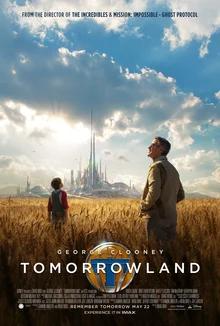
Tomorrowland
Optimistic teenager Casey Newton receives a mysterious pin that, when touched, drops her into a vision of Tomorrowland — a gleaming hidden city of impossible future technology. Tracking down the pin's origin leads her to Frank Walker, a disillusioned former boy-genius who was exiled from that city decades ago, and together they race to understand why humanity's brightest possible future has been sealed away and left to die.
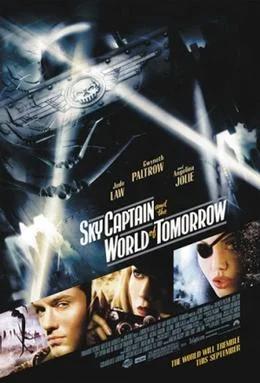
Sky Captain and the World of Tomorrow
1939, an alternate New York besieged by giant robots stomping through Manhattan. Mercenary pilot Joe 'Sky Captain' Sullivan and journalist Polly Perkins — his ex — race to uncover who is behind the attacks, chasing the trail across the globe to a hidden island fortress where a mad scientist's decades-old plan for 'the world of tomorrow' is finally coming to fruition.
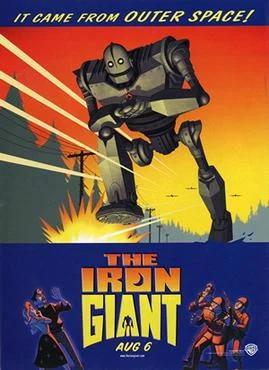
The Iron Giant
Maine, 1957. Young Hogarth Hughes discovers a colossal robot that fell from space, its memory wiped, hiding in the woods behind his house. As Hogarth teaches the Giant about the world — and about choice — a paranoid government agent closes in, convinced the visitor is a Cold War weapon that must be destroyed before it destroys them first.
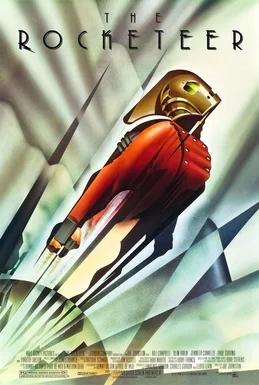
The Rocketeer
1938, Los Angeles. Stunt pilot Cliff Secord stumbles onto a prototype jetpack hidden in his hangar by gangsters — and straps it on. As word of a flying man spreads, Cliff finds himself hunted by Neville Sinclair, a matinee-idol movie star secretly working for Nazi agents desperate to recover the rocket before it reaches Germany, with only his mechanic Peevy and his girlfriend Jenny standing between the jetpack and the Third Reich.
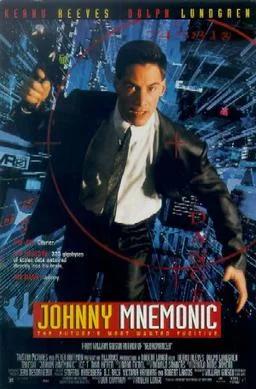
Johnny Mnemonic
2021: half the world suffers from a technology-induced plague, and the most valuable data travels not on networks — too easily hacked — but inside the heads of mnemonic couriers. Johnny is one of them, and his latest job stuffs his implanted memory far beyond safe capacity with data the Yakuza and a pharmaceutical giant will kill for. He has roughly a day to make delivery before the payload literally destroys his brain — the same brain he emptied of his own childhood to make room for cargo.
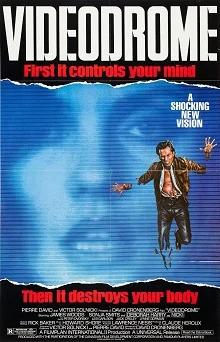
Videodrome
Max Renn, president of a sleazy Toronto UHF station always hunting for harder content, stumbles onto a pirate broadcast called Videodrome: plotless scenes of torture that appear to be real. As he chases the signal's source, his perception begins to warp — hallucinations bleed into reality, his body starts to change, and Max discovers the broadcast isn't entertainment at all, but a weapon that rewires whoever watches it.
Comments
Sign in to join the conversation
No comments yet. Be the first!
Advertisement