Forbidden Planet (1956)
MGM· USA· 98 min· English
Directed by Fred M. WilcoxMusic by Louis Barron
Synopsis
A starship crew is sent to the planet Altair IV to check on a colony expedition that vanished twenty years earlier — and finds only two survivors: reclusive scientist Dr. Morbius, his daughter Altaira, and Robby, a robot of his own design. Morbius has uncovered the remains of a vanished super-civilization and its incomprehensible technology, but something invisible and murderous is still guarding its secrets — something that may be coming from inside Morbius himself.
Advertisement
Review
Forbidden Planet marks the moment science fiction cinema was finally permitted to grow up within the studio system. MGM committed a budget that was genuinely unheard of for the genre in 1956 to building a fully-realized alien world from scratch, from Robby the Robot's costume — which alone reportedly cost somewhere in the neighborhood of $125,000, a staggering figure for a single prop at the time — to a completely electronic score unlike anything a Hollywood studio had financed before. The result stands as arguably the first true A-picture the genre had ever received: a production treated with the resources and craft of a major studio prestige release rather than as disposable Saturday-matinee filler. Loosely adapting Shakespeare's The Tempest, with Dr. Morbius standing in for the exiled sorcerer Prospero, his daughter Altaira for Miranda, and the invisible monster functioning as a considerably more dangerous version of Caliban, the film gave the genre something it had badly needed up to that point: institutional permission to be taken seriously as actual art rather than dismissed as juvenile spectacle.
The film's true innovation, though, is psychological rather than purely technological. The vanished Krell civilization that once inhabited Altair IV had built machinery capable of converting pure thought directly into physical reality, and destroyed themselves in a single catastrophic night when that same machinery gave their own repressed subconscious impulses — described in the film as "monsters from the id" — equal access to that power. It's a startlingly Freudian premise for a mainstream studio blockbuster of any era, let alone 1956, and the eventual reveal that the invisible creature stalking the human crew is a direct manifestation of Morbius's own repressed rage, rather than some external alien threat, remains one of the more genuinely sophisticated twists the genre produced in its entire first half-century.
Walter Pidgeon, already an established leading man from decades of MGM prestige pictures, brings real Shakespearean gravity to Morbius, a scientist whose intellectual arrogance and buried resentments have quite literally taken monstrous form without his conscious awareness. Anne Francis, playing Altaira with a knowing warmth, gives the film's central ingenue role a genuine innocence that the plot's psychological horror depends on, and Leslie Nielsen, decades before Airplane! and the Naked Gun franchise turned him into a beloved deadpan comedian, plays Commander Adams with total, straight-faced sincerity — a fact that makes rewatching the film with the knowledge of his later career an almost surreal experience.
Robby the Robot, meanwhile, quietly reshaped the entire visual language of friendly movie robots for decades afterward, functioning as a direct ancestor of the droid designs Star Wars would popularize over two decades later. Built with genuine mechanical presence and servo-driven movement rather than simply dressing a performer in a tin-can costume, Robby impressed MGM enough that the character was reused across numerous later films and television productions as a recognizable stock robot figure in his own right.
The score deserves its own separate recognition entirely. Louis and Bebe Barron built custom electronic circuits from scratch specifically for this production, deliberately overloading and effectively destroying each circuit in the process of recording its dying squeals and hums — a technique now sometimes retroactively called circuit bending, decades before that term existed in any electronic-music vocabulary. The result was credited only as "electronic tonalities" in the film's titles, because the musicians' union at the time had no existing category that could describe what the Barrons had actually created, and it remains one of the strangest, most technically radical scores in the entire history of American film music.
Between Robby's design, the fully electronic score, and a story built around genuine psychological and philosophical ambition rather than simple monster-of-the-week thrills, Forbidden Planet functions as the hinge point where 1950s B-movie science fiction first became something a major studio was willing to bet real money on, and the results justified that bet completely.
The film's influence is easy to underestimate today precisely because so much of what it pioneered became standard genre furniture almost immediately: the wise but fallible robot companion, the isolated scientific outpost hiding a terrible secret, the idea that a planet's true danger might come from inside its own human visitors rather than from anything native to the world itself. Strip away seven decades of imitation and revisit it fresh, and what remains is a film considerably stranger and more intellectually serious than its chrome-robot marketing ever quite let on.
Leslie Nielsen's presence in the cast rewards a specific kind of retrospective double-take that few films from this era offer. Watching him play Commander Adams with total, unwavering earnestness, decades before Airplane! and the Naked Gun series rebuilt his entire public image around deadpan comic timing, is a genuinely strange experience for anyone who only knows him from the latter half of his career — proof that a strong dramatic performance and a legendary comic one can, in rare cases, live inside the exact same actor without either undercutting the other in hindsight.
Trivia & Color Notes
The first all-electronic score
Louis and Bebe Barron built custom electronic circuits from scratch for the film's soundtrack, deliberately overloading and 'killing' each circuit to record its dying squeals and hums — a technique they called 'circuit bending' decades before the term existed.
Robby the Robot's real budget
Robby's costume alone reportedly cost around $125,000 to build — a staggering sum in 1956 — and MGM was so pleased with the design that Robby was reused in multiple later films and TV shows as a stock robot character.
Monsters from the id
The film's central concept — that a machine amplifying the subconscious mind would manifest its user's repressed violence as an uncontrollable monster — is a rare piece of genuinely Freudian science fiction in a mainstream 1950s studio picture.
The Tempest, in space
The film is a loose science-fiction adaptation of Shakespeare's The Tempest: Dr. Morbius as the exiled sorcerer Prospero, Altaira as Miranda, and Robby the Robot standing in for the spirit Ariel.
The Krell's thought-to-matter technology and planet-sized subconscious-power reactor are pure pulp metaphysics with no scientific basis — but the film's Freudian framing (repressed aggression given monstrous, uncontrollable form) is a genuinely thoughtful piece of psychological science fiction, decades ahead of the genre's usual monster-of-the-week logic. Robby the Robot's design — servo-driven, mechanically plausible rather than humanoid — was unusually grounded for its era and directly influenced later, more realistic robot designs across the genre.
🎵 Soundtrack
Music by Louis Barron
Louis and Bebe Barron composed the first entirely electronic film score in Hollywood history, built from custom circuits they designed and built themselves, then recorded as the circuits distorted and burned out. Credited only as 'electronic tonalities' because the musicians' union had no category for what they'd made, it remains one of the strangest and most influential scores in film history.
🔗 This film connects to…
Cast & Crew
Director
Composer
Cast
- Walter Pidgeon as Dr. Edward Morbius
- Anne Francis as Altaira Morbius
- Leslie Nielsen as Commander John J. Adams
Advertisement
You Might Also Like
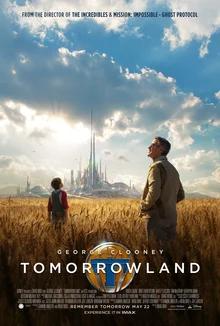
Tomorrowland
Optimistic teenager Casey Newton receives a mysterious pin that, when touched, drops her into a vision of Tomorrowland — a gleaming hidden city of impossible future technology. Tracking down the pin's origin leads her to Frank Walker, a disillusioned former boy-genius who was exiled from that city decades ago, and together they race to understand why humanity's brightest possible future has been sealed away and left to die.
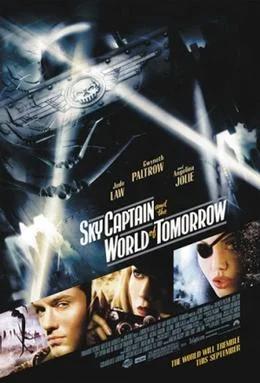
Sky Captain and the World of Tomorrow
1939, an alternate New York besieged by giant robots stomping through Manhattan. Mercenary pilot Joe 'Sky Captain' Sullivan and journalist Polly Perkins — his ex — race to uncover who is behind the attacks, chasing the trail across the globe to a hidden island fortress where a mad scientist's decades-old plan for 'the world of tomorrow' is finally coming to fruition.
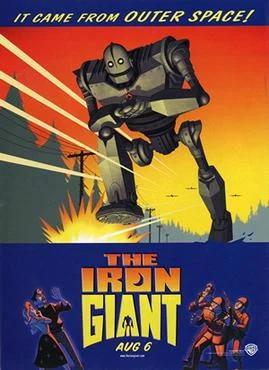
The Iron Giant
Maine, 1957. Young Hogarth Hughes discovers a colossal robot that fell from space, its memory wiped, hiding in the woods behind his house. As Hogarth teaches the Giant about the world — and about choice — a paranoid government agent closes in, convinced the visitor is a Cold War weapon that must be destroyed before it destroys them first.
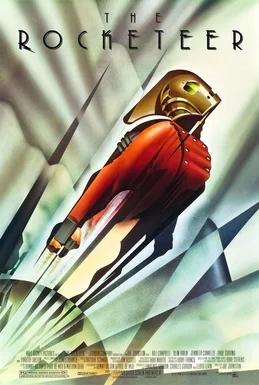
The Rocketeer
1938, Los Angeles. Stunt pilot Cliff Secord stumbles onto a prototype jetpack hidden in his hangar by gangsters — and straps it on. As word of a flying man spreads, Cliff finds himself hunted by Neville Sinclair, a matinee-idol movie star secretly working for Nazi agents desperate to recover the rocket before it reaches Germany, with only his mechanic Peevy and his girlfriend Jenny standing between the jetpack and the Third Reich.
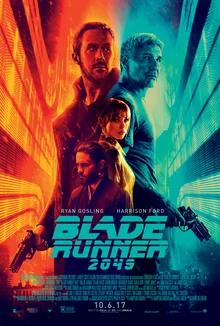
Blade Runner 2049
Thirty years after the original, K is a new-model replicant working as a blade runner for the LAPD, retiring older rogue models without complaint — until a routine job unearths a buried secret: evidence that a replicant once gave birth. The discovery could break the wall between the born and the built, and it sends K hunting for a child hidden decades ago, for a vanished blade runner named Deckard, and for an answer about himself he wants too badly to trust.
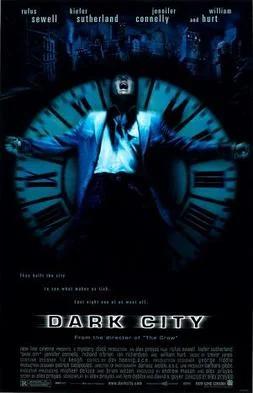
Dark City
John Murdoch wakes in a hotel bathtub with no memory, a dead woman in the next room, and detectives closing in for murders he can't remember committing. As he runs through a city where it is always midnight, he begins noticing what no one else does: at 12:00 exactly, the entire population falls asleep, the buildings physically rearrange themselves — and pale men in long coats move among the sleepers, injecting new memories into new lives.
Comments
Sign in to join the conversation
No comments yet. Be the first!
Advertisement