Blade Runner 2049 (2017)
Warner Bros.· USA· 164 min· English
Directed by Denis VilleneuveMusic by Hans ZimmerCinematography by Roger Deakins
Synopsis
Thirty years after the original, K is a new-model replicant working as a blade runner for the LAPD, retiring older rogue models without complaint — until a routine job unearths a buried secret: evidence that a replicant once gave birth. The discovery could break the wall between the born and the built, and it sends K hunting for a child hidden decades ago, for a vanished blade runner named Deckard, and for an answer about himself he wants too badly to trust.
Advertisement
Review
Sequelizing Blade Runner was widely assumed, for decades, to be essentially impossible — the original's particular power lay so heavily in unresolved ambiguity and sustained atmosphere, and sequels, as a form, tend to destroy exactly those qualities by explaining and expanding what worked better left alone. Blade Runner 2049 is the rare legacy sequel that understood the assignment at real depth rather than settling for surface nostalgia: Denis Villeneuve doesn't attempt to answer the original's open questions so much as he inherits them intact, aging the entire world forward thirty years — a sea wall now straining to hold back an encroaching Pacific, the irradiated orange ruins of an abandoned Las Vegas, a blind industrialist farming replicants like agricultural crops — and using that aged world to ask what hope could possibly look like for beings manufactured specifically into servitude.
Villeneuve, a Québécois director who built his international reputation with tense, acclaimed dramas like Prisoners and Sicario, was personally selected by Ridley Scott to direct the long-gestating sequel; Scott stayed on as executive producer and has since said publicly that Villeneuve's finished film was better than what he believes he would have made himself, an unusually generous concession from a director handing off one of his own most beloved creations.
Ryan Gosling's K carries the film's central, genuinely devastating arc. A former Mickey Mouse Club cast member turned acclaimed dramatic actor, Gosling plays a replicant who gradually allows himself to believe he might be the miracle child the plot has been chasing — special, actually born rather than manufactured — only to learn that his single most cherished childhood memory in fact belongs to somebody else entirely. The film's philosophical thesis lands precisely in how K responds to that devastating reversal: being genuinely special was never actually the point of the story. Choosing to act with meaning and courage regardless of whether you're special is. Around him, Ana de Armas's Joi, a mass-produced holographic companion whose love may be entirely authentic or simply extremely well-executed software optimized to please its owner, extends the franchise's oldest and most persistent question directly into the realm of consumer software, and the film refuses to settle that question definitively, exactly as its 1982 predecessor refused to settle whether Deckard himself was human or replicant.
Roger Deakins finally won his long, considerably overdue first Academy Award for Best Cinematography on this film, after an astonishing fourteen prior nominations without a single win — a drought so widely lamented within the industry that his eventual victory reportedly prompted a spontaneous standing ovation from colleagues who considered it decades overdue. His photography here makes nearly every individual frame look like a panel torn from an impossible graphic novel, achieved in part through an unusual commitment to enormous physical miniatures for the Los Angeles cityscapes and Wallace Corporation interiors — effects house Weta reportedly built some of the largest practical miniature sets constructed for any production of the entire decade, a deliberate choice to ground the film's digital-age imagery in tangible, photographed physical objects wherever possible.
Hans Zimmer and Benjamin Wallfisch, brought onto the project relatively late after the original scoring plans changed, honor Vangelis's original score through sheer analog synthesizer volume and brutalist sound design rather than through direct imitation of his specific melodic ideas, and the original Vangelis themes themselves resurface just once, devastatingly, in the film's final scene — a musical choice that lands with enormous emotional weight precisely because the rest of the score has so thoroughly avoided leaning on that nostalgia until the exact moment it matters most.
The film underperformed commercially on release; nearly three slow, patient, deliberately unhurried hours proved a difficult sell to mainstream audiences accustomed to faster-paced blockbuster pacing. But as with its predecessor, box office returns proved a poor measure of the film's actual achievement and staying power. Harrison Ford's return as Deckard, thirty-five years after the original, comes with the film pointedly declining to resolve whether Deckard himself is human or replicant, preserving the original's single most argued-about ambiguity against what must have been enormous commercial pressure to finally settle it for a modern audience. Blade Runner 2049 stands today as the clearest possible proof that cyberpunk's founding cinematic text could grow old with genuine dignity rather than diminishing returns, and that the genre's oldest questions only deepen, rather than resolve, with the passage of real time.
Bioengineered replicant bodies, holographic companions with apparent genuine inner lives, and replicant reproduction all remain speculative biology well beyond anything currently achievable, but the film's imagined 2049 is built on unusually thoughtful extrapolation elsewhere: ecological collapse driving synthetic agricultural farming, an entire economy dependent on manufactured labor conveniently classified as non-persons under the law, and AI companionship products explicitly optimized to tell their owners exactly what they most need to hear in any given moment. That last idea, fully embodied in Joi, has aged from speculative fiction into an actual consumer product category with startling speed — the film's single sharpest anticipation may simply be emotional software sold as a recurring subscription service.
Ryan Gosling has said in interviews that he approached K's arc as fundamentally about learning to act with dignity even after being stripped of every reason a person is usually told they need in order to matter, a reading that gives the film's quiet final scenes, stripped of spectacle entirely, more genuine emotional force than nearly anything else in the franchise's history.
Trivia & Color Notes
Deakins's fourteenth try
Roger Deakins won his first Academy Award for Best Cinematography on his fourteenth nomination — a drought so famous that his win prompted a standing ovation from colleagues who considered it decades overdue.
Miniatures over pixels
Despite its scale, the film leaned heavily on enormous physical miniatures for the Los Angeles cityscapes and the Wallace Corporation interiors, with effects house Weta building some of the largest miniature sets constructed for any film of its decade.
Ford, thirty-five years later
Harrison Ford returned as Deckard 35 years after the original — and the film pointedly declines to resolve whether Deckard himself is human or replicant, preserving the original's most argued-about ambiguity against enormous fan pressure to settle it.
A sequel blessed by Ridley Scott
Ridley Scott developed the project and stayed on as executive producer, but handed direction to Denis Villeneuve — later saying the younger director's version was better than what he would have made himself.
Bioengineered humans, holographic companions with apparent inner lives, and replicant reproduction remain speculative biology — but the film's 2049 is built on unusually thoughtful extrapolation: ecological collapse driving synthetic farming, an economy dependent on manufactured labor conveniently defined as non-persons, and AI companionship products optimized to tell users exactly what they need to hear. That last one, embodied in Joi, has aged from speculation to product category with startling speed — the film's sharpest anticipation is emotional software as a subscription service.
🎵 Soundtrack
Music by Hans Zimmer
Hans Zimmer and Benjamin Wallfisch, stepping in late in production, honor Vangelis with massive analog synth walls rather than imitation — brutalist sound design as much as score — while the Vangelis original surfaces once, devastatingly, in the film's final scene.
🔗 This film connects to…
Cast & Crew
Director
Composer
Cinematographer
Cast
- Ryan Gosling as K / Joe
- Harrison Ford as Rick Deckard
- Ana de Armas as Joi
Advertisement
You Might Also Like
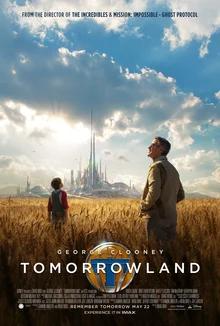
Tomorrowland
Optimistic teenager Casey Newton receives a mysterious pin that, when touched, drops her into a vision of Tomorrowland — a gleaming hidden city of impossible future technology. Tracking down the pin's origin leads her to Frank Walker, a disillusioned former boy-genius who was exiled from that city decades ago, and together they race to understand why humanity's brightest possible future has been sealed away and left to die.
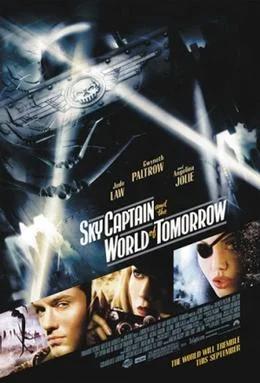
Sky Captain and the World of Tomorrow
1939, an alternate New York besieged by giant robots stomping through Manhattan. Mercenary pilot Joe 'Sky Captain' Sullivan and journalist Polly Perkins — his ex — race to uncover who is behind the attacks, chasing the trail across the globe to a hidden island fortress where a mad scientist's decades-old plan for 'the world of tomorrow' is finally coming to fruition.
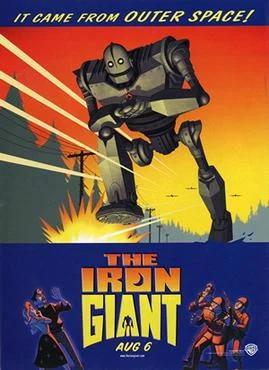
The Iron Giant
Maine, 1957. Young Hogarth Hughes discovers a colossal robot that fell from space, its memory wiped, hiding in the woods behind his house. As Hogarth teaches the Giant about the world — and about choice — a paranoid government agent closes in, convinced the visitor is a Cold War weapon that must be destroyed before it destroys them first.
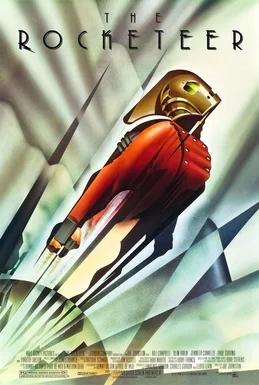
The Rocketeer
1938, Los Angeles. Stunt pilot Cliff Secord stumbles onto a prototype jetpack hidden in his hangar by gangsters — and straps it on. As word of a flying man spreads, Cliff finds himself hunted by Neville Sinclair, a matinee-idol movie star secretly working for Nazi agents desperate to recover the rocket before it reaches Germany, with only his mechanic Peevy and his girlfriend Jenny standing between the jetpack and the Third Reich.
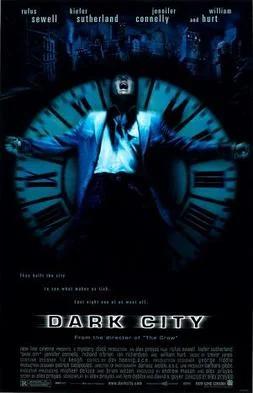
Dark City
John Murdoch wakes in a hotel bathtub with no memory, a dead woman in the next room, and detectives closing in for murders he can't remember committing. As he runs through a city where it is always midnight, he begins noticing what no one else does: at 12:00 exactly, the entire population falls asleep, the buildings physically rearrange themselves — and pale men in long coats move among the sleepers, injecting new memories into new lives.
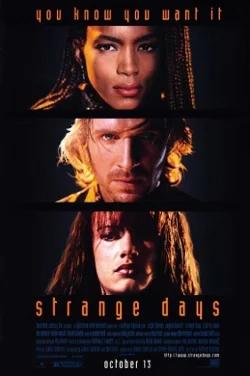
Strange Days
Los Angeles, the last two days of 1999. Lenny Nero, ex-cop turned black-market dealer, sells SQUID recordings — full sensory captures of other people's experiences, straight from their cerebral cortex to yours. Addicted to replaying tapes of his own lost relationship, Lenny is dragged out of his loop when a snuff recording lands in his hands: evidence of a murder that connects to his ex, a music-industry conspiracy, and a police killing that could set the burning city off entirely.
Comments
Sign in to join the conversation
No comments yet. Be the first!
Advertisement