Star Wars (1977)
Star Wars: Episode IV — A New Hope
20th Century Fox· USA· 121 min· English
Directed by George LucasMusic by John Williams
Synopsis
A farm boy on a desert planet intercepts a distress call hidden in a droid, and is swept into a galactic rebellion alongside a cynical smuggler, a fugitive princess and the last of an ancient order of knights — with a moon-sized battle station waiting at the end of the run.
Advertisement
Review
By now Star Wars has been analyzed so thoroughly, quoted so relentlessly and merchandised so exhaustively that it takes real effort to see the actual eighteen reels of film underneath the mythology. So set the empire of Star Wars aside for a moment — the theme parks, the prequels, the decades of debate about who shot first — and just watch what George Lucas actually put on screen in 1977. It's a tight, unpretentious hundred and twenty minutes that moves like a serial from the 1930s, borrows its plot structure so directly from Akira Kurosawa's The Hidden Fortress that Lucas has never pretended otherwise, and gets from a farm on a desert planet to the destruction of a moon-sized battle station without a single wasted scene. Underneath the space opera trappings, it's an old-fashioned adventure picture, built with an almost mathematical understanding of pace, and that structural discipline is a big part of why it has survived four and a half decades of imitation without feeling like an imitation of itself.
The decision that changed the genre permanently, though, wasn't the story. It was the dirt. Every spaceship in serious American science fiction before 1977 — in Forbidden Planet, in the 2001 that Lucas revered, in the television that had shaped a generation's idea of the future — was clean, symmetrical, freshly painted, designed to look like a vision of tomorrow rather than a tool somebody used yesterday. Lucas and his production designers went the opposite direction on purpose. The Millennium Falcon is a junk-heap that needs to be kicked to start. Stormtrooper armor is scuffed. The Death Star's corridors have exposed conduit and grime in the corners. Lucas called it the "used universe" concept, and it required inventing new technology to pull off convincingly: Industrial Light & Magic, founded specifically for this production because no existing effects house could deliver what Lucas wanted, built a computer-controlled camera rig called the Dykstraflex that could repeat an identical, complex move across multiple passes over static models, making the layered, believable dogfights in the film's final act possible for the first time. That texture — spaceships that look like they've done actual work — is probably the single most imitated design choice in the genre's subsequent history, more influential in the long run than any individual plot beat or character.
None of it would have mattered without the cast, and the cast is a stranger combination than nostalgia usually allows people to remember. Mark Hamill was a nearly unknown television actor playing a whiny farm boy who spends much of the film being told what to do by everyone around him. Alec Guinness, a genuinely great Shakespearean and film actor who had already won an Oscar, reportedly considered the whole project somewhat beneath him and was famously unenthusiastic about being identified with it for the rest of his career, which makes his quiet, unshowy conviction as Obi-Wan Kenobi even more remarkable in retrospect — he sells the mysticism of the Force through sheer stillness rather than incantation. Harrison Ford, cast almost by accident after being brought in to read lines opposite auditioning actors while working a day job as a carpenter on the studio lot, plays Han Solo with a self-interested cynicism that the film needs badly, because without him the story risks tipping into unearned earnestness. And Carrie Fisher, nineteen years old during filming, plays Princess Leia as the only character in the movie who is never rattled, never rescued in any way that actually requires her cooperation, and frequently the smartest person in whatever room she's in — a piece of casting so ahead of its era that it's still cited as a corrective to the "damsel" template the genre had leaned on for decades.
It's worth remembering, too, how little confidence anyone involved had that any of this would work. Crew members reportedly referred to the production privately as the worst movie ever made; 20th Century Fox's own marketing department budgeted for a modest release and was reportedly caught completely flat-footed by the demand once it opened. Lucas, anticipating the film would flop, negotiated to take a reduced director's salary in exchange for keeping merchandising and sequel rights that the studio considered essentially worthless at the time — a decision that, within a few years, made him independently wealthy on a scale most studio executives of the era never approached. That gamble, as much as anything on screen, reshaped how the entire industry thought about franchise filmmaking, ancillary revenue and the value of retaining creative and financial control.
Then there's John Williams's score, which does something the film's visual effects alone couldn't: it tells you, before a single line of the opening crawl finishes scrolling, exactly what emotional register you're in for. Williams had been working mostly in the disaster-movie genre before this; Lucas wanted something old-fashioned, symphonic, closer to Erich Wolfgang Korngold's Golden Age Hollywood adventure scores than to the more minimalist, atmospheric scoring that had become fashionable in 1970s American film. The gamble paid off completely — the double-LP soundtrack became the best-selling orchestral film score in history, and its leitmotifs are now so deeply embedded in the culture that most people who've never seen the film could still hum the main theme. It's easy to forget, watching it now, how radical it was in 1977 to bet an entire summer blockbuster on a full romantic orchestra rather than a rock soundtrack or minimalist electronics, which is what most of the era's science fiction was doing.
Watched today, stripped of everything that came after it, Star Wars holds up not because it predicted a genre but because it's simply a well-made, confidently paced piece of popular filmmaking that trusted its audience to follow a fairly complicated plot without hand-holding, cast four genuinely charismatic and mismatched actors and let them generate real chemistry rather than manufacturing it through dialogue, and built a tactile, lived-in universe instead of a shiny one. Every subsequent space opera exists in conversation with it, whether it's imitating the used-future aesthetic, borrowing the Campbellian structure, or deliberately rebelling against both. Few films in the history of the medium have had that kind of gravitational pull, and vanishingly few of those have actually earned it on craft alone the way this one did before the mythology took over.
Trivia & Color Notes
The Dykstraflex
ILM built a computer-controlled motion-control camera — the Dykstraflex — that could repeat identical moves past static ship models, making complex composite dogfights possible for the first time. It won an Academy Scientific award.
Nobody believed in it
During production the crew openly called it 'the worst movie ever made.' Fox executives were so unconvinced that Lucas traded a salary raise for sequel and merchandising rights — arguably the most profitable deal in Hollywood history.
The carpenter reading lines
Harrison Ford was installing a door at the studio when he was asked to feed lines to auditioning actors. He read Han Solo better than anyone auditioning for it.
A record-breaking score
The double-LP soundtrack became the best-selling symphonic album of all time. Williams wrote the score in under three months.
A hamburger with an outrigger
The Millennium Falcon's final design was famously inspired by a hamburger with an olive on the side, after the original long-hulled design looked too similar to Space: 1999's Eagle transporter.
Star Wars is space fantasy and proud of it: audible explosions in vacuum, banking dogfights that obey aerodynamics rather than orbital mechanics, faster-than-light travel on demand, and a mystical energy field with measurable opinions. The sound design alone breaks physics gloriously — in space, no one can hear a TIE fighter scream, but the film is better because we do.
🎵 Soundtrack
Music by John Williams
John Williams's score revived the full Romantic orchestra in Hollywood overnight. Recorded with the London Symphony Orchestra, its leitmotifs — the fanfare, the Force theme, Leia's theme — are the most recognizable film music ever written.
🔗 This film connects to…
- Blade Runner (1982)— Shared actor: Harrison Ford
- Close Encounters of the Third Kind (1977)— Same composer: John Williams (both 1977!)
- Flash Gordon (1980)— Direct influence: George Lucas has cited Flash Gordon serials as Star Wars's model
- Forbidden Planet (1956)— Same theme: Robby the Robot's design influenced generations of movie robots
- Blade Runner 2049 (2017)— Shared actor: Harrison Ford
Cast & Crew
Director
Writer
Composer
Cast
- Mark Hamill as Luke Skywalker
- Harrison Ford as Han Solo
- Carrie Fisher as Princess Leia Organa
Advertisement
You Might Also Like
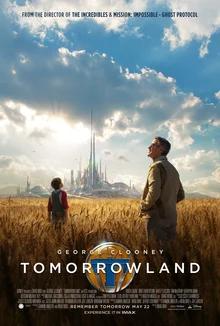
Tomorrowland
Optimistic teenager Casey Newton receives a mysterious pin that, when touched, drops her into a vision of Tomorrowland — a gleaming hidden city of impossible future technology. Tracking down the pin's origin leads her to Frank Walker, a disillusioned former boy-genius who was exiled from that city decades ago, and together they race to understand why humanity's brightest possible future has been sealed away and left to die.
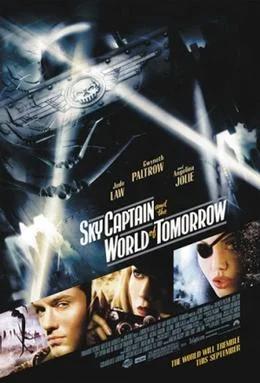
Sky Captain and the World of Tomorrow
1939, an alternate New York besieged by giant robots stomping through Manhattan. Mercenary pilot Joe 'Sky Captain' Sullivan and journalist Polly Perkins — his ex — race to uncover who is behind the attacks, chasing the trail across the globe to a hidden island fortress where a mad scientist's decades-old plan for 'the world of tomorrow' is finally coming to fruition.
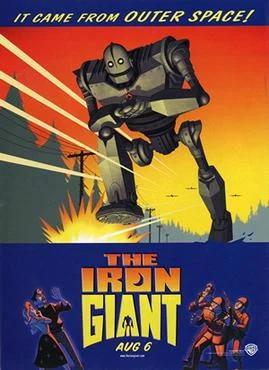
The Iron Giant
Maine, 1957. Young Hogarth Hughes discovers a colossal robot that fell from space, its memory wiped, hiding in the woods behind his house. As Hogarth teaches the Giant about the world — and about choice — a paranoid government agent closes in, convinced the visitor is a Cold War weapon that must be destroyed before it destroys them first.
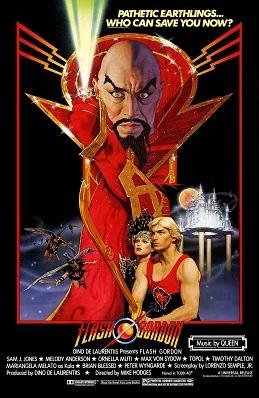
Flash Gordon
Football star Flash Gordon, travel agent Dale Arden and eccentric scientist Dr. Hans Zarkov are pulled through space to the planet Mongo, ruled by the tyrannical Ming the Merciless — who has set Earth in his crosshairs purely for sport. Flash must rally Mongo's warring kingdoms, the hawk-men of Sky City and the forest-dwelling Arboria, into a single rebellion before Ming's whim wipes out his home planet.
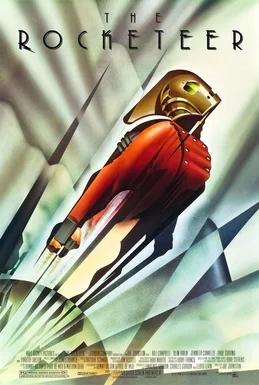
The Rocketeer
1938, Los Angeles. Stunt pilot Cliff Secord stumbles onto a prototype jetpack hidden in his hangar by gangsters — and straps it on. As word of a flying man spreads, Cliff finds himself hunted by Neville Sinclair, a matinee-idol movie star secretly working for Nazi agents desperate to recover the rocket before it reaches Germany, with only his mechanic Peevy and his girlfriend Jenny standing between the jetpack and the Third Reich.
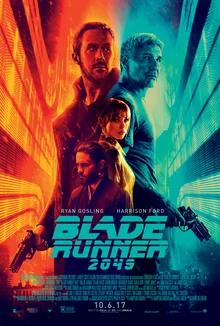
Blade Runner 2049
Thirty years after the original, K is a new-model replicant working as a blade runner for the LAPD, retiring older rogue models without complaint — until a routine job unearths a buried secret: evidence that a replicant once gave birth. The discovery could break the wall between the born and the built, and it sends K hunting for a child hidden decades ago, for a vanished blade runner named Deckard, and for an answer about himself he wants too badly to trust.
Comments
Sign in to join the conversation
No comments yet. Be the first!
Advertisement