Tomorrowland (2015)
Walt Disney Pictures· USA· 130 min· English
Directed by Brad BirdMusic by Michael Giacchino
Synopsis
Optimistic teenager Casey Newton receives a mysterious pin that, when touched, drops her into a vision of Tomorrowland — a gleaming hidden city of impossible future technology. Tracking down the pin's origin leads her to Frank Walker, a disillusioned former boy-genius who was exiled from that city decades ago, and together they race to understand why humanity's brightest possible future has been sealed away and left to die.
Advertisement
Review
Tomorrowland is the rare blockbuster built entirely around a thesis statement about retrofuturism itself: that the mid-century's gleaming, Populuxe vision of tomorrow — jetpacks, monorails, a 1964 World's Fair full of confident optimism — was a genuine civic project, and that its quiet abandonment says something troubling about the present rather than the future. Brad Bird opens the film inside a lovingly recreated 1964 World's Fair, all Populuxe curves and Space Age confidence, before yanking the story forward into a present that has stopped believing that kind of future is still possible.
George Clooney's world-weary Frank Walker and Britt Robertson's stubbornly hopeful Casey make an effective generational argument in miniature — cynicism earned through disappointment versus optimism that hasn't been tested yet — while Raffey Cassidy's Athena, an android recruiter who never physically ages, quietly anchors the film's most melancholy idea: that Tomorrowland itself gave up on humanity before humanity gave up on itself.
Bird and co-writer Damon Lindelof reportedly built the project under an unusually tight veil of secrecy even by tentpole standards, marketing it internally and externally under vague code names and withholding plot details until close to release — an approach meant to preserve the film's mystery-box structure but one that arguably left audiences uncertain what kind of movie they were being sold, family adventure or ideas-driven science fiction essay, right up until opening weekend.
The production's most concrete link to genuine history is its treatment of the 1964 New York World's Fair itself: the sequence recreates real pavilions and exhibits in careful period detail, including a version of Walt Disney's original Audio-Animatronics debut, and Frank's jetpack and Tomorrowland's other gadgetry were deliberately modeled on genuine 1960s Disney Imagineering concept art rather than invented wholesale for the film. That grounding gives the fictional hidden city an unusually researched texture, even as its underlying technology remains pure speculative fantasy.
Where the film runs into trouble is precisely where its ambitions are highest. Its first hour, built almost entirely around wonder and possibility, is among the most purely enjoyable stretches of blockbuster filmmaking Bird has directed; its back half then has to dramatize an abstract argument about collective despair and self-fulfilling doom through a fairly conventional chase-and-confrontation structure, and the mechanics never quite rise to meet the ideas. Hugh Laurie's David Nix gets one genuinely startling monologue about humanity's addiction to apocalyptic thinking that the rest of the film's plotting can't fully support.
The film underperformed at the box office and drew mixed reviews for a third act that struggles to dramatize its own abstract argument as compellingly as its gorgeous first hour promises. But as a mainstream studio film willing to directly argue that civilization needs to want the future again — using the actual visual language of mid-century retrofuturism as its evidence — it's one of the most unusual, sincere failures a major studio has released this century, and its central thesis about lost civic optimism has only grown more resonant with age rather than less.
Raffey Cassidy's work as Athena rewards a second viewing more than almost any other performance in the film — knowing the character's true nature from the outset recasts her early scenes with Casey as something closer to a recruiter grieving in advance for a species she has already, quietly, given up hoping for, which makes her late change of heart land as the film's most genuine emotional turn rather than a plot mechanism.
Michael Giacchino's score amplifies that same tension between wonder and grief, swelling with the same unguarded, brassy optimism that defined his work on Pixar's most hopeful films even as the story around it grows steadily more despairing — a deliberate mismatch that keeps the film's visual and musical language arguing for hope even during its bleakest plot turns.
The film's opening framing device — Frank and Casey narrating events directly to camera, interrupting and correcting each other's version of the story — is an unusually self-conscious structural choice for a summer tentpole, one that signals from the first minutes that this will be a film at least as interested in how stories about the future get told as in the future itself.
Hugh Laurie, cast against his more genial television-comedy image, plays Nix with a controlled, wounded certainty rather than cartoonish villainy — a man who genuinely believes he is protecting the world from itself, which makes his eventual monologue about humanity's fascination with its own destruction land as diagnosis rather than mere exposition.
Trivia & Color Notes
A real World's Fair, rebuilt
The film's opening at the 1964 New York World's Fair meticulously recreates real period pavilions and exhibits, including a version of Disney's original Audio-Animatronics debut — grounding its fictional hidden city inside an authentic slice of mid-century futurist history.
A secret kept by numbers, not words
Marketing for the film withheld nearly all plot details before release, referring to the project only by internal code names during production — an unusually tight lid for a major studio tentpole built around a single big reveal.
Props from real Imagineering blueprints
Production designers deliberately modeled Frank Walker's jetpack and other Tomorrowland-city technology on genuine 1960s Disney Imagineering concept art and Populuxe-era industrial design, rather than inventing a new futuristic look from scratch.
A sincere argument, mixed reception
Despite a director fresh off critical acclaim and a high-profile cast, the film underperformed financially and split critics over its earnest, message-forward third act — though its central thesis about lost civic optimism has drawn growing reappraisal since release.
A hidden pocket-dimension city built by history's greatest inventors, recruiting android talent-scouts and monorail networks powered by unspecified miracle technology, is pure speculative fantasy — but the film's framing device is historically accurate: the 1964 New York World's Fair genuinely did showcase then-cutting-edge exhibits (including Disney's first Audio-Animatronics figures) built around an explicitly optimistic vision of a technologically transformed near future, which the film recreates in careful period detail.
🎵 Soundtrack
Music by Michael Giacchino
Michael Giacchino's score swells with the same unguarded, brassy optimism that scored his work on Pixar's most hopeful films, deliberately evoking the triumphant, brass-forward sound of mid-century World's Fair newsreels and Space Age orchestral cues.
🔗 This film connects to…
Cast & Crew
Director
Composer
Cast
- George Clooney as Frank Walker
- Britt Robertson as Casey Newton
- Hugh Laurie as David Nix
- Raffey Cassidy as Athena
Advertisement
You Might Also Like
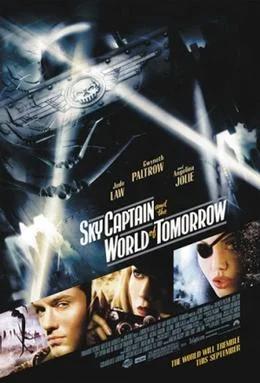
Sky Captain and the World of Tomorrow
1939, an alternate New York besieged by giant robots stomping through Manhattan. Mercenary pilot Joe 'Sky Captain' Sullivan and journalist Polly Perkins — his ex — race to uncover who is behind the attacks, chasing the trail across the globe to a hidden island fortress where a mad scientist's decades-old plan for 'the world of tomorrow' is finally coming to fruition.
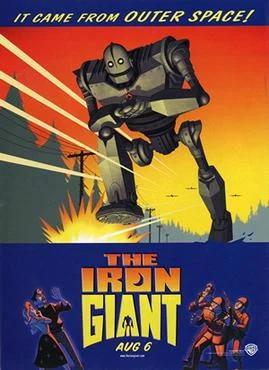
The Iron Giant
Maine, 1957. Young Hogarth Hughes discovers a colossal robot that fell from space, its memory wiped, hiding in the woods behind his house. As Hogarth teaches the Giant about the world — and about choice — a paranoid government agent closes in, convinced the visitor is a Cold War weapon that must be destroyed before it destroys them first.
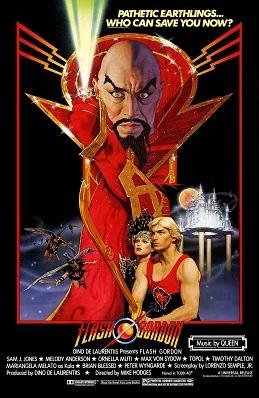
Flash Gordon
Football star Flash Gordon, travel agent Dale Arden and eccentric scientist Dr. Hans Zarkov are pulled through space to the planet Mongo, ruled by the tyrannical Ming the Merciless — who has set Earth in his crosshairs purely for sport. Flash must rally Mongo's warring kingdoms, the hawk-men of Sky City and the forest-dwelling Arboria, into a single rebellion before Ming's whim wipes out his home planet.
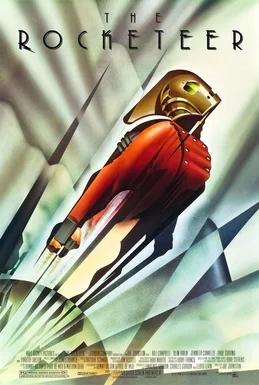
The Rocketeer
1938, Los Angeles. Stunt pilot Cliff Secord stumbles onto a prototype jetpack hidden in his hangar by gangsters — and straps it on. As word of a flying man spreads, Cliff finds himself hunted by Neville Sinclair, a matinee-idol movie star secretly working for Nazi agents desperate to recover the rocket before it reaches Germany, with only his mechanic Peevy and his girlfriend Jenny standing between the jetpack and the Third Reich.
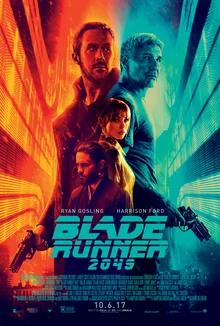
Blade Runner 2049
Thirty years after the original, K is a new-model replicant working as a blade runner for the LAPD, retiring older rogue models without complaint — until a routine job unearths a buried secret: evidence that a replicant once gave birth. The discovery could break the wall between the born and the built, and it sends K hunting for a child hidden decades ago, for a vanished blade runner named Deckard, and for an answer about himself he wants too badly to trust.
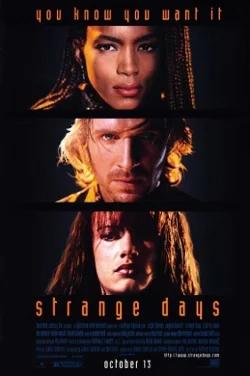
Strange Days
Los Angeles, the last two days of 1999. Lenny Nero, ex-cop turned black-market dealer, sells SQUID recordings — full sensory captures of other people's experiences, straight from their cerebral cortex to yours. Addicted to replaying tapes of his own lost relationship, Lenny is dragged out of his loop when a snuff recording lands in his hands: evidence of a murder that connects to his ex, a music-industry conspiracy, and a police killing that could set the burning city off entirely.
Comments
Sign in to join the conversation
No comments yet. Be the first!
Advertisement