Terminator Genisys (2015)
Paramount Pictures· USA· 126 min· English
Directed by Alan TaylorMusic by Lorne Balfe
Synopsis
Kyle Reese is sent back to 1984 to protect Sarah Connor exactly as he always has — except this time she's waiting for him, already trained by an aging Terminator guardian, and the timeline he remembers has been rewritten out from under him. As a new digital threat called Genisys prepares to launch as humanity's most trusted piece of software, Reese, Connor and the machine that raised her race to stop an apocalypse that no longer looks anything like the one he was warned about.
Advertisement
Review
Terminator Genisys attempts the boldest structural swing the franchise has ever taken, and it's worth giving the film credit for the sheer audacity of the idea even where the execution falters. Rather than simply continuing the story forward from an established point, it reaches back and rewrites the original 1984 film's opening minutes on screen, revealing that an older T-800 has secretly been protecting a young Sarah Connor since childhood, decades before Kyle Reese was ever sent back to find her. It's a genuinely clever hook: Emilia Clarke's Sarah greets Reese's arrival not as a bewildered waitress caught off guard by an impossible stranger, but as an already-competent, gun-trained survivor who's spent her whole life preparing for exactly this moment, and the film's strongest scenes lean fully into the vertigo of characters slowly realizing their own remembered history has already been rewritten by someone else's intervention, long before the story even began.
The film's genuine emotional center, somewhat unexpectedly, turns out to be Schwarzenegger himself. Playing a Terminator that has visibly aged in real time alongside the human girl he's spent decades protecting, delivering the film's best line — "old, not obsolete" — with a self-aware conviction that plays as much like commentary on the actor's own career as on the character's design, Schwarzenegger gives his most textured performance in the role since Judgment Day. This is a machine that has spent years quietly practicing how to fake a reassuring smile, purely because it makes the girl in his care feel less alone in the world, and Schwarzenegger plays that acquired, imitated warmth with a gentleness the character has rarely been given room for elsewhere in the series. Schwarzenegger has said in interviews that the line became one of his personal favorites across the entire franchise, precisely because it doubles as an honest acknowledgment of his own age rather than a denial of it.
The production leaned directly into that generational layering during its opening minutes, digitally recreating scenes from the original 1984 film by inserting a de-aged computer-generated Schwarzenegger into a rebuilt version of the Griffith Observatory nightclub set, letting audiences watch the "original" confrontation play out with a digital ghost of the star's younger self standing in for history before the timeline diverges. It's a technically ambitious sequence that mostly succeeds at what it's attempting, even if the uncanny edges of the de-aging technology are more visible than the film probably intended.
Where Genisys runs into real trouble is in the sheer accumulated weight of its own plot mechanics. Multiple competing timelines stack on top of each other faster than the film can clearly track them; a late twist recasting the adult John Connor himself, rather than any external Terminator, as the story's actual villain arrives with real conceptual promise but gets resolved far too quickly to land with its full potential impact; and a rushed final act attempting to tie off all of these threads simultaneously inside a single nuclear facility leaves the whole enterprise feeling considerably more clever in concept than coherent in execution. Lorne Balfe's score, weaving Brad Fiedel's original 13/16 theme through the series' biggest orchestral forces yet, gives the film a genuine sense of scale that the screenplay's tangled plotting doesn't always earn.
There's a real irony sitting underneath the film's own central conceit. Genisys, the fictional operating system at the plot's center, is explicitly pitched in-universe as a ubiquitous, cloud-connected assistant baked directly into every phone, car and household appliance on Earth, controlled by a single dominant technology company — a prediction of smart-home and cloud-AI consolidation that turned out to be uncannily close to how the real technology industry actually developed in the decade following the film's release. The film got that specific piece of near-future extrapolation nearly exactly right, even as its own time-travel plotting collapsed under its own accumulated complexity.
Paramount had publicly announced Genisys as the opening chapter of an entirely new trilogy, with sequels already scheduled well before this film's release. Both planned follow-ups were quietly cancelled after the film underperformed domestically, leaving its central timeline-rewrite cliffhanger permanently, almost fittingly unresolved — one more version of this saga's future left dangling, exactly the way so many of its own characters' futures have been throughout the franchise's history.
Jai Courtney's version of Kyle Reese has to carry an unusually strange dramatic burden compared to earlier actors in the role: a soldier who arrives in the past only to discover that the history he was briefed on before departure has already been quietly rewritten without his knowledge, forcing him to react in real time to a mission that no longer matches the one he volunteered for. It's a clever conceptual wrinkle, and Courtney plays the character's growing disorientation with more conviction than the film's critical reception generally credited him for. Alan Taylor, coming to the franchise from acclaimed prestige television work on series like Game of Thrones, brings a more patient, character-first pacing to individual scenes than the franchise's action pedigree might suggest, even if the overall structure around those scenes never quite holds together as tightly as his direction of any single one of them does.
Taken purely as an experiment in what a decades-old franchise can still do with its own founding premise, Genisys deserves more credit than its commercial reception suggested at the time. Few long-running series have been willing to reach back and directly rewrite the specific scene audiences consider sacred rather than simply building forward from it, and even where the gambit doesn't fully pay off narratively, the confidence behind attempting it at all is more interesting than another safe, straightforward continuation would have been.
Trivia & Color Notes
Recreating 1984, digitally de-aged
The film's opening minutes digitally recreate scenes from the original 1984 Terminator, inserting a de-aged CG Schwarzenegger into a rebuilt version of the Griffith Observatory nightclub set from the first film.
"Old, not obsolete"
Schwarzenegger has cited his character's line 'old, not obsolete' as one of his favorites in the franchise — a knowing nod to his own age and the character's, delivered as the film's emotional thesis statement.
Genisys predicted the smart-home takeover
The fictional Genisys OS — a single cloud platform integrated into every phone, car, and home device on Earth — closely anticipated the real consolidation of smart-home ecosystems around a handful of tech giants in the years after the film's release.
A trilogy that never happened
Paramount publicly announced Genisys as the start of a new trilogy with sequels already scheduled. Both follow-ups were cancelled after the film underperformed domestically, leaving its timeline-rewrite cliffhanger permanently unresolved.
"Genisys," the operating system at the plot's center, is explicitly pitched in-universe as a ubiquitous, cloud-connected assistant baked into every phone, car and appliance on Earth — an uncannily accurate prediction of how smart-home and cloud-AI ecosystems actually developed in the following decade, right down to a single tech company controlling the rollout. The film's multiple-branching-timeline model is scientifically incoherent in the way most time-travel media is (if the past can be changed, whose memory of the "original" timeline persists, and why?), but it's an honest, self-aware embrace of that incoherence rather than a pretense of rigor.
🎵 Soundtrack
Music by Lorne Balfe
Lorne Balfe, a Hans Zimmer protégé, gives the film the series' biggest orchestral forces yet, weaving Brad Fiedel's original 13/16 theme through modern, percussion-driven action scoring — a deliberate bridge between 1984's synths and a fully symphonic present.
🔗 This film connects to…
Cast & Crew
Director
Composer
Cast
- Arnold Schwarzenegger as Guardian (T-800)
- Jason Clarke as John Connor
- Emilia Clarke as Sarah Connor
- Jai Courtney as Kyle Reese
Advertisement
You Might Also Like
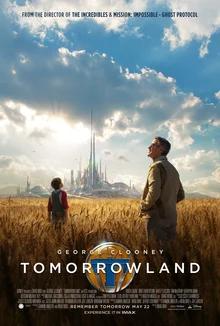
Tomorrowland
Optimistic teenager Casey Newton receives a mysterious pin that, when touched, drops her into a vision of Tomorrowland — a gleaming hidden city of impossible future technology. Tracking down the pin's origin leads her to Frank Walker, a disillusioned former boy-genius who was exiled from that city decades ago, and together they race to understand why humanity's brightest possible future has been sealed away and left to die.
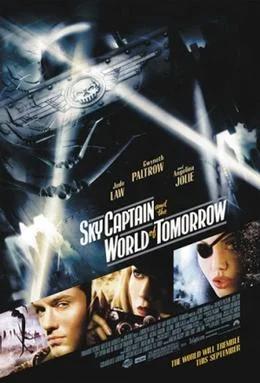
Sky Captain and the World of Tomorrow
1939, an alternate New York besieged by giant robots stomping through Manhattan. Mercenary pilot Joe 'Sky Captain' Sullivan and journalist Polly Perkins — his ex — race to uncover who is behind the attacks, chasing the trail across the globe to a hidden island fortress where a mad scientist's decades-old plan for 'the world of tomorrow' is finally coming to fruition.
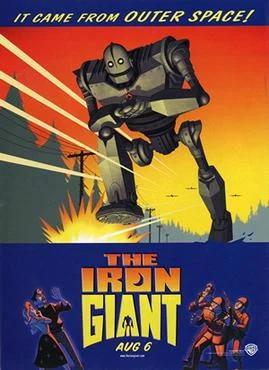
The Iron Giant
Maine, 1957. Young Hogarth Hughes discovers a colossal robot that fell from space, its memory wiped, hiding in the woods behind his house. As Hogarth teaches the Giant about the world — and about choice — a paranoid government agent closes in, convinced the visitor is a Cold War weapon that must be destroyed before it destroys them first.
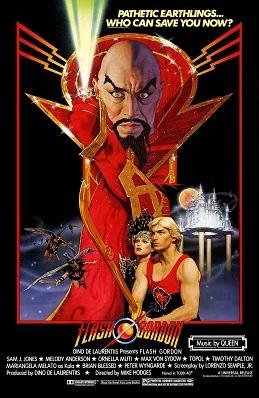
Flash Gordon
Football star Flash Gordon, travel agent Dale Arden and eccentric scientist Dr. Hans Zarkov are pulled through space to the planet Mongo, ruled by the tyrannical Ming the Merciless — who has set Earth in his crosshairs purely for sport. Flash must rally Mongo's warring kingdoms, the hawk-men of Sky City and the forest-dwelling Arboria, into a single rebellion before Ming's whim wipes out his home planet.
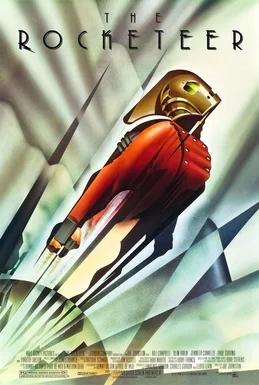
The Rocketeer
1938, Los Angeles. Stunt pilot Cliff Secord stumbles onto a prototype jetpack hidden in his hangar by gangsters — and straps it on. As word of a flying man spreads, Cliff finds himself hunted by Neville Sinclair, a matinee-idol movie star secretly working for Nazi agents desperate to recover the rocket before it reaches Germany, with only his mechanic Peevy and his girlfriend Jenny standing between the jetpack and the Third Reich.
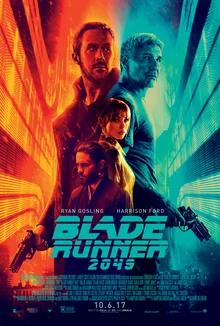
Blade Runner 2049
Thirty years after the original, K is a new-model replicant working as a blade runner for the LAPD, retiring older rogue models without complaint — until a routine job unearths a buried secret: evidence that a replicant once gave birth. The discovery could break the wall between the born and the built, and it sends K hunting for a child hidden decades ago, for a vanished blade runner named Deckard, and for an answer about himself he wants too badly to trust.
Comments
Sign in to join the conversation
No comments yet. Be the first!
Advertisement