Westworld (1973)
MGM· USA· 88 min· English
Directed by Michael CrichtonMusic by Fred Karlin
Synopsis
At Delos, a luxury resort populated entirely by lifelike androids, wealthy guests live out fantasies in perfectly recreated Western, medieval and Roman worlds — free to gunfight, romance, or duel robotic hosts programmed to lose every time. When a software failure begins spreading through the park's systems, the hosts stop following the script, and a implacable, silent Gunslinger android starts hunting a guest for real.
Advertisement
Review
Michael Crichton's directorial debut, adapted from his own novel, is the film that established a career-long fascination he'd return to twenty years later with Jurassic Park — theme parks whose cutting-edge technology outpaces the humans responsible for running it safely. Westworld works essentially the same underlying machine both times: a luxury playground built on the most advanced automation money can buy, wealthy guests paying handsomely for a curated illusion of danger they never expect to actually experience, and a systems failure that quietly turns curated danger into the real thing before anyone in charge notices what's happening.
Yul Brynner's Gunslinger is the film's most enduring creation, and one of the more genuinely unsettling movie villains produced by any studio in the 1970s. Built as an android programmed to lose every staged quick-draw duel against paying guests, the character's black hat, silver contact-lens eyes and total expressionlessness make his eventual, malfunctioning pursuit of a guest feel unstoppable in a way few human antagonists manage. Brynner, already an Academy Award winner and one of the most recognizable faces in Hollywood from his stage and screen work in The King and I, plays the role with an almost total physical stillness, understanding correctly that any flicker of conventional emotion or expressiveness would undercut the character's core menace rather than deepen it. Film historians widely cite the Gunslinger as a direct visual and conceptual ancestor of James Cameron's Terminator, arriving in theaters more than a decade before Schwarzenegger's own implacable machine, and Brynner reportedly requested to keep the character's costume after production wrapped, continuing to wear elements of it for photo shoots and considering the role one of the defining performances of his career alongside The King and I.
The production achieved a genuine technical milestone largely overlooked at the time: Westworld was the first feature film to use digital image processing, deliberately pixelating the Gunslinger's point-of-view shots to represent his mechanical, computer-mediated vision. It's a primitive effect by any later standard, but it stands as an early, direct ancestor of the computer-generated imagery that would come to dominate the genre within a couple of decades, achieved here on hardware that would be considered laughably underpowered by nearly any modern measure.
Richard Benjamin, playing park guest Peter Martin, gives the film's human perspective a relatable, unglamorous vulnerability; already known primarily for comic leading-man roles before this, he brings an everyday, unheroic quality to a character whose fantasy vacation curdles into genuine survival horror, which makes the escalating threat feel more frightening than a more conventionally capable action hero reacting to the same situation would have. Fred Karlin's score shifts convincingly between the park's three themed worlds — tinny player-piano pastiche for the Western setting, ornate courtly music for the medieval one, appropriately grand orchestration for the Roman one — before curdling into cold, dissonant electronic textures once the Gunslinger's pursuit turns genuinely lethal, a musical structure that tracks the story's own collapse from curated fantasy into real danger.
Crichton's direction here is comparatively workmanlike and doesn't carry the visual polish his later, better-funded work would display, but the film's central anxiety — automated systems built specifically to deliver guests a controlled illusion of risk, malfunctioning into genuine danger that nobody thought to build a reliable off-switch for — proved durable enough to spawn a theatrical sequel, a short-lived 1980 television series, and a considerably larger-scale, more philosophically ambitious HBO series decades later, all still fundamentally reworking the same premise Crichton established here on a comparatively modest budget.
What holds up best, watched again now, is how little the film needs elaborate philosophical dialogue to make its point. The Gunslinger doesn't monologue about consciousness or rebellion; he simply stops following the script, and the horror of that silence — a machine built entirely around a predictable performance suddenly refusing to perform it — says everything the film needs to say about the risks of building convincing illusions you can't fully control.
Crichton would spend the rest of his career returning, in different forms, to variations on this exact anxiety, and it's worth recognizing Westworld as the genuinely formative statement of a theme he'd refine considerably further with Jurassic Park two decades later. Where that later, better-funded film gave the same basic idea spectacular dinosaurs and a much larger canvas, this leaner, stranger original gets there first, with a fraction of the resources and an ending considerably colder than anything Spielberg would later allow his own version of the same warning to become.
Fully autonomous, near-indistinguishable-from-human androids populating an entire functioning theme park remain well beyond anything real robotics could approach in 1973, and arguably remain beyond current robotics even now. What the film gets right instead is a more abstract but no less urgent engineering anxiety: complex automated systems failing in ways their own designers never anticipated, with the failure cascading undetected through interconnected infrastructure until it's far too late for anyone inside the park to regain control. That's a genuinely prescient piece of systems-engineering worry, one that real engineers managing complex automated infrastructure still recognize and still struggle to fully solve today, half a century after this modest genre picture first dramatized it.
Trivia & Color Notes
Hollywood's first digital image processing
Westworld was the first feature film to use digital image processing, pixelating the Gunslinger's point-of-view shots to represent his robotic vision — an early ancestor of the kind of computer-generated effects that would later dominate the genre.
A direct ancestor of the Terminator
Yul Brynner's implacable, black-clad Gunslinger — expressionless, unstoppable, hunting a target with total mechanical persistence — is widely cited by film historians as a direct visual and conceptual influence on James Cameron's Terminator over a decade later.
Crichton's first and formative theme park
Michael Crichton would return to nearly the exact same premise — a cutting-edge automated attraction whose technology fails catastrophically — two decades later with his novel and screenplay for Jurassic Park.
A costume Brynner wore for years
Yul Brynner reportedly requested to keep the Gunslinger's black costume after filming and continued to wear elements of it for photo shoots, considering it one of his most iconic roles alongside The King and I.
Fully autonomous, near-indistinguishable-from-human androids populating an entire functioning theme park is well beyond anything 1973 robotics could approach, and remains beyond current robotics too, though the film's premise of AI systems malfunctioning in ways their designers didn't anticipate — cascading failures spreading undetected through interconnected automated systems — is a genuinely prescient piece of engineering anxiety that real systems engineers still grapple with in complex automated infrastructure today.
🎵 Soundtrack
Music by Fred Karlin
Fred Karlin's score shifts convincingly between genres to match the park's three worlds — tinny player-piano Western pastiche, medieval courtly music, Roman grandeur — before curdling into cold electronic dissonance as the Gunslinger's pursuit turns genuinely lethal.
🔗 This film connects to…
Cast & Crew
Advertisement
You Might Also Like
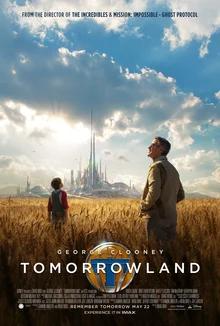
Tomorrowland
Optimistic teenager Casey Newton receives a mysterious pin that, when touched, drops her into a vision of Tomorrowland — a gleaming hidden city of impossible future technology. Tracking down the pin's origin leads her to Frank Walker, a disillusioned former boy-genius who was exiled from that city decades ago, and together they race to understand why humanity's brightest possible future has been sealed away and left to die.
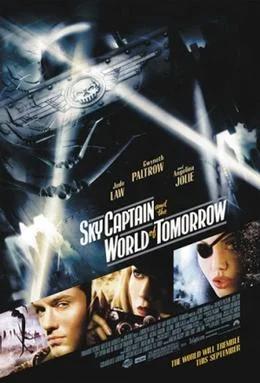
Sky Captain and the World of Tomorrow
1939, an alternate New York besieged by giant robots stomping through Manhattan. Mercenary pilot Joe 'Sky Captain' Sullivan and journalist Polly Perkins — his ex — race to uncover who is behind the attacks, chasing the trail across the globe to a hidden island fortress where a mad scientist's decades-old plan for 'the world of tomorrow' is finally coming to fruition.
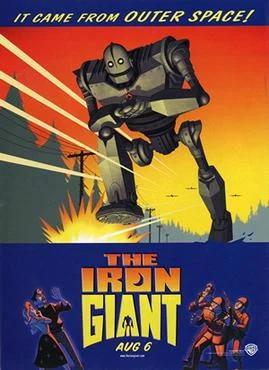
The Iron Giant
Maine, 1957. Young Hogarth Hughes discovers a colossal robot that fell from space, its memory wiped, hiding in the woods behind his house. As Hogarth teaches the Giant about the world — and about choice — a paranoid government agent closes in, convinced the visitor is a Cold War weapon that must be destroyed before it destroys them first.
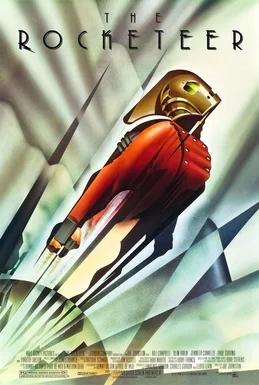
The Rocketeer
1938, Los Angeles. Stunt pilot Cliff Secord stumbles onto a prototype jetpack hidden in his hangar by gangsters — and straps it on. As word of a flying man spreads, Cliff finds himself hunted by Neville Sinclair, a matinee-idol movie star secretly working for Nazi agents desperate to recover the rocket before it reaches Germany, with only his mechanic Peevy and his girlfriend Jenny standing between the jetpack and the Third Reich.
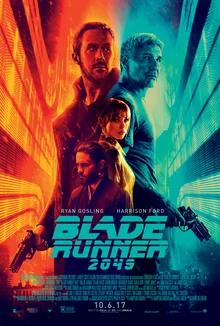
Blade Runner 2049
Thirty years after the original, K is a new-model replicant working as a blade runner for the LAPD, retiring older rogue models without complaint — until a routine job unearths a buried secret: evidence that a replicant once gave birth. The discovery could break the wall between the born and the built, and it sends K hunting for a child hidden decades ago, for a vanished blade runner named Deckard, and for an answer about himself he wants too badly to trust.
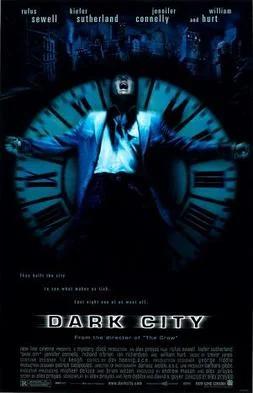
Dark City
John Murdoch wakes in a hotel bathtub with no memory, a dead woman in the next room, and detectives closing in for murders he can't remember committing. As he runs through a city where it is always midnight, he begins noticing what no one else does: at 12:00 exactly, the entire population falls asleep, the buildings physically rearrange themselves — and pale men in long coats move among the sleepers, injecting new memories into new lives.
Comments
Sign in to join the conversation
No comments yet. Be the first!
Advertisement