Contact (1997)
Warner Bros.· USA· 150 min· English
Directed by Robert ZemeckisMusic by Alan Silvestri
Synopsis
Radio astronomer Dr. Ellie Arroway has spent her career searching for proof of extraterrestrial intelligence against the skepticism of the scientific establishment and her own government funders. When she finally detects an unmistakable signal from the star Vega — instructions for building a machine of unknown purpose — Ellie is thrust into a collision between science, faith, politics and her own deepest need to believe that the universe holds more than empty static.
Advertisement
Review
Adapted from Carl Sagan's novel, Contact is the rare studio science fiction film built around a genuine, patient argument rather than a threat that needs defeating by the credits. Robert Zemeckis, working here in a far more contemplative register than the crowd-pleasing momentum of Back to the Future or Forrest Gump, treats first contact as fundamentally a story about epistemology — about how a working scientist goes about proving something genuinely extraordinary to a public and a government considerably more interested in politics, religious anxiety and institutional control than in the actual scientific discovery sitting in front of them.
Jodie Foster's Dr. Ellie Arroway carries the film's intellectual and emotional weight almost entirely single-handedly, and it stands as one of the more personally meaningful roles of her career by her own account. Already a two-time Academy Award winner for The Accused and The Silence of the Lambs, Foster plays Ellie's demand for rigorous empirical proof as inseparable from a private, unresolved grief over her father's early death, and her climactic journey through the wormhole-transit machine built from the alien signal's own instructions becomes as much a spiritual experience as a scientific one, blurring a line the character herself has spent her entire career insisting was absolute. Her extended dialogue with Matthew McConaughey's Palmer Joss, a theologian who challenges her rigid science-versus-faith framing without ever being reduced to a simple strawman for the film's own scientific perspective to dismiss, gives Contact a genuine intellectual debate rather than a one-sided lecture dressed up as dialogue — a rare achievement in studio filmmaking of any decade. McConaughey, still relatively early in his career and mostly known at that point for lighter romantic and comedic roles, uses the part to demonstrate a more serious dramatic register than audiences had generally seen from him up to that point.
The film's scientific groundwork is unusually careful for a studio blockbuster of its scale. The alien message at the plot's center is built around a sequence of prime numbers, a real and seriously proposed strategy within actual SETI research for constructing a signal any sufficiently advanced civilization would recognize as artificial, since prime numbers have no natural astrophysical explanation that could otherwise account for their pattern. Extensive location filming took place at the real National Radio Astronomy Observatory's Very Large Array in New Mexico, giving the film's early SETI research sequences a documentary-grade authenticity most studio productions never bother to pursue. The film also used then-groundbreaking digital compositing to insert archival footage of President Bill Clinton, re-editing real press-conference remarks to appear as though he were responding directly to the film's fictional alien-contact plot — an effects trick that generated its own separate wave of commentary at the time about the ethics of digitally manipulating real political footage for entertainment purposes.
Novelist and co-screenwriter Carl Sagan, who originally developed the story specifically with film in mind before adapting it into the novel that bears his name, died of pneumonia in December 1996, several months before the film's eventual July 1997 release, and never saw the finished adaptation of his own work. Alan Silvestri, Zemeckis's regular musical collaborator since Back to the Future, delivers a score built more around quiet wonder and patient yearning than triumphant fanfare, with its most memorable passages underlining the act of listening and searching itself rather than accompanying conventional action beats.
The film's finale — Ellie's journey producing a profound personal experience she has no way of scientifically proving actually happened, forcing her to ask a skeptical public and government to simply trust her account on faith alone — amounts to a quietly audacious inversion of the entire film's premise, placing its rigorously empirical protagonist in the exact same position as every religious believer she's spent her career being professionally skeptical of. It's optimistic, genuinely moving science fiction, made by a director who trusted a mainstream studio audience to sit through two and a half hours built around a woman patiently listening to the universe, and to find that patience worth the reward it eventually delivers.
Foster has spoken since of how personally the material resonated with her, and that investment shows in a performance built almost entirely around small, precise adjustments of expression and posture rather than any single grand emotional outburst. Contact remains one of the clearest arguments the genre has produced that scientific wonder and genuine spiritual longing aren't necessarily opposing forces, and that a blockbuster budget can be spent on patience and doubt just as easily as on explosions.
Where the film turns speculative — the wormhole-transit machine itself, and the true nature of what Ellie actually experiences while traveling through it — the screenplay is unusually honest about its own ambiguity, deliberately leaving open whether her journey was physically, verifiably real or something closer to a profound personal revelation that happened entirely within her own mind. That refusal to settle the question, in a film so otherwise committed to empirical rigor, is itself a quietly bold storytelling choice few studio productions of its scale would have had the patience to sustain through an entire two-and-a-half-hour runtime.
Trivia & Color Notes
Prime numbers as a universal signal
The film's alien message is built around a sequence of prime numbers — a real, seriously proposed strategy in SETI research for constructing a signal any sufficiently advanced civilization would recognize as artificial, since primes have no natural astrophysical explanation.
Carl Sagan didn't live to see it finished
Novelist and co-screenwriter Carl Sagan, who developed the story specifically for film before turning it into a novel, died of pneumonia in December 1996, several months before Contact's July 1997 release.
A young Jodie Foster on the Very Large Array
Extensive location filming took place at the real National Radio Astronomy Observatory's Very Large Array in New Mexico, giving the film's early SETI sequences a documentary-grade authenticity most studio productions never bother to seek out.
A young Ellie, and a young President, digitally inserted
The film used then-groundbreaking digital compositing to insert archival footage of President Bill Clinton delivering real press-conference remarks re-edited to appear to be responding to the film's fictional alien-contact plot.
Unusually careful for a studio blockbuster: the SETI radio-astronomy premise, the mathematics-first nature of any genuine interstellar signal (the film's message is encoded around prime numbers, a real proposed strategy for unambiguous, non-linguistic first contact), and its take on how governments and institutions would actually respond to definitive proof of alien intelligence are all grounded in real scientific and political thinking. Where it turns speculative — the wormhole-transit machine itself and the nature of Ellie's experience inside it — the film is honest about the ambiguity, deliberately leaving open whether what she experienced was physically real or something closer to a personal revelation.
🎵 Soundtrack
Music by Alan Silvestri
Alan Silvestri, Zemeckis's regular collaborator since Back to the Future, delivers a score built more around quiet wonder and yearning than triumphant fanfare — its most memorable passages underline listening and searching rather than action.
🔗 This film connects to…
Cast & Crew
Advertisement
You Might Also Like
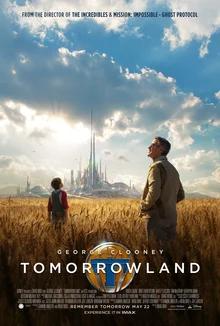
Tomorrowland
Optimistic teenager Casey Newton receives a mysterious pin that, when touched, drops her into a vision of Tomorrowland — a gleaming hidden city of impossible future technology. Tracking down the pin's origin leads her to Frank Walker, a disillusioned former boy-genius who was exiled from that city decades ago, and together they race to understand why humanity's brightest possible future has been sealed away and left to die.
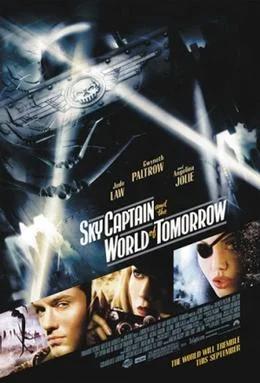
Sky Captain and the World of Tomorrow
1939, an alternate New York besieged by giant robots stomping through Manhattan. Mercenary pilot Joe 'Sky Captain' Sullivan and journalist Polly Perkins — his ex — race to uncover who is behind the attacks, chasing the trail across the globe to a hidden island fortress where a mad scientist's decades-old plan for 'the world of tomorrow' is finally coming to fruition.
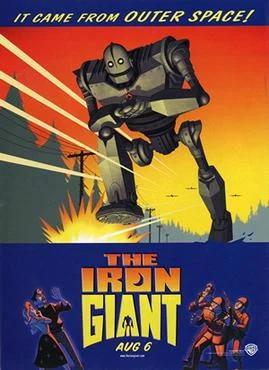
The Iron Giant
Maine, 1957. Young Hogarth Hughes discovers a colossal robot that fell from space, its memory wiped, hiding in the woods behind his house. As Hogarth teaches the Giant about the world — and about choice — a paranoid government agent closes in, convinced the visitor is a Cold War weapon that must be destroyed before it destroys them first.
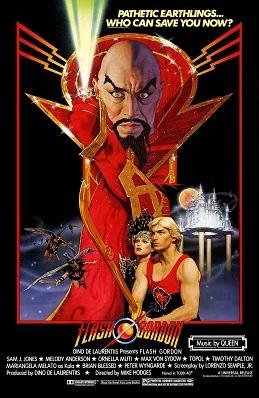
Flash Gordon
Football star Flash Gordon, travel agent Dale Arden and eccentric scientist Dr. Hans Zarkov are pulled through space to the planet Mongo, ruled by the tyrannical Ming the Merciless — who has set Earth in his crosshairs purely for sport. Flash must rally Mongo's warring kingdoms, the hawk-men of Sky City and the forest-dwelling Arboria, into a single rebellion before Ming's whim wipes out his home planet.
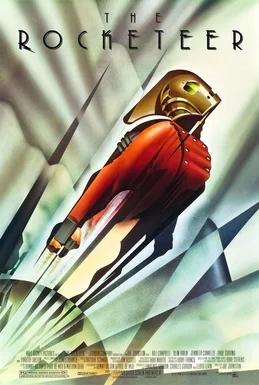
The Rocketeer
1938, Los Angeles. Stunt pilot Cliff Secord stumbles onto a prototype jetpack hidden in his hangar by gangsters — and straps it on. As word of a flying man spreads, Cliff finds himself hunted by Neville Sinclair, a matinee-idol movie star secretly working for Nazi agents desperate to recover the rocket before it reaches Germany, with only his mechanic Peevy and his girlfriend Jenny standing between the jetpack and the Third Reich.
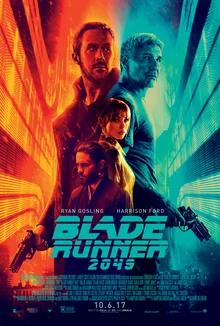
Blade Runner 2049
Thirty years after the original, K is a new-model replicant working as a blade runner for the LAPD, retiring older rogue models without complaint — until a routine job unearths a buried secret: evidence that a replicant once gave birth. The discovery could break the wall between the born and the built, and it sends K hunting for a child hidden decades ago, for a vanished blade runner named Deckard, and for an answer about himself he wants too badly to trust.
Comments
Sign in to join the conversation
No comments yet. Be the first!
Advertisement