Escape from New York (1981)
AVCO Embassy Pictures· USA· 99 min· English
Directed by John CarpenterMusic by John Carpenter
Synopsis
By 1997, Manhattan Island has been walled off entirely and converted into a maximum-security prison where convicts are dumped and left to build their own lawless society. When Air Force One crashes inside the island with the President of the United States aboard, the authorities offer decorated ex-soldier and convicted bank robber Snake Plissken a full pardon for one impossible job: go in, get the President out, in 24 hours or less.
Advertisement
Review
John Carpenter's follow-up to Halloween trades that film's suburban, domestic dread for full-blown dystopian pulp, imagining Manhattan Island as a lawless walled prison ruled by competing gang warlords and functionally abandoned by the very government that built the walls sealing it off in the first place. Escape from New York runs on a lean B-movie premise executed with genuine craft: confident widescreen compositions, a driving synth score Carpenter wrote himself with regular collaborator Alan Howarth, and a lead performance from Kurt Russell that became, almost overnight, one of the genre's defining antiheroes.
Russell's Snake Plissken — eyepatch, gravel-voiced contempt for every authority figure who's ever given him an order, a man who agrees to the mission purely for the pardon and not out of any residual patriotism — was deliberately modeled by Carpenter and Russell together on Clint Eastwood's Man with No Name from the Sergio Leone spaghetti westerns, transplanting that archetype wholesale out of the Old West and into a crumbling near-future America. It's a performance built almost entirely out of physical stillness and clipped, economical dialogue rather than exposition, continuing the specific creative partnership between Russell and Carpenter that had already begun reshaping Russell's public image away from his years as a clean-cut Disney child star. The performance worked well enough to anchor a belated sequel some fifteen years later and to influence antihero protagonists across the genre for decades afterward; video game designer Hideo Kojima has repeatedly and specifically cited Snake Plissken as a direct influence on both the naming and design of Metal Gear's own protagonist, Solid Snake, down to the shared first name.
The film's genuinely modest budget forced real ingenuity rather than expensive spectacle at nearly every turn, and the ingenuity shows up as a strength rather than a limitation. Much of the production was shot in East St. Louis, Illinois, using several city blocks that had actually been devastated by a real fire shortly before filming began, giving the crew ready-made, wholly convincing post-apocalyptic ruins at a fraction of the cost building equivalent sets from scratch would have required. The elaborate hang-glider sequence carrying Snake into Manhattan over the still-standing World Trade Center towers was achieved through genuine stunt glider work rather than any form of effects compositing, one of several sequences where the production's limited budget pushed the crew toward accomplishing things practically that a better-funded film might simply have faked.
Lee Van Cleef, a spaghetti-western icon in his own right from For a Few Dollars More, brings the exact same weathered, morally compromised authority he'd built his earlier career on to Bob Hauk, the official who dispatches Snake into Manhattan, and his casting deliberately trades on the audience's prior association with him from Leone's westerns. Ernest Borgnine, an Academy Award winner for Marty, finds gleeful, cackling comic energy as Cabbie, functioning as the film's rare note of genuine warmth inside a story otherwise populated almost entirely by hardened, dangerous characters.
The crashed Air Force One, the gladiatorial "Duke of New York" arena fights, and the ticking-clock structure built around Snake's twenty-four-hour deadline to extract the President all move with a leanness that keeps the film's pacing tight throughout its comparatively brief runtime, never lingering longer on any single set piece than the story requires. This is Carpenter working in pure, disciplined genre-exercise mode, and the finished film pulls off considerably more style and atmosphere than its modest budget had any obvious right to produce.
What's easy to overlook, given how thoroughly Snake Plissken's silhouette has been absorbed into popular culture since, is how genuinely bleak the film's underlying political vision actually is: a federal government that has responded to an intractable crime problem not by governing more effectively but by simply building a wall around an entire American city and calling the abandonment a solution. That casual, unexamined cruelty toward an entire discarded population sits under all the gunfights and gladiatorial spectacle as the film's real, still-uncomfortable subject.
Carpenter's synth score, minimalist and driving in exactly the register that had already defined Halloween a few years earlier, gives Snake's mission a ticking, mechanical urgency that never lets the film's leaner set pieces feel like padding between the plot's bigger beats. Reused and referenced across the director's own later work, the theme has become as instantly identified with Plissken as Russell's own weary, one-eyed performance, a rare instance of a director's signature musical style and his own recurring collaborator's signature screen persona reinforcing each other this completely across an entire career.
Walling off an entire island borough as a self-governing, ungoverned prison colony, with no guards inside and no rules beyond what the prisoners enforce on each other, functions best as a provocative thought experiment about the total absence of law rather than as a genuine policy proposal any real penal system has seriously attempted at this scale. The film's actual interest lies elsewhere, in political allegory: an authoritarian federal government that has simply given up on governing an entire population rather than continue trying, choosing abandonment dressed as security over the harder, more expensive work of actual justice.
Trivia & Color Notes
Built from Clint Eastwood's silhouette
Carpenter and Russell deliberately modeled Snake Plissken's minimal dialogue and physical stillness on Clint Eastwood's Man with No Name from the Sergio Leone westerns, transplanting the archetype directly into a science-fiction dystopia.
A real fire-ravaged city stood in for Manhattan
Much of the film was shot in East St. Louis, Illinois, using several city blocks that had been devastated by a real fire just before production — giving the crew ready-made post-apocalyptic ruins at a fraction of the cost of building sets.
An eyepatch that inspired a mercenary
Video game designer Hideo Kojima has repeatedly cited Snake Plissken as a direct influence on the naming and design of Metal Gear's protagonist, Solid Snake — down to the shared first name.
A glider built for a real crash
The elaborate hang-glider sequence over the World Trade Center towers was achieved using genuine stunt glider work rather than effects compositing, one of several practical stunts the modest budget forced the production to pull off for real.
Walling off an entire island borough as a self-governing, ungoverned prison colony — no guards inside, no rules, prisoners simply dumped and left to survive — is a provocative thought experiment about the total absence of law rather than a proposal any real penal system has attempted at this scale, though smaller-scale "self-governing" prison and no-go zone concepts have occasionally been floated in real criminal justice debate. The film's real interest is political allegory: an authoritarian federal government that has simply given up on an entire population rather than govern it.
🎵 Soundtrack
Music by John Carpenter
John Carpenter, composing with regular collaborator Alan Howarth, built another of his signature synth scores — a driving, minimalist main theme that became as identified with Snake Plissken as Russell's own performance, reused and referenced across the director's later work.
🔗 This film connects to…
Cast & Crew
Director
Composer
Cast
- Kurt Russell as Snake Plissken
- Lee Van Cleef as Bob Hauk
- Ernest Borgnine as Cabbie
Advertisement
You Might Also Like

Tomorrowland
Optimistic teenager Casey Newton receives a mysterious pin that, when touched, drops her into a vision of Tomorrowland — a gleaming hidden city of impossible future technology. Tracking down the pin's origin leads her to Frank Walker, a disillusioned former boy-genius who was exiled from that city decades ago, and together they race to understand why humanity's brightest possible future has been sealed away and left to die.
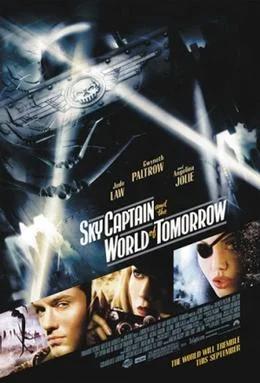
Sky Captain and the World of Tomorrow
1939, an alternate New York besieged by giant robots stomping through Manhattan. Mercenary pilot Joe 'Sky Captain' Sullivan and journalist Polly Perkins — his ex — race to uncover who is behind the attacks, chasing the trail across the globe to a hidden island fortress where a mad scientist's decades-old plan for 'the world of tomorrow' is finally coming to fruition.
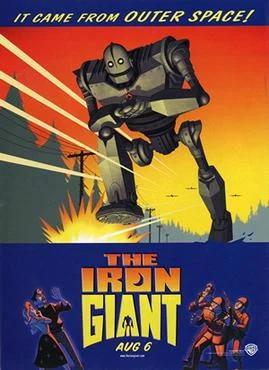
The Iron Giant
Maine, 1957. Young Hogarth Hughes discovers a colossal robot that fell from space, its memory wiped, hiding in the woods behind his house. As Hogarth teaches the Giant about the world — and about choice — a paranoid government agent closes in, convinced the visitor is a Cold War weapon that must be destroyed before it destroys them first.
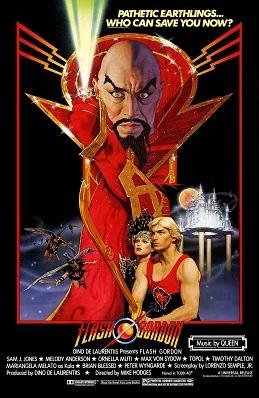
Flash Gordon
Football star Flash Gordon, travel agent Dale Arden and eccentric scientist Dr. Hans Zarkov are pulled through space to the planet Mongo, ruled by the tyrannical Ming the Merciless — who has set Earth in his crosshairs purely for sport. Flash must rally Mongo's warring kingdoms, the hawk-men of Sky City and the forest-dwelling Arboria, into a single rebellion before Ming's whim wipes out his home planet.
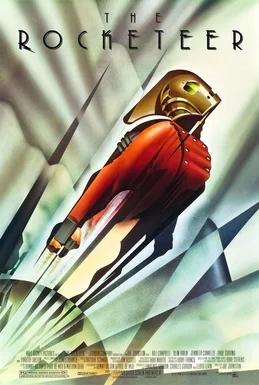
The Rocketeer
1938, Los Angeles. Stunt pilot Cliff Secord stumbles onto a prototype jetpack hidden in his hangar by gangsters — and straps it on. As word of a flying man spreads, Cliff finds himself hunted by Neville Sinclair, a matinee-idol movie star secretly working for Nazi agents desperate to recover the rocket before it reaches Germany, with only his mechanic Peevy and his girlfriend Jenny standing between the jetpack and the Third Reich.

Blade Runner 2049
Thirty years after the original, K is a new-model replicant working as a blade runner for the LAPD, retiring older rogue models without complaint — until a routine job unearths a buried secret: evidence that a replicant once gave birth. The discovery could break the wall between the born and the built, and it sends K hunting for a child hidden decades ago, for a vanished blade runner named Deckard, and for an answer about himself he wants too badly to trust.
Comments
Sign in to join the conversation
No comments yet. Be the first!
Advertisement