Brazil (1985)
Universal Pictures· UK· 132 min· English
Directed by Terry GilliamMusic by Michael Kamen
Synopsis
In a retro-futuristic, totalitarian bureaucracy choking on paperwork and ductwork, low-level government clerk Sam Lowry spends his days processing forms and his nights escaping into elaborate flying dreams. When a literal typing error — a squashed fly jamming a printer, turning 'Tuttle' into 'Buttle' — sends the wrong man to his death, Sam's attempt to correct the paperwork pulls him into a nightmarish collision between his fantasies and a state that treats a clerical mistake as more dangerous than the person it actually kills.
Advertisement
Review
Terry Gilliam's Brazil imagines totalitarian control not through jackboots and omnipresent surveillance screens but through something far more mundane and, in its own way, far more terrifying: paperwork, filed correctly and processed on schedule regardless of the human cost. Its retro-futuristic setting — crumbling Art Deco architecture strangled by exposed, oversized ductwork, malfunctioning machines everywhere you look, a bureaucracy so vast and thoroughly self-justifying that correcting an obvious clerical error becomes an act of genuine, dangerous rebellion — gives the film's satire a texture unlike almost any other dystopia the genre has produced, closer to Kafka rewritten as slapstick comedy than to Orwell rewritten as grim spectacle.
Jonathan Pryce's Sam Lowry, a low-level government clerk who escapes his suffocating bureaucratic reality into elaborate winged-hero fantasies, anchors the film's central collision between private imagination and institutional cruelty. Pryce, a respected British stage actor with a Tony Award already to his name, brings a wide-eyed, genuinely dreamlike quality to a character caught permanently between mundane paperwork drudgery and soaring escapist fantasy, and Gilliam stages that collision with a visual density — every single frame crammed with production design detail, every institutional space rendered simultaneously grand and visibly crumbling — that rewards repeated viewing more than almost any other film of its decade. Production designer Norman Garwood built entire sets around exposed, deliberately oversized ductwork specifically to visualize bureaucracy as something that had literally, physically overtaken and strangled the architecture of everyday life, a design choice so complete that the ducts function almost as a competing character in their own right.
Robert De Niro's brief cameo as Harry Tuttle, a renegade heating engineer operating entirely outside the state's suffocating permit system, gives the film's second act a genuine jolt of anarchic energy against all that institutional gray. De Niro reportedly took the small role specifically because he wanted the opportunity to work with Gilliam, accepting a considerably smaller fee than his standing in the industry would normally have commanded for a part this brief — a testament to how seriously respected filmmakers regarded Gilliam's ambition even before the finished film's difficult release history became public knowledge.
Michael Kamen builds the score around Ary Barroso's cheerful 1939 song "Aquarela do Brasil," which gives the film its title, deploying its bright, deliberately escapist melody with mounting irony as the state's cruelty toward Sam and everyone around him steadily escalates — a soundtrack choice that grows darker and more pointed every single time it recurs across the runtime, turning a genuinely charming piece of period music into something closer to a taunt by the film's end.
The film's production and release history is nearly as famous within film circles as the finished picture itself. Gilliam fought a protracted, deliberately public battle with Universal over final cut, refusing the studio's demanded happy ending and eventually taking out a full-page advertisement in Variety publicly asking studio chairman Sid Sheinberg directly when he intended to actually release the film as its director had cut it — a remarkably aggressive pressure campaign for any filmmaker to wage against the studio financing his own picture. Universal, for its part, reportedly prepared its own drastically re-edited version with a tacked-on happy ending, nicknamed internally the "Love Conquers All" cut, without Gilliam's approval; that version aired on American television but was never released as the studio's official theatrical cut.
Gilliam ultimately won the fight, more or less, and the film's actual ending — Sam's apparent escape into freedom and love revealed to be pure fantasy occurring inside his own mind while his physical body remains catatonic under ongoing state interrogation — stands as one of the bleakest, most formally audacious closing sequences any studio-financed genre film has ever been permitted to keep. Watched today, in an era of automated bureaucracy, algorithmic customer service and institutions that treat their own procedural consistency as more sacred than the people those procedures are supposedly meant to serve, Brazil's specific comic nightmare has lost none of its bite.
Gilliam has continued making similarly idiosyncratic, bureaucracy-haunted films across the decades since, several of which endured their own famously chaotic productions, but none has matched Brazil's precise combination of visual density, comic invention and genuine political fury. It remains the clearest statement of a sensibility Gilliam had been developing since his Monty Python animation work, now given the resources and the running time to build an entire, fully coherent nightmare rather than a sketch of one.
Brazil isn't extrapolating any real technology so much as satirizing bureaucratic institutions through deliberately anachronistic, decaying machinery — antique typewriters awkwardly wired into modern systems, pneumatic tubes carrying paperwork through walls, ductwork that dominates every interior space and constantly malfunctions regardless of how many repair tickets get filed. Its genuine insight is institutional rather than technological: a security and surveillance state so committed to procedural self-justification that correcting its own acknowledged factual error becomes, bureaucratically, more dangerous to pursue than the human cost of leaving the error uncorrected — a dynamic real whistleblowers and accountability researchers would recognize immediately, decades later, in institutions that have nothing to do with Gilliam's imagined dystopia at all.
Trivia & Color Notes
A trade-ad war with the studio
When Universal demanded a happier ending and shelved Gilliam's cut, he took out a full-page ad in Variety publicly asking studio chairman Sid Sheinberg when he intended to release the film — a rare, aggressive public pressure campaign by a director against his own studio.
The 'Love Conquers All' cut
Universal secretly prepared a drastically re-edited version with a happy ending, nicknamed the 'Love Conquers All' cut, without Gilliam's approval — it aired on American television but was never released as the studio's official theatrical version.
De Niro's uncredited-feeling cameo
Robert De Niro took the small role of renegade repairman Harry Tuttle specifically because he wanted to work with Gilliam, reportedly taking a much smaller fee than his standing would normally command for the part.
Ductwork as set design philosophy
Production designer Norman Garwood built entire sets around exposed, oversized ductwork specifically to visualize bureaucracy as something that had literally overtaken and strangled the physical architecture of everyday life.
Brazil isn't extrapolating real technology so much as satirizing bureaucratic institutions through deliberately anachronistic, decaying machinery — antique typewriters wired into modern systems, pneumatic tubes, ductwork that dominates every space and constantly malfunctions. Its genuine insight isn't technological but institutional: a surveillance and security state so committed to procedural self-justification that correcting its own factual error becomes more dangerous, bureaucratically, than the human cost of the error itself — a dynamic real whistleblowers and bureaucratic-accountability researchers would recognize immediately.
🎵 Soundtrack
Music by Michael Kamen
Michael Kamen builds the score around Ary Barroso's cheerful 1939 song 'Aquarela do Brasil' (giving the film its title), deploying its bright, escapist melody with increasing irony against the state's mounting cruelty — a soundtrack choice that becomes darker every time it recurs.
🔗 This film connects to…
Cast & Crew
Advertisement
You Might Also Like
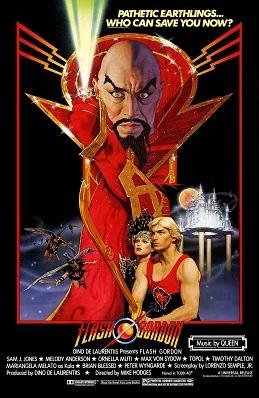
Flash Gordon
Football star Flash Gordon, travel agent Dale Arden and eccentric scientist Dr. Hans Zarkov are pulled through space to the planet Mongo, ruled by the tyrannical Ming the Merciless — who has set Earth in his crosshairs purely for sport. Flash must rally Mongo's warring kingdoms, the hawk-men of Sky City and the forest-dwelling Arboria, into a single rebellion before Ming's whim wipes out his home planet.
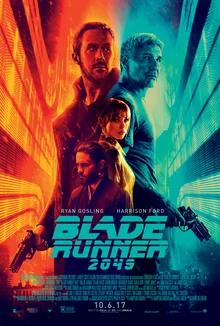
Blade Runner 2049
Thirty years after the original, K is a new-model replicant working as a blade runner for the LAPD, retiring older rogue models without complaint — until a routine job unearths a buried secret: evidence that a replicant once gave birth. The discovery could break the wall between the born and the built, and it sends K hunting for a child hidden decades ago, for a vanished blade runner named Deckard, and for an answer about himself he wants too badly to trust.
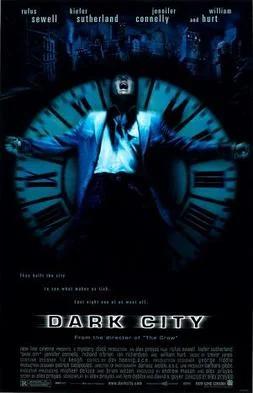
Dark City
John Murdoch wakes in a hotel bathtub with no memory, a dead woman in the next room, and detectives closing in for murders he can't remember committing. As he runs through a city where it is always midnight, he begins noticing what no one else does: at 12:00 exactly, the entire population falls asleep, the buildings physically rearrange themselves — and pale men in long coats move among the sleepers, injecting new memories into new lives.
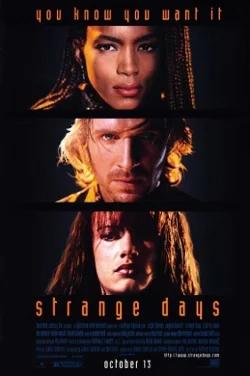
Strange Days
Los Angeles, the last two days of 1999. Lenny Nero, ex-cop turned black-market dealer, sells SQUID recordings — full sensory captures of other people's experiences, straight from their cerebral cortex to yours. Addicted to replaying tapes of his own lost relationship, Lenny is dragged out of his loop when a snuff recording lands in his hands: evidence of a murder that connects to his ex, a music-industry conspiracy, and a police killing that could set the burning city off entirely.
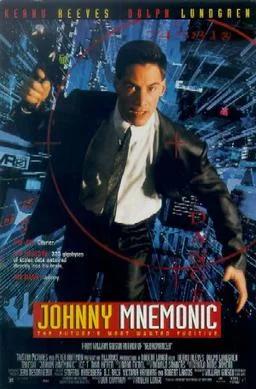
Johnny Mnemonic
2021: half the world suffers from a technology-induced plague, and the most valuable data travels not on networks — too easily hacked — but inside the heads of mnemonic couriers. Johnny is one of them, and his latest job stuffs his implanted memory far beyond safe capacity with data the Yakuza and a pharmaceutical giant will kill for. He has roughly a day to make delivery before the payload literally destroys his brain — the same brain he emptied of his own childhood to make room for cargo.
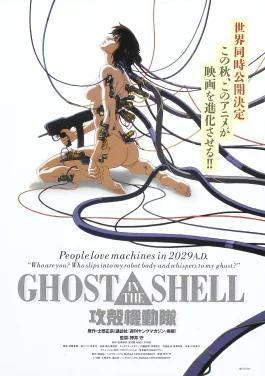
Ghost in the Shell
New Port City, 2029. Major Motoko Kusanagi, a cyborg security officer whose body is entirely artificial, hunts an elusive hacker known as the Puppet Master — an entity that ghost-hacks human minds and rewrites their memories. But the closer she gets, the more the case turns inward: if her body is manufactured and her memories can be edited, what exactly is the 'ghost' in her shell that makes her her?
Comments
Sign in to join the conversation
No comments yet. Be the first!
Advertisement