TRON (1982)
Walt Disney Pictures· USA· 96 min· English
Directed by Steven LisbergerMusic by Wendy Carlos
Synopsis
Video game programmer Kevin Flynn breaks into his former employer's mainframe to find evidence a rival executive stole his game designs — and is instead digitized by an experimental laser, pulled physically inside the computer system itself. Trapped in a neon-lit digital world where programs are living beings forced to compete in gladiatorial games by a tyrannical AI called the Master Control Program, Flynn allies with the security program Tron to fight his way back to the real world.
Advertisement
Review
Disney bet on a genuinely strange proposition in 1982: a feature film that treats the interior of a computer as a physical, inhabitable world in its own right, populated by digital programs who resemble people and regard their human "Users" with something close to religious reverence. TRON was a commercial disappointment on release and even generated a small controversy over its Academy Award eligibility — several members of the effects branch reportedly felt that using computers to generate imagery amounted to a form of cheating, an attitude the entire film industry would reverse completely within roughly a decade. Whatever the Academy's reservations at the time, the film's influence on both visual effects craft and the entire aesthetic vocabulary of "cyberspace" as a navigable, spatial concept has proven considerably more durable than its underwhelming initial box office.
The film's glowing-grid visual design mixes traditional backlit animation techniques with genuinely groundbreaking, if primitive by later standards, computer-generated sequences, and despite its reputation as a landmark of early computer animation, the finished film actually contains less than twenty minutes of true CGI. The bulk of its distinctive look instead relies on a labor-intensive backlit process in which live-action performances were traced and hand-colored frame by frame, a painstaking technique that gave the Grid its consistent, luminous quality without requiring computing power the era simply didn't have available at feature length. Together, these approaches gave audiences their first extended look at a completely digital environment rendered as genuine cinematic space rather than abstract data on a screen — a good decade before "cyberspace" entered mainstream vocabulary through William Gibson's novels, and roughly two decades before The Matrix would revisit strikingly similar territory with vastly more processing power behind it.
Jeff Bridges plays both hacker Kevin Flynn and his glowing programmatic double Clu with easy, likable energy that keeps the film's more abstract conceptual stakes grounded in recognizable human charisma. Wendy Carlos's electronic score, her first major film work since A Clockwork Orange over a decade earlier, blends orchestral passages with pioneering synthesizer textures to give the Grid's light-cycle races and disc-combat arenas a pulse that no conventional orchestral score of the era could have supplied, reinforcing the sense of a world built from a genuinely different, electronic logic than the physical one just outside the computer's casing.
TRON stands as one of the more technologically ambitious and expensive productions Disney had attempted since Fantasia, drawing on computer time from four separate specialized effects houses running some of the most powerful graphics hardware available anywhere at the time. The film's glowing Light Cycles were designed by futurist illustrator Syd Mead, who was simultaneously working on Blade Runner's production design the very same year — a remarkable coincidence that put one designer's imagination behind two of 1982's most influential and visually distinct science fiction productions at once, released within months of each other.
It's a film whose narrative ambition occasionally outstrips its actual storytelling execution; the plot mechanics connecting Flynn's journey through the Grid can feel thin compared to the density and confidence of the world-building surrounding them. But as a piece of pure conceptual invention — insisting, with total sincerity, that a computer's internal processes could constitute a genuine, explorable place worth taking seriously on cinematic terms — it was years, arguably decades, ahead of the technology actually available to fully realize its own ambitions, and the culture eventually caught up to what the film was reaching for long after its initial theatrical run had already come and gone.
The eventual 2010 legacy sequel, arriving nearly three decades later with a considerably larger budget and vastly more capable digital tools, in some ways only confirmed how much of the original's charm lay in its specific technical limitations rather than despite them. There's a hand-built, slightly rough sincerity to the 1982 film's vision of the Grid that a smoother, more photorealistic update couldn't entirely recapture, and it's a large part of why the original still feels like a genuine artifact of a particular, unrepeatable moment in effects history rather than simply an early draft of something later films perfected.
Physically digitizing and transporting a human body into a computer's internal processes, where programs exist as sentient, physically embodied beings walking around a lit environment, has no basis whatsoever in how computing actually functions — programs are instructions, not conscious entities occupying literal, navigable space. What the film gets right, with unusual prescience for 1982, is the conceptual metaphor underneath the impossible mechanics: representing abstract digital processes as a spatial, explorable "cyberspace" anticipated both real virtual-reality interface design and an entire subsequent genre of fiction built on exactly that same founding idea.
Trivia & Color Notes
Disqualified from the visual effects Oscar
TRON was reportedly deemed ineligible for the Academy Award for Best Visual Effects because some voters felt using computers to generate imagery was a form of cheating — an attitude the entire film industry would completely reverse within a decade.
Less than 20 minutes of true CGI
Despite its reputation as a computer-animation landmark, the film contains less than 20 minutes of actual computer-generated imagery; the rest uses a labor-intensive backlit animation process where actors' filmed performances were traced and colored by hand, frame by frame.
Disney's biggest gamble of the era
TRON was one of the most technologically ambitious and expensive productions Disney had attempted since Fantasia, using computer time from four different specialized effects houses running some of the era's most powerful available graphics hardware.
The Light Cycle, redesigned for decades
The film's glowing Light Cycles were designed by futurist illustrator Syd Mead, who also worked on Blade Runner the same year — a rare instance of one designer shaping the core vehicle imagery of two genre-defining 1982 films simultaneously.
Physically digitizing and transporting a human body into a computer's internal processes, where digital programs exist as sentient, physically embodied beings, has no basis in how computing actually works — programs are instructions, not conscious entities occupying literal space. What the film gets right, with unusual prescience for 1982, is the conceptual metaphor: representing abstract digital processes as a navigable, spatial "cyberspace" anticipated both real virtual-reality interface design and an entire subsequent genre of fiction built on the same core idea.
🎵 Soundtrack
Music by Wendy Carlos
Wendy Carlos returned to film scoring for the first time since A Clockwork Orange, blending orchestral passages with pioneering synthesizer work to give the Grid's races and combat a sound that felt genuinely, newly electronic rather than a traditional score simply layered with synth textures.
🔗 This film connects to…
Cast & Crew
Advertisement
You Might Also Like
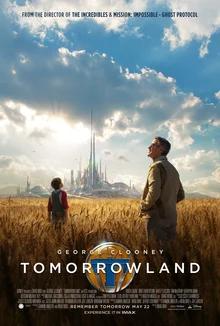
Tomorrowland
Optimistic teenager Casey Newton receives a mysterious pin that, when touched, drops her into a vision of Tomorrowland — a gleaming hidden city of impossible future technology. Tracking down the pin's origin leads her to Frank Walker, a disillusioned former boy-genius who was exiled from that city decades ago, and together they race to understand why humanity's brightest possible future has been sealed away and left to die.
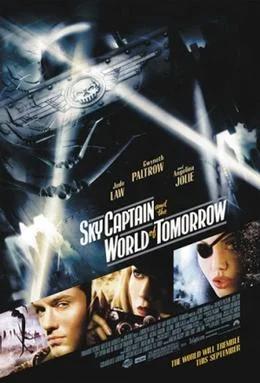
Sky Captain and the World of Tomorrow
1939, an alternate New York besieged by giant robots stomping through Manhattan. Mercenary pilot Joe 'Sky Captain' Sullivan and journalist Polly Perkins — his ex — race to uncover who is behind the attacks, chasing the trail across the globe to a hidden island fortress where a mad scientist's decades-old plan for 'the world of tomorrow' is finally coming to fruition.
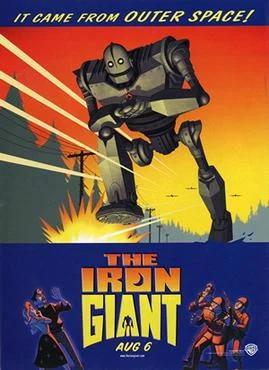
The Iron Giant
Maine, 1957. Young Hogarth Hughes discovers a colossal robot that fell from space, its memory wiped, hiding in the woods behind his house. As Hogarth teaches the Giant about the world — and about choice — a paranoid government agent closes in, convinced the visitor is a Cold War weapon that must be destroyed before it destroys them first.
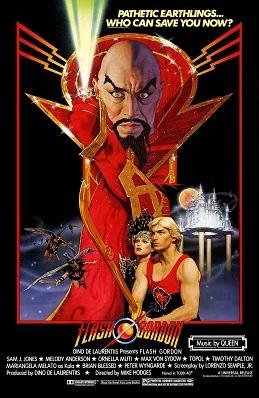
Flash Gordon
Football star Flash Gordon, travel agent Dale Arden and eccentric scientist Dr. Hans Zarkov are pulled through space to the planet Mongo, ruled by the tyrannical Ming the Merciless — who has set Earth in his crosshairs purely for sport. Flash must rally Mongo's warring kingdoms, the hawk-men of Sky City and the forest-dwelling Arboria, into a single rebellion before Ming's whim wipes out his home planet.
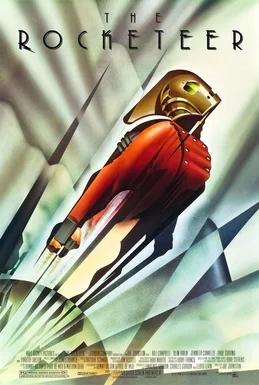
The Rocketeer
1938, Los Angeles. Stunt pilot Cliff Secord stumbles onto a prototype jetpack hidden in his hangar by gangsters — and straps it on. As word of a flying man spreads, Cliff finds himself hunted by Neville Sinclair, a matinee-idol movie star secretly working for Nazi agents desperate to recover the rocket before it reaches Germany, with only his mechanic Peevy and his girlfriend Jenny standing between the jetpack and the Third Reich.
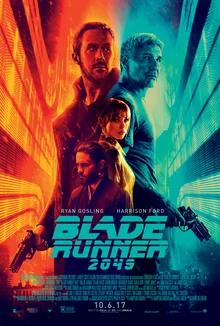
Blade Runner 2049
Thirty years after the original, K is a new-model replicant working as a blade runner for the LAPD, retiring older rogue models without complaint — until a routine job unearths a buried secret: evidence that a replicant once gave birth. The discovery could break the wall between the born and the built, and it sends K hunting for a child hidden decades ago, for a vanished blade runner named Deckard, and for an answer about himself he wants too badly to trust.
Comments
Sign in to join the conversation
No comments yet. Be the first!
Advertisement