The Day the Earth Stood Still (2008)
20th Century Fox· USA· 104 min· English
Directed by Scott DerricksonMusic by Tyler Bates
Synopsis
An alien visitor named Klaatu arrives on Earth inside a glowing sphere, escorted by an enormous, silent robotic guardian called Gort — this time carrying an ultimatum about humanity's environmental destruction rather than its nuclear weapons. As government agents scramble to contain him and astrobiologist Helen Benson tries to understand his true intentions, Klaatu must decide whether a species this reckless with its own planet deserves to survive at all.
Advertisement
Review
Rebooting Robert Wise's 1951 classic for a twenty-first-century audience, this Day the Earth Stood Still swaps its predecessor's nuclear-anxiety framing for ecological collapse: Klaatu's ultimatum is no longer about weapons humanity might turn against itself, but about a species so reckless with its own planet's biosphere that a wider community of worlds has decided Earth would simply be better preserved without humans occupying it. The filmmakers have said they made that shift deliberately, reasoning that climate anxiety had replaced nuclear war as the defining existential fear of a new generation of moviegoers, and it's a reasonable, era-appropriate update of the original's central premise, even if the finished film never quite reaches the same moral clarity or narrative discipline as its source.
Keanu Reeves plays Klaatu with a deliberate, alien stillness that consciously echoes Michael Rennie's original 1951 performance — flat affect, carefully measured physical movements, a stranger genuinely unfamiliar with human bodies and social customs, relearning basic gestures in real time. His casting drew frequent, largely unavoidable comparison to his earlier role in The Matrix as another figure who arrives specifically to challenge humanity's fundamental understanding of its own reality, a connection critics noted repeatedly on release and one the film seems at least partially aware of trading on. Jennifer Connelly's Helen Benson, an astrobiologist rather than the original's more general scientific consultant, carries the emotional argument for humanity's continued worth opposite him, and the film is at its strongest in their quieter, more intimate scenes, considerably closer in spirit to the 1951 original's patient character work than to the effects-heavy set pieces surrounding them.
The production made a clear, self-aware effort to honor its source material directly: the filmmakers included a version of the original's famous "Klaatu barada nikto" phrase as a deliberate homage, though it functions differently within the new plot's mechanics, serving as a conscious nod for longtime fans rather than as an identical functional plot device. Gort himself was reimagined for this version partly as a swarm of self-replicating nanobots capable of disassembling matter and machinery at a molecular level, rather than remaining a single implacable robotic enforcer — a significant conceptual departure from the original that updates the vague "unstoppable robotic power" of 1951 into a more period-appropriate technological anxiety about nanotechnology and self-replicating systems, even if it sacrifices some of the original robot's iconic simplicity in the process.
Tyler Bates, scoring the remake, deliberately avoided directly quoting Bernard Herrmann's iconic theremin work from the original, instead building a modern orchestral-electronic hybrid score that nods toward the earlier film's alien atmosphere without attempting to replace or compete with its most famous and instantly recognizable musical signature — a wise choice, given how thoroughly Herrmann's two-theremin arrangement had already defined "the sound of 1950s alien contact" for generations of viewers.
Where the remake genuinely struggles is in precisely the area the original excelled: message discipline. Wise's 1951 film delivered its warning with spare, remarkably confident restraint, trusting a handful of quiet, human-scaled scenes to carry its entire argument. Scott Derrickson's version, by contrast, gets increasingly pulled toward blockbuster-scale spectacle as it progresses — expanded military confrontations, larger-scale destruction sequences, a nanotech swarm that reads as considerably more abstract and less personally threatening than a single implacable robot standing at a doorway — diluting some of the intimacy that made the 1951 version so effective at a fraction of the budget. It's a competent, well-cast, respectfully assembled update of a genuine classic, but it never quite locates a compelling reason of its own to exist alongside the original rather than simply in its shadow.
Derrickson, a horror specialist who would go on to direct Marvel's Doctor Strange, brought an unusually somber, genuinely eco-anxious tone to individual scenes even where the larger structure around them pulled toward more conventional blockbuster beats, and it's worth recognizing the film as a sincere, thoughtful attempt at updating a genre landmark rather than a cynical cash-in trading purely on name recognition. It simply arrived carrying an impossible burden of comparison, and few remakes of any genre classic have ever fully escaped that particular shadow.
The remake's ecological framing — an advanced civilization judging Earth's biosphere worth preserving even at the direct cost of its dominant species — engages with genuine, serious contemporary climate anxiety more directly than the original's Cold War nuclear framing ever could for a modern audience, even though the actual mechanism driving the plot, alien intervention through judgment and potential extermination, remains just as speculative as it was in 1951. Gort's redesign as self-replicating nanotechnology capable of disassembling matter draws on real, if highly speculative, nanotechnology research directions, updating the original robot's vague "unstoppable power" into a more period-appropriate technological anxiety for an audience considerably more familiar with the language of engineered systems run amok.
Trivia & Color Notes
An ecological reboot for a new anxiety
The filmmakers deliberately shifted Klaatu's ultimatum from the original's nuclear-weapons warning to an environmental-collapse warning, reasoning that climate change had replaced nuclear war as the defining existential anxiety of the era for a new audience.
Gort, rebuilt from nanotechnology
Rather than a single giant robot, the remake reimagines Gort partly as a swarm of self-replicating nanobots capable of disassembling matter and machinery — a significant conceptual departure from the original's single implacable enforcer.
A deliberately different Klaatu barada nikto
The filmmakers included a version of the original's famous phrase as a direct homage, though it functions differently in the new plot — a conscious nod for longtime fans rather than a functionally identical plot device.
Reeves, twice an alien messenger
Keanu Reeves's casting drew frequent comparison to his earlier role in The Matrix as another figure who arrives to fundamentally challenge humanity's understanding of its own reality — a connection critics noted repeatedly on release.
The remake's ecological framing — an advanced civilization judging Earth's biosphere worth preserving even at the cost of its dominant species — engages with real, serious contemporary climate anxiety more directly than the original's Cold War nuclear framing, though the mechanism (alien intervention via judgment and potential extermination) remains speculative rather than scientific. Gort's redesign as self-replicating nanotechnology capable of disassembling matter draws on genuine, if highly speculative, nanotechnology research directions, updating the original robot's vague "unstoppable power" into a more period-appropriate technological anxiety.
🎵 Soundtrack
Music by Tyler Bates
Tyler Bates avoids directly quoting Bernard Herrmann's iconic theremin work, instead building a modern orchestral-electronic hybrid score that nods to the original's alien atmosphere without attempting to replace its most famous musical signature.
🔗 This film connects to…
Cast & Crew
Advertisement
You Might Also Like
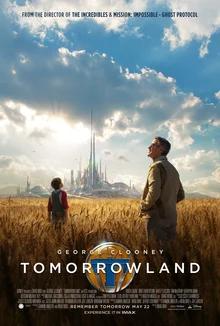
Tomorrowland
Optimistic teenager Casey Newton receives a mysterious pin that, when touched, drops her into a vision of Tomorrowland — a gleaming hidden city of impossible future technology. Tracking down the pin's origin leads her to Frank Walker, a disillusioned former boy-genius who was exiled from that city decades ago, and together they race to understand why humanity's brightest possible future has been sealed away and left to die.
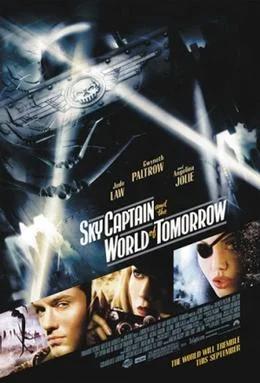
Sky Captain and the World of Tomorrow
1939, an alternate New York besieged by giant robots stomping through Manhattan. Mercenary pilot Joe 'Sky Captain' Sullivan and journalist Polly Perkins — his ex — race to uncover who is behind the attacks, chasing the trail across the globe to a hidden island fortress where a mad scientist's decades-old plan for 'the world of tomorrow' is finally coming to fruition.
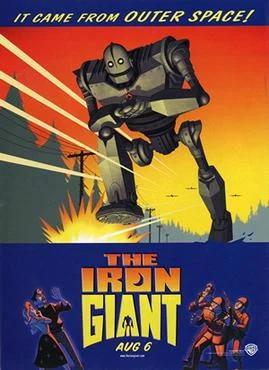
The Iron Giant
Maine, 1957. Young Hogarth Hughes discovers a colossal robot that fell from space, its memory wiped, hiding in the woods behind his house. As Hogarth teaches the Giant about the world — and about choice — a paranoid government agent closes in, convinced the visitor is a Cold War weapon that must be destroyed before it destroys them first.
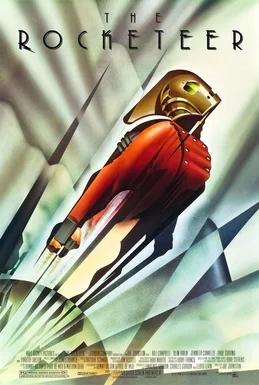
The Rocketeer
1938, Los Angeles. Stunt pilot Cliff Secord stumbles onto a prototype jetpack hidden in his hangar by gangsters — and straps it on. As word of a flying man spreads, Cliff finds himself hunted by Neville Sinclair, a matinee-idol movie star secretly working for Nazi agents desperate to recover the rocket before it reaches Germany, with only his mechanic Peevy and his girlfriend Jenny standing between the jetpack and the Third Reich.
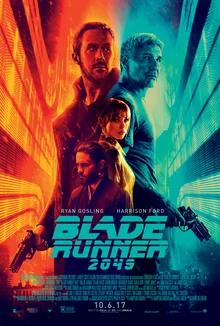
Blade Runner 2049
Thirty years after the original, K is a new-model replicant working as a blade runner for the LAPD, retiring older rogue models without complaint — until a routine job unearths a buried secret: evidence that a replicant once gave birth. The discovery could break the wall between the born and the built, and it sends K hunting for a child hidden decades ago, for a vanished blade runner named Deckard, and for an answer about himself he wants too badly to trust.
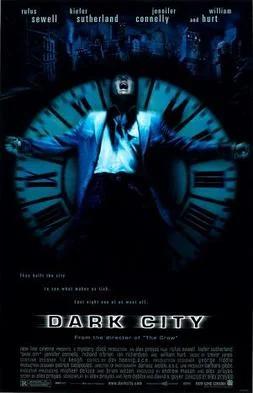
Dark City
John Murdoch wakes in a hotel bathtub with no memory, a dead woman in the next room, and detectives closing in for murders he can't remember committing. As he runs through a city where it is always midnight, he begins noticing what no one else does: at 12:00 exactly, the entire population falls asleep, the buildings physically rearrange themselves — and pale men in long coats move among the sleepers, injecting new memories into new lives.
Comments
Sign in to join the conversation
No comments yet. Be the first!
Advertisement