The Day the Earth Stood Still (1951)
20th Century Fox· USA· 92 min· English
Directed by Robert WiseMusic by Bernard Herrmann
Synopsis
A flying saucer lands in Washington, D.C., and out steps Klaatu, a humanoid alien with an ultimatum: abandon nuclear weapons and the violence they represent, or Earth will be destroyed as a threat to the wider galaxy. Escaping military custody to live quietly among ordinary Americans, Klaatu — accompanied everywhere by his silent, seemingly all-powerful robot Gort — searches for someone who will actually listen before his patience runs out.
Advertisement
Review
Released at the absolute peak of Cold War nuclear panic, barely six years after Hiroshima and Nagasaki and squarely within the era of duck-and-cover classroom drills, The Day the Earth Stood Still stands out from the wave of alien-invasion pictures it helped inspire by inverting the genre's most basic assumption. Here, the aliens aren't the threat. Humanity is. Robert Wise, who had cut his teeth as an editor on Citizen Kane before moving into directing, brings a deliberately plain, almost documentary-style restraint to Klaatu's arrival: no bug-eyed monster lurching out of the saucer, no death ray leveling city blocks, just a calm, well-dressed stranger asking, in measured and reasonable tones, why a species that has just invented atomic weapons believes itself entitled to a place among the stars.
Casting Michael Rennie in the role of Klaatu was a deliberate and, at the time, somewhat unusual studio decision. 20th Century Fox specifically wanted an actor American audiences wouldn't already recognize, so that his alien strangeness would register as genuine unfamiliarity rather than movie-star charisma wearing a costume; Rennie, a working British stage actor virtually unknown in the United States, got the part largely for that reason. It pays off across the film's quieter stretches, particularly the sequences of Klaatu living incognito in an ordinary Washington, D.C. boarding house, especially opposite Patricia Neal's Helen Benson and her young son Bobby — scenes that do more to sell the film's underlying humanist argument than any of its special effects ever could. When the moment finally arrives for Helen to halt Gort's rampage with the whispered command "Klaatu barada nikto," the phrase lands as one of the most quoted and endlessly theorized lines in the genre's history, and it has stayed that way in large part because screenwriter Edmund H. North reportedly never fully explained its meaning to the public — a deliberate ambiguity that's kept fans arguing and referencing it for over seven decades since, in everything from Army of Darkness to modern sitcoms.
Bernard Herrmann's score is doing at least as much emotional work as anything happening visually on screen, and it remains one of the more genuinely innovative pieces of film music from its entire decade. Herrmann built the arrangement around two theremins, played simultaneously by Samuel Hoffman and Paul Shure, layered alongside electric violin, electric bass and unconventional percussion choices that would have been almost unrecognizable inside a typical 1951 studio orchestra. That specific, humming, otherworldly texture effectively decided what "the sound of outer space" would mean to American audiences for a full generation afterward, and it's difficult to overstate how thoroughly Herrmann's theremin work here became genre shorthand almost immediately upon release.
The production's political courage is easy to underestimate from a modern vantage point. The U.S. Department of Defense reportedly refused to cooperate with the filmmakers at all, specifically because the screenplay's underlying message — that Earth's own weapons, not any external threat, represented the actual danger to the planet's survival — ran directly counter to the image the military wanted reflected on American movie screens during an active Cold War standoff. That a major studio picture got made and released with its anti-nuclear thesis fully intact, without military cooperation smoothing over its more uncomfortable implications, speaks to a genuine seriousness of purpose that separates this film from the era's more straightforwardly reassuring alien-invasion fare.
What ultimately distinguishes the film, watched again today, is its refusal to resolve its warning with comfort. Klaatu doesn't depart having saved humanity from itself through some act of last-minute negotiation or compromise. He departs having delivered an ultimatum — abandon this path or be destroyed as a threat to a wider community of worlds — to a species he clearly isn't certain is capable of listening. The film ends not on rescue but on warning, delivered by precisely the calm, reasonable stranger audiences had spent ninety minutes being told, gradually and against considerable institutional resistance within the story itself, to actually trust.
Watched today, the film's core proposition — that a species capable of building weapons powerful enough to threaten its own extinction has an obligation to demonstrate it can also be trusted with restraint — reads less like a period piece about a specific mid-century anxiety and more like a still-open argument the world hasn't finished having. Klaatu's ultimatum was aimed at 1951's atomic arsenals specifically, but the underlying logic transfers cleanly to nearly any subsequent technology capable of doing irreversible harm at scale, which is a large part of why the film keeps finding new audiences long after the specific fear that produced it has receded into history.
Gort himself, the silent robotic enforcer standing guard over Klaatu's ship, remains a masterclass in restraint-driven menace precisely because the film almost never explains the full extent of his capabilities, letting a handful of demonstrations of his power imply far more than any extended action sequence could. That's a lesson in withholding information the genre would relearn and forget repeatedly across the following seven decades, and one this film, working with a fraction of the budget later blockbusters would command, mastered almost by instinct.
Trivia & Color Notes
A phrase that means nothing — on purpose
'Klaatu barada nikto' has no in-film translation and screenwriter Edmund H. North never fully explained its meaning publicly. Its mystery has made it one of the most referenced phrases in science-fiction history, quoted everywhere from Army of Darkness to The Big Bang Theory.
The Air Force said no
The U.S. Department of Defense refused to cooperate with the production because the script's message — that Earth's own weapons were the real threat — ran counter to what the military wanted portrayed on screen.
Cast for anonymity
Fox specifically wanted an actor American audiences wouldn't recognize to play Klaatu, so his strangeness would feel genuine. British stage actor Michael Rennie, virtually unknown in the US at the time, got the role partly for that reason.
Two theremins, one first
Bernard Herrmann's score used two theremins simultaneously (played by Samuel Hoffman and Paul Shure) alongside electric violin, electric bass, and unconventional percussion — an ensemble virtually unheard of in a 1951 studio orchestra.
Klaatu's arrival is thoughtful, restrained first-contact fiction rather than hard science: a humanoid alien indistinguishable from a human, a robot policeman with unexplained near-omnipotent power, and a "galaxy of planets" cooperating under a shared non-aggression enforcement system are all speculative shorthand rather than engineering. What the film gets exactly right is the political and psychological read on 1951: it dramatizes real contemporary anxiety about the newly formed atomic age with more restraint and moral seriousness than almost any other genre film of its decade.
🎵 Soundtrack
Music by Bernard Herrmann
Bernard Herrmann's score is one of the first major Hollywood uses of the theremin, paired here in a rare two-theremin arrangement that gave the film's alien atmosphere its otherworldly hum — a sound so associated with 1950s sci-fi that it became genre shorthand almost overnight.
🔗 This film connects to…
Cast & Crew
Advertisement
You Might Also Like
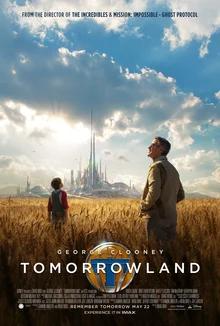
Tomorrowland
Optimistic teenager Casey Newton receives a mysterious pin that, when touched, drops her into a vision of Tomorrowland — a gleaming hidden city of impossible future technology. Tracking down the pin's origin leads her to Frank Walker, a disillusioned former boy-genius who was exiled from that city decades ago, and together they race to understand why humanity's brightest possible future has been sealed away and left to die.
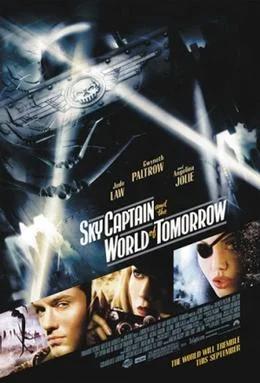
Sky Captain and the World of Tomorrow
1939, an alternate New York besieged by giant robots stomping through Manhattan. Mercenary pilot Joe 'Sky Captain' Sullivan and journalist Polly Perkins — his ex — race to uncover who is behind the attacks, chasing the trail across the globe to a hidden island fortress where a mad scientist's decades-old plan for 'the world of tomorrow' is finally coming to fruition.
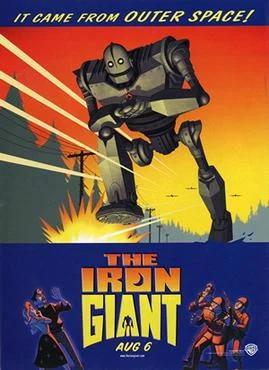
The Iron Giant
Maine, 1957. Young Hogarth Hughes discovers a colossal robot that fell from space, its memory wiped, hiding in the woods behind his house. As Hogarth teaches the Giant about the world — and about choice — a paranoid government agent closes in, convinced the visitor is a Cold War weapon that must be destroyed before it destroys them first.
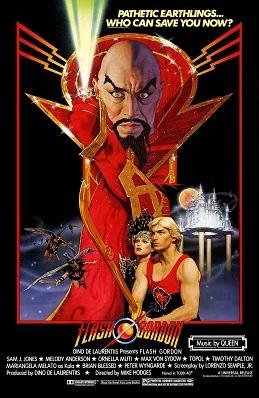
Flash Gordon
Football star Flash Gordon, travel agent Dale Arden and eccentric scientist Dr. Hans Zarkov are pulled through space to the planet Mongo, ruled by the tyrannical Ming the Merciless — who has set Earth in his crosshairs purely for sport. Flash must rally Mongo's warring kingdoms, the hawk-men of Sky City and the forest-dwelling Arboria, into a single rebellion before Ming's whim wipes out his home planet.
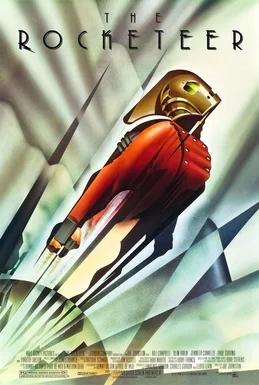
The Rocketeer
1938, Los Angeles. Stunt pilot Cliff Secord stumbles onto a prototype jetpack hidden in his hangar by gangsters — and straps it on. As word of a flying man spreads, Cliff finds himself hunted by Neville Sinclair, a matinee-idol movie star secretly working for Nazi agents desperate to recover the rocket before it reaches Germany, with only his mechanic Peevy and his girlfriend Jenny standing between the jetpack and the Third Reich.
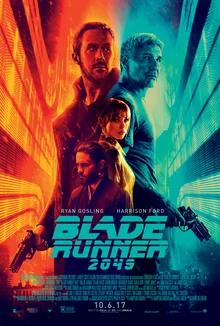
Blade Runner 2049
Thirty years after the original, K is a new-model replicant working as a blade runner for the LAPD, retiring older rogue models without complaint — until a routine job unearths a buried secret: evidence that a replicant once gave birth. The discovery could break the wall between the born and the built, and it sends K hunting for a child hidden decades ago, for a vanished blade runner named Deckard, and for an answer about himself he wants too badly to trust.
Comments
Sign in to join the conversation
No comments yet. Be the first!
Advertisement