Star Trek: The Motion Picture (1979)
Paramount Pictures· USA· 132 min· English
Directed by Robert WiseMusic by Jerry Goldsmith
Synopsis
A massive, unidentified energy cloud is on a direct collision course with Earth, destroying every ship that tries to stop it. Admiral James T. Kirk resumes command of a newly refitted USS Enterprise and reassembles his original crew for one more mission — one that will force them to confront what's actually inside the cloud, and what it wants.
Advertisement
Review
A full decade after the original television series was cancelled, and directly spurred into production by the runaway commercial success of both Star Wars and Close Encounters of the Third Kind, Paramount handed Star Trek's leap to the big screen to Robert Wise — the same director responsible for The Day the Earth Stood Still nearly three decades earlier, and a filmmaker temperamentally inclined toward quiet, patient awe rather than propulsive action. The result stands as the most deliberately paced, philosophically minded entry the franchise has ever produced theatrically: long, hushed sequences of the newly refitted Enterprise gliding past the camera in near-total silence, an extended journey directly into the heart of a mysterious, planet-devouring energy cloud that unfolds with almost none of the space-battle spectacle audiences arriving fresh off Star Wars were primed to expect.
Douglas Trumbull, fresh off his effects work on Close Encounters, supervised the production's visual design, and the results — from V'Ger's cathedral-scale interior sequences, achieved using massive backlit miniatures and layered multiple-exposure photography to suggest genuinely incomprehensible scale, to the entirely rebuilt Enterprise model itself — remain some of the most meticulously detailed effects work of the entire era. Rather than simply reusing the original television series' ship model, the production commissioned an entirely new, far more elaborate physical Enterprise so large it reportedly required its own specially constructed motion-control rig just to photograph properly. That level of craft is evident in nearly every frame, even where the pacing built around it tested the patience of audiences who'd come expecting something closer to a space war.
What the film actually delivers is considerably closer in spirit to 2001: A Space Odyssey than to anything the franchise had attempted on television: a story fundamentally about a machine intelligence searching for its own creator, and about what happens when a perfect, logical entity finally collides with something — human emotion, human imperfection — it has no existing category for. Reuniting William Shatner, Leonard Nimoy and the entire surviving original cast, the film's emotional core runs quieter than the franchise's more action-oriented television roots. Spock's individual arc carries particular weight: torn between his own disciplined Vulcan logic and the unsettling realization that pure logic stripped entirely of feeling is exactly what the seemingly all-powerful V'Ger has become, Nimoy gives the film's most genuinely introspective performance, one that gives the whole production a thematic backbone the effects spectacle alone couldn't have supplied.
The production itself was reportedly troubled and badly rushed, going into filming before the screenplay was fully finished, with key effects sequences still being completed in the days immediately preceding the film's premiere; Wise has said he delivered the final theatrical print to cinemas with the print's ink barely dry, and the film was substantially re-edited decades later for a 2001 Director's Edition that attempted to smooth over some of the pacing issues that plagued the rushed original cut. Jerry Goldsmith's score, meanwhile, proved to be the single most durable element to emerge from the entire troubled production: its main theme was later repurposed wholesale as the opening title music for Star Trek: The Next Generation in 1987 and has since been reused across multiple subsequent series, making it arguably the single most widely heard piece of music in the franchise's entire history, and one of Goldsmith's own most celebrated compositions.
The film remains genuinely divisive among longtime fans specifically because of its glacial, meditative pace, and it's fair to say the deliberate patience Wise brings to the material doesn't always pay off dramatically the way it does visually. But its underlying ambition — treating first contact as fundamentally a matter of philosophy and empathy rather than firepower, a machine intelligence redeemed not through defeat but through being shown something it didn't know it needed — set a thematic template the franchise has returned to, in one form or another, across nearly every subsequent film and television iteration produced since.
Watching it today, stripped of the commercial pressures that shaped its troubled production, the film plays less like a rushed cash-grab chasing Star Wars and more like an earnest, if uneven, attempt to bring the franchise's television-era humanism to a genuinely cinematic scale. Its reputation has softened considerably in retrospect, in large part because later, more action-forward Trek films made its unusual patience look, in hindsight, like a deliberate artistic choice rather than simply a miscalculation about what 1979 audiences were hoping to see.
V'Ger's origin story, an ancient Earth space probe that achieved genuine sentience after being captured and "completed" by a distant machine civilization somewhere across the galaxy, is speculative but internally coherent science fiction, engaging seriously with real philosophical questions about where programmed behavior ends and authentic consciousness begins. The film's warp-drive and transporter mechanics remain the same convenient narrative shorthand the rest of the franchise relies on throughout its history, but its central meditation on artificial intelligence, purpose and what a machine intelligence would actually want once it achieved genuine self-awareness is considerably more philosophically serious than most of the genre's AI stories manage, then or since.
Trivia & Color Notes
A theme that outlived the film
Jerry Goldsmith's main theme was repurposed as the opening title music for Star Trek: The Next Generation in 1987 and has since been reused across multiple later series, making it arguably the most widely heard piece of music in the franchise's history.
A troubled, rushed production
The film went into production before the script was finished, with effects sequences still being completed days before the premiere. Robert Wise reportedly delivered the final print to theaters with the ink barely dry, and the film was substantially re-edited for a 2001 Director's Edition.
V'Ger's interior, built at cathedral scale
Douglas Trumbull and his effects team built V'Ger's interior sequences using massive backlit miniatures and multiple-exposure photography to give the alien machine's inner workings a sense of genuinely vast, incomprehensible scale.
The Enterprise redesign, from scratch
Rather than simply reusing the original series' Enterprise model, the production built an entirely new, far more detailed physical model for the film — one so large it required its own specially constructed motion-control rig to photograph.
V'Ger's origin — an ancient Earth space probe that achieved sentience after being captured and "completed" by a machine civilization across the galaxy — is speculative but internally coherent science fiction, engaging seriously with real questions about the boundary between programmed behavior and genuine consciousness. The film's warp-drive and transporter technology remain the same convenient handwaves as the rest of the franchise, but its central meditation on artificial intelligence, purpose, and what a machine intelligence would actually want once it achieved genuine understanding is more philosophically serious than most of the genre's AI stories.
🎵 Soundtrack
Music by Jerry Goldsmith
Jerry Goldsmith's score introduced the theme that would go on to become the main title music for Star Trek: The Next Generation — one of the most recognizable and reused pieces of music in the franchise's entire history, and widely considered among Goldsmith's finest work.
🔗 This film connects to…
- Close Encounters of the Third Kind (1977)— Same effects artist: Douglas Trumbull
- The Day the Earth Stood Still (1951)— Same director: Robert Wise
- Silent Running (1972)— Douglas Trumbull directed one, then supervised effects on the other
- Logan's Run (1976)— Same composer: Jerry Goldsmith
- Planet of the Apes (1968)— Same composer: Jerry Goldsmith
Cast & Crew
Advertisement
You Might Also Like
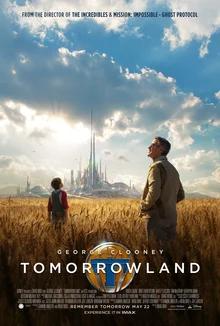
Tomorrowland
Optimistic teenager Casey Newton receives a mysterious pin that, when touched, drops her into a vision of Tomorrowland — a gleaming hidden city of impossible future technology. Tracking down the pin's origin leads her to Frank Walker, a disillusioned former boy-genius who was exiled from that city decades ago, and together they race to understand why humanity's brightest possible future has been sealed away and left to die.
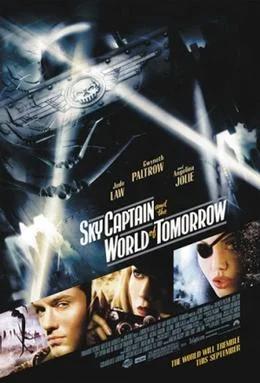
Sky Captain and the World of Tomorrow
1939, an alternate New York besieged by giant robots stomping through Manhattan. Mercenary pilot Joe 'Sky Captain' Sullivan and journalist Polly Perkins — his ex — race to uncover who is behind the attacks, chasing the trail across the globe to a hidden island fortress where a mad scientist's decades-old plan for 'the world of tomorrow' is finally coming to fruition.
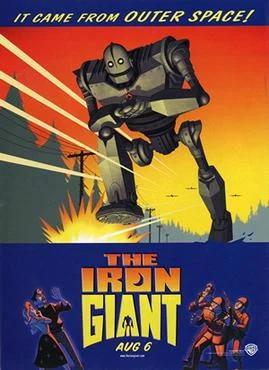
The Iron Giant
Maine, 1957. Young Hogarth Hughes discovers a colossal robot that fell from space, its memory wiped, hiding in the woods behind his house. As Hogarth teaches the Giant about the world — and about choice — a paranoid government agent closes in, convinced the visitor is a Cold War weapon that must be destroyed before it destroys them first.
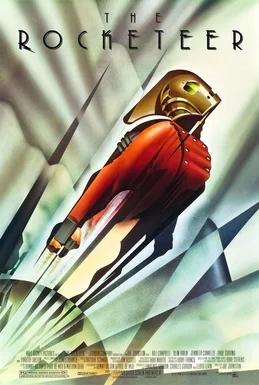
The Rocketeer
1938, Los Angeles. Stunt pilot Cliff Secord stumbles onto a prototype jetpack hidden in his hangar by gangsters — and straps it on. As word of a flying man spreads, Cliff finds himself hunted by Neville Sinclair, a matinee-idol movie star secretly working for Nazi agents desperate to recover the rocket before it reaches Germany, with only his mechanic Peevy and his girlfriend Jenny standing between the jetpack and the Third Reich.
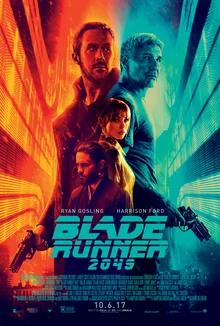
Blade Runner 2049
Thirty years after the original, K is a new-model replicant working as a blade runner for the LAPD, retiring older rogue models without complaint — until a routine job unearths a buried secret: evidence that a replicant once gave birth. The discovery could break the wall between the born and the built, and it sends K hunting for a child hidden decades ago, for a vanished blade runner named Deckard, and for an answer about himself he wants too badly to trust.
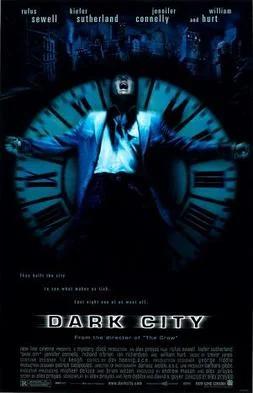
Dark City
John Murdoch wakes in a hotel bathtub with no memory, a dead woman in the next room, and detectives closing in for murders he can't remember committing. As he runs through a city where it is always midnight, he begins noticing what no one else does: at 12:00 exactly, the entire population falls asleep, the buildings physically rearrange themselves — and pale men in long coats move among the sleepers, injecting new memories into new lives.
Comments
Sign in to join the conversation
No comments yet. Be the first!
Advertisement