Silent Running (1972)
Universal Pictures· USA· 89 min· English
Directed by Douglas TrumbullMusic by Peter Schickele
Synopsis
In a future where all plant life on Earth has gone extinct, botanist Freeman Lowell tends the last surviving forests aboard a fleet of orbiting greenhouse domes, cared for alongside three drone robots he's named Huey, Dewey and Louie. When corporate orders arrive to jettison and destroy the domes so the ships can return to commercial service, Lowell makes a desperate choice to save the only forest left in the universe — whatever the cost.
Advertisement
Review
Douglas Trumbull spent much of the 1960s building the visual effects that made 2001: A Space Odyssey and, later, Close Encounters of the Third Kind look the way they do, working under Stanley Kubrick's and Steven Spielberg's direction rather than his own. Silent Running was his first opportunity to direct a film himself, and instead of scaling up the vast, cold, awe-struck vistas he'd helped build for his mentors, he used the opportunity to make something quietly radical in the opposite direction: an intimate, mournful environmental parable dressed in space-adventure clothing, made on a budget a small fraction of the productions that had built his reputation. Where 2001 turns its camera outward toward cosmic scale, Trumbull turns his inward, toward a single isolated man and three small robots trying, against direct orders, to keep something alive.
Bruce Dern carries nearly the entire film essentially alone, and it's one of the more demanding solo performances the genre has ever asked of an actor. His Freeman Lowell, a botanist tending the last surviving forests of Earth aboard a fleet of orbiting greenhouse domes, plays his devotion to that cargo as something suspended between genuine religious conviction and outright derangement, and the film pointedly never resolves which reading is correct. Dern, already known for playing unstable or morally ambiguous supporting characters, brings real conviction to a character whose climactic act of violence against his own crewmates is framed with just as much sympathy as horror — the film asks you to understand Lowell's logic completely while never quite excusing where it leads him.
Huey, Dewey and Louie, the three drone robots Lowell reprograms and gradually befriends once events force his hand, remain one of the more successful non-verbal character creations in the genre's history. They were performed by bilateral amputee actors, including Mark Persons, who walked on their hands inside compact robot shells, and that specific physical constraint gives the drones a genuinely alien, non-human gait that no full-body suit performer or animatronic rig of the era could have convincingly replicated. Concept and effects artists across the following decade cited the drones directly as a visual precursor to the beloved droid designs Star Wars would popularize just five years later, a lineage that speaks to how thoroughly this small, low-budget film's imagery seeped into the wider genre's visual vocabulary.
Much of the production took advantage of an unusually large practical location: the interior forest-dome scenes were filmed aboard the retired aircraft carrier USS Valley Forge, whose enormous below-deck spaces gave the production industrial, genuinely cavernous sets far larger and more atmospherically convincing than a soundstage built to the film's actual budget could normally have afforded. That combination of real, oversized industrial space and the tightly focused, character-driven story shot inside it gives Silent Running a scale that belies how modest its resources actually were.
Peter Schickele's score, an unusually earnest and folk-inflected choice for a science fiction film, includes two original songs performed by Joan Baez, whose plaintive, very-of-its-decade vocals give Lowell's isolation a specific emotional register orchestral scoring alone couldn't have supplied. It's a choice that could easily have curdled into mawkishness in less careful hands, but it instead deepens the film's sense of a man clinging to Earth's remembered warmth from millions of miles away.
The film's climax, Lowell alone in an escape pod watching the last surviving dome drift away into the void with only a single drone left behind to tend it, ranks among the more quietly devastating endings 1970s science fiction produced, offering no rescue, no triumphant return home, just a lonely, uncertain continuation of the mission that cost Lowell everything else. It's an odd, deeply personal, occasionally clumsy film — Trumbull's inexperience as a director shows in places the effects work never does — and it remains one of the genre's earliest and most sincere ecological warnings, made at a moment when the wider culture was only beginning to take environmental collapse seriously as a subject worth an entire film's grief.
Trumbull went on to return to effects supervision rather than continue directing after this film's modest commercial performance, working on Close Encounters and later Blade Runner, and it's tempting to wonder what a longer directorial career built on this film's specific sensibility might have produced. What he left behind instead is a singular, slightly awkward, thoroughly sincere piece of science fiction that trusted audiences to grieve for a forest, and for the men and machines trying to save it, without ever pretending the grief came with an easy solution attached.
The film's premise — that Earth's biosphere had collapsed so completely that plant life survived only in orbiting geodesic domes, tended like relics rather than a living ecosystem — is extreme extrapolation well beyond plausible real-world ecology, but its underlying anxiety about industrial and agricultural pressure steadily eliminating biodiversity tracked directly with serious environmental science being published around the same time the film was made. That the story chooses to dramatize an abstract ecological argument through one man's personal, escalating breakdown, rather than through committee hearings or scientific exposition, is precisely what gives Silent Running its lasting emotional charge; abstractions rarely move audiences the way a single grieving man clutching a dying tree does.
Trivia & Color Notes
Robots played by amputees
Huey, Dewey and Louie were performed by bilateral amputee actors (including Mark Persons) who walked on their hands inside the compact drone shells, giving the robots a genuinely non-human gait no full-body suit performer could replicate.
A real decommissioned aircraft carrier
Interior forest-dome scenes were filmed aboard the retired aircraft carrier USS Valley Forge, whose below-deck spaces gave the production industrial, cavernous sets far larger than a soundstage budget would normally allow.
Trumbull's directorial debut
This was Douglas Trumbull's first film as director after years as a visual effects supervisor on 2001: A Space Odyssey; he would return to effects work (including Close Encounters and Blade Runner) after this film's modest box office.
Named a favorite by a future Star Wars artist
Concept and effects work on the film influenced a generation of production designers; the drones in particular are frequently cited as a visual precursor to Star Wars's own beloved droid characters.
The premise — Earth's biosphere so thoroughly collapsed that all plant life survives only in orbiting geodesic domes — is extreme extrapolation rather than plausible ecology, though its underlying anxiety (industrial and agricultural pressure eliminating biodiversity) tracks with real, serious environmental science of its era. The film's robot drones, performed by amputee actors rather than animatronics or a man in a full suit, gave them a genuinely distinct, non-humanoid gait that real robotics research would spend decades trying to replicate mechanically.
🎵 Soundtrack
Music by Peter Schickele
Peter Schickele's earnest, folk-inflected score includes two original songs performed by Joan Baez, an unusual choice for a science fiction film that gives Lowell's isolation a specific, plaintive, very-1970s emotional register.
🔗 This film connects to…
Cast & Crew
Advertisement
You Might Also Like
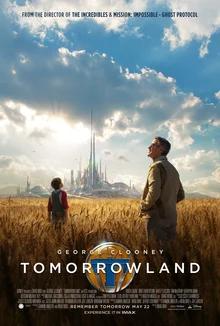
Tomorrowland
Optimistic teenager Casey Newton receives a mysterious pin that, when touched, drops her into a vision of Tomorrowland — a gleaming hidden city of impossible future technology. Tracking down the pin's origin leads her to Frank Walker, a disillusioned former boy-genius who was exiled from that city decades ago, and together they race to understand why humanity's brightest possible future has been sealed away and left to die.
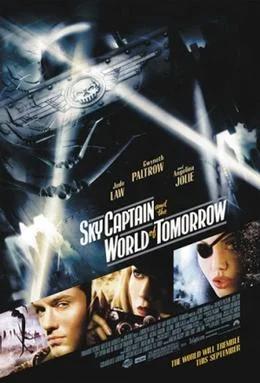
Sky Captain and the World of Tomorrow
1939, an alternate New York besieged by giant robots stomping through Manhattan. Mercenary pilot Joe 'Sky Captain' Sullivan and journalist Polly Perkins — his ex — race to uncover who is behind the attacks, chasing the trail across the globe to a hidden island fortress where a mad scientist's decades-old plan for 'the world of tomorrow' is finally coming to fruition.
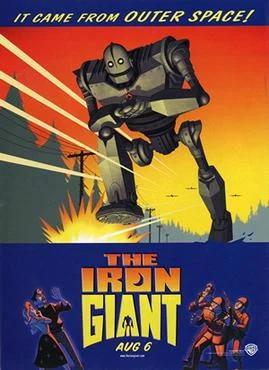
The Iron Giant
Maine, 1957. Young Hogarth Hughes discovers a colossal robot that fell from space, its memory wiped, hiding in the woods behind his house. As Hogarth teaches the Giant about the world — and about choice — a paranoid government agent closes in, convinced the visitor is a Cold War weapon that must be destroyed before it destroys them first.
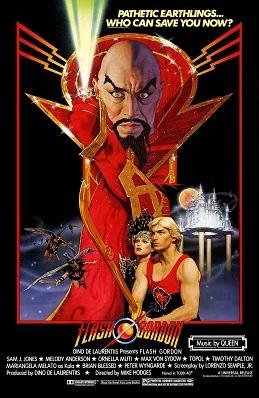
Flash Gordon
Football star Flash Gordon, travel agent Dale Arden and eccentric scientist Dr. Hans Zarkov are pulled through space to the planet Mongo, ruled by the tyrannical Ming the Merciless — who has set Earth in his crosshairs purely for sport. Flash must rally Mongo's warring kingdoms, the hawk-men of Sky City and the forest-dwelling Arboria, into a single rebellion before Ming's whim wipes out his home planet.
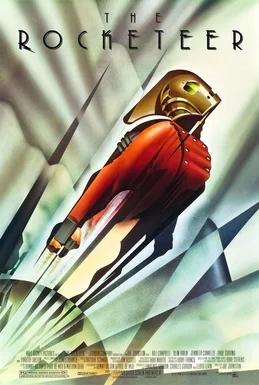
The Rocketeer
1938, Los Angeles. Stunt pilot Cliff Secord stumbles onto a prototype jetpack hidden in his hangar by gangsters — and straps it on. As word of a flying man spreads, Cliff finds himself hunted by Neville Sinclair, a matinee-idol movie star secretly working for Nazi agents desperate to recover the rocket before it reaches Germany, with only his mechanic Peevy and his girlfriend Jenny standing between the jetpack and the Third Reich.
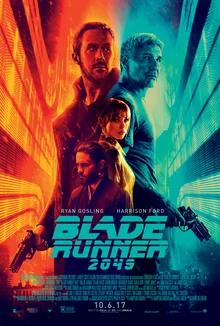
Blade Runner 2049
Thirty years after the original, K is a new-model replicant working as a blade runner for the LAPD, retiring older rogue models without complaint — until a routine job unearths a buried secret: evidence that a replicant once gave birth. The discovery could break the wall between the born and the built, and it sends K hunting for a child hidden decades ago, for a vanished blade runner named Deckard, and for an answer about himself he wants too badly to trust.
Comments
Sign in to join the conversation
No comments yet. Be the first!
Advertisement