Planet of the Apes (1968)
20th Century Fox· USA· 112 min· English
Directed by Franklin J. SchaffnerMusic by Jerry Goldsmith
Synopsis
Astronaut George Taylor crash-lands on a distant planet where intelligent, talking apes rule as masters and mute, primitive humans are hunted as livestock and lab animals. Captured, caged, and stripped of his voice, Taylor must prove he's more than an animal to a ruling class of apes who have built their entire civilization on a founding lie about how the world came to be this way.
Advertisement
Review
Planet of the Apes smuggles a genuinely radical piece of social science fiction inside the trappings of a big-budget studio adventure picture, and the trick works because every department involved in the production treated the premise with complete, unironic seriousness. John Chambers's ape makeup, mobile and flexible enough that the actors underneath it could genuinely emote and even eat through it during scenes, reportedly took hours to apply for each principal performer and remains a landmark of practical effects craftsmanship; it was good enough, and unprecedented enough, that the Academy created a special honorary award specifically to recognize it, since no competitive makeup category yet existed at the time. That gesture directly led to the Academy Award for Best Makeup being formally established as its own category roughly a decade later. Jerry Goldsmith's score matches that formal ambition with equally uncompromising invention, built from atonal clusters, prepared piano, actual ram's horns and percussion techniques that avoid conventional melody almost entirely — a deliberate rejection of anything Hollywood had previously used to score a studio genre picture, engineered to sound as genuinely alien as the world Taylor wakes up in.
The film's real ambition, though, sits in its social inversion. Ape society on this planet has its own rigidly stratified class structure — orangutan politicians controlling public discourse, gorilla soldiers enforcing order, chimpanzee scientists doing the actual intellectual work while receiving the least institutional respect — along with its own scripture-backed suppression of inconvenient evolutionary evidence and its own casual, unexamined cruelty toward a "lesser" species it has simply decided doesn't merit basic rights. Franklin J. Schaffner, who would win the Best Director Academy Award for Patton within roughly the same stretch of his career, stages Taylor's systematic degradation — captured, caged, stripped of speech, nearly scheduled for a lobotomy — as a direct, visceral experience of dehumanization, forcing largely white 1968 American audiences to sit inside the position of the oppressed rather than observe it comfortably from a position of safety.
Charlton Heston's performance carries an unusual physical intensity even by his own considerably muscular standards; much of Taylor's arc depends on his being reduced to wordless, animalistic desperation before slowly reclaiming both language and dignity, and Heston commits to the character's early degradation without vanity or visible concern for his own star image. Roddy McDowall, as the sympathetic chimpanzee scientist Cornelius, spent hours in makeup for nearly every day of shooting and reportedly found it both amusing and a little unsettling that cast members in ape makeup tended to eat lunch segregated by which ape species they were playing — chimps clustering with chimps, gorillas with gorillas — almost without anyone consciously deciding to do so.
And then, of course, there's the ending, an image so completely embedded in popular culture that it's difficult to fully recapture how it landed on audiences experiencing it cold: Taylor riding along a ruined, empty shoreline to discover the shattered, half-buried Statue of Liberty jutting out of the sand, and realizing, with a scream directed as much at himself as at fate, that this was Earth all along. Heston himself reportedly insisted the reveal be kept entirely out of all promotional materials and trailers, correctly understanding that its power depended completely on audiences not seeing it coming. It remains one of the most famous twist endings ever committed to film, not simply for its shock value but because of how thoroughly it recontextualizes everything that preceded it — the apes' institutional cruelty toward humans, the buried scientific evidence, an entire society's war over whose version of history gets to survive — as something the human species had, in effect, already done to itself first, long before any ape ever picked up a rifle.
The premise's commercial and cultural success spawned four theatrical sequels through 1973, a short-lived 1974 television series, and eventually two entirely separate modern reboot franchises, one launched in 2001 and a considerably more acclaimed trilogy beginning in 2011 — an unusually long half-life for a science fiction premise built, at its core, around a single carefully withheld twist. Few franchises have managed to keep returning to the same central idea, generation after generation, and still find something new to say about the arrogance of assuming your own species' dominance is permanent.
What's easy to overlook, given how thoroughly the twist ending has entered the cultural bloodstream, is how genuinely committed the film is to its social allegory even in scenes that have nothing to do with Taylor's personal fate. The ape tribunal sequences, staged with the pomp and procedural theater of an actual courtroom, spend real screen time dramatizing how institutions manufacture consensus and suppress inconvenient evidence long before Taylor's individual case ever becomes the story's focus — proof that the film's ambitions extended well past its one famous shock image.
The screenplay, co-written by Twilight Zone creator Rod Serling, brings a specifically televisual gift for compact, morally pointed dialogue to scenes that could easily have become dry lecture in less careful hands; Serling's fingerprints are visible in the way nearly every ape character, however minor, gets at least one line that doubles as social commentary without ever feeling like the plot has stopped to make a speech. That density of purpose, sustained across a genre adventure picture with this much studio money riding on it, remains a genuinely rare combination even by today's standards.
Trivia & Color Notes
Makeup that took home an Oscar
John Chambers's ape makeup design was so groundbreaking the Academy created a special honorary award for it, since no competitive makeup category existed yet — his work directly led to the Academy Award for Best Makeup being established a decade later.
The ending, kept secret
Charlton Heston insisted the Statue of Liberty ending be kept out of all promotional materials and trailers, understanding correctly that its power depended entirely on audiences not knowing it was coming.
Segregated cafeteria tables — by species
During filming, actors in ape makeup reportedly ate lunch separated by which ape species they played (chimps with chimps, gorillas with gorillas) almost unconsciously, a detail Roddy McDowall later found both funny and a little unsettling.
A franchise built on one twist
The success of the reveal spawned four sequels through 1973, a 1974 TV series, and two separate modern reboot franchises (2001 and the Rise/Dawn/War trilogy beginning 2011) — an unusually long half-life for a single twist ending.
The film's core biology — a fully verbal, technologically advanced ape society evolving from present-day apes within roughly 2,000 years, alongside a simultaneous regression of humans to a mute, pre-linguistic state — compresses evolutionary timescales by orders of magnitude beyond anything real evolutionary biology would allow; this kind of change genuinely requires many hundreds of thousands to millions of years. The film's underlying point isn't really about evolution's mechanics, though — it's a pointed allegory about nuclear war, scriptural suppression of inconvenient truths, and the fragility of any species that assumes its dominance is permanent.
🎵 Soundtrack
Music by Jerry Goldsmith
Jerry Goldsmith's score is one of the most radical the studio system ever greenlit — atonal clusters, prepared piano, ram's horns, and unconventional percussion techniques that avoid melody almost entirely, built to sound as alien as the world Taylor wakes up in.
🔗 This film connects to…
Cast & Crew
Advertisement
You Might Also Like
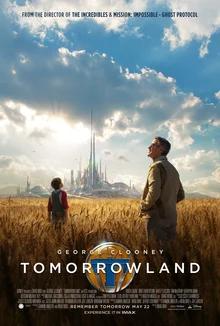
Tomorrowland
Optimistic teenager Casey Newton receives a mysterious pin that, when touched, drops her into a vision of Tomorrowland — a gleaming hidden city of impossible future technology. Tracking down the pin's origin leads her to Frank Walker, a disillusioned former boy-genius who was exiled from that city decades ago, and together they race to understand why humanity's brightest possible future has been sealed away and left to die.
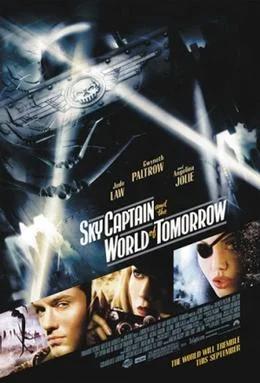
Sky Captain and the World of Tomorrow
1939, an alternate New York besieged by giant robots stomping through Manhattan. Mercenary pilot Joe 'Sky Captain' Sullivan and journalist Polly Perkins — his ex — race to uncover who is behind the attacks, chasing the trail across the globe to a hidden island fortress where a mad scientist's decades-old plan for 'the world of tomorrow' is finally coming to fruition.
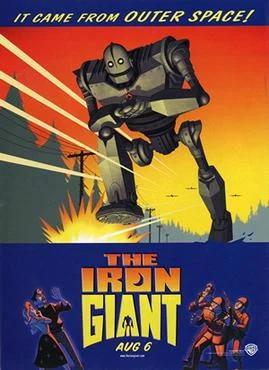
The Iron Giant
Maine, 1957. Young Hogarth Hughes discovers a colossal robot that fell from space, its memory wiped, hiding in the woods behind his house. As Hogarth teaches the Giant about the world — and about choice — a paranoid government agent closes in, convinced the visitor is a Cold War weapon that must be destroyed before it destroys them first.
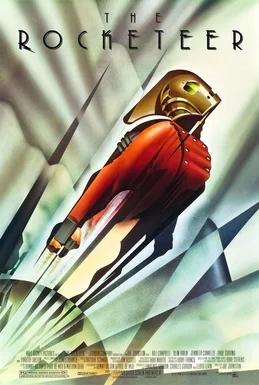
The Rocketeer
1938, Los Angeles. Stunt pilot Cliff Secord stumbles onto a prototype jetpack hidden in his hangar by gangsters — and straps it on. As word of a flying man spreads, Cliff finds himself hunted by Neville Sinclair, a matinee-idol movie star secretly working for Nazi agents desperate to recover the rocket before it reaches Germany, with only his mechanic Peevy and his girlfriend Jenny standing between the jetpack and the Third Reich.
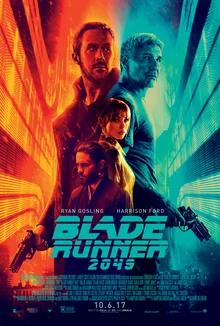
Blade Runner 2049
Thirty years after the original, K is a new-model replicant working as a blade runner for the LAPD, retiring older rogue models without complaint — until a routine job unearths a buried secret: evidence that a replicant once gave birth. The discovery could break the wall between the born and the built, and it sends K hunting for a child hidden decades ago, for a vanished blade runner named Deckard, and for an answer about himself he wants too badly to trust.
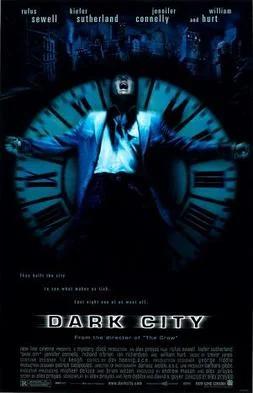
Dark City
John Murdoch wakes in a hotel bathtub with no memory, a dead woman in the next room, and detectives closing in for murders he can't remember committing. As he runs through a city where it is always midnight, he begins noticing what no one else does: at 12:00 exactly, the entire population falls asleep, the buildings physically rearrange themselves — and pale men in long coats move among the sleepers, injecting new memories into new lives.
Comments
Sign in to join the conversation
No comments yet. Be the first!
Advertisement