The Omega Man (1971)
Warner Bros.· USA· 98 min· English
Directed by Boris SagalMusic by Ron Grainer
Synopsis
Two years after a biological war wipes out nearly all of humanity, Dr. Robert Neville believes he may be the last normal man alive in Los Angeles — immunized by an experimental serum while everyone else either died or mutated into a nocturnal, light-sensitive, quasi-religious cult calling itself The Family. By day, Neville scavenges an empty city and hunts his enemies; by night, he barricades himself inside his fortified apartment and waits for dawn.
Advertisement
Review
Adapted from Richard Matheson's novel I Am Legend, and the second of three separate film versions of that same source material, The Omega Man gives Charlton Heston the loneliest role of an unusually apocalypse-heavy decade in his career — a man rattling alone around a completely empty, sun-bleached Los Angeles, talking to a marble bust of Julius Caesar in his fortified apartment because there is, quite simply, no one else left alive to talk to. Director Boris Sagal shoots the depopulated city with an eerie, near-documentary emptiness, shutting down actual downtown Los Angeles streets before dawn to film Neville's solitary wanderings rather than relying on matte paintings or optical effects, and that commitment to genuine, unstaged desolation gives the film's early stretches a power its comparatively modest budget couldn't otherwise have purchased.
The Family, the robed, light-averse mutant cult hunting Neville through the city's ruins, functions as the film's most distinctly 1970s addition to Matheson's original story, blending Manson Family-adjacent paranoia with a pseudo-religious rejection of technology, condemning Neville's guns, machines and hoarded modern comforts as "creations of a dead man's evil world" even as they ritually burn his books in bonfires meant to erase the old world's knowledge entirely. It's considerably cruder social commentary than Matheson's more psychologically interior source novel, but it hands the film's back half genuine, tangible menace, particularly through Anthony Zerbe's chillingly composed, quietly charismatic performance as the cult's leader.
Ron Grainer, the composer behind the original electronic Doctor Who theme, gives the empty city an eerie, electronically tinged score that underlines exactly how alone Neville really is, most effective across the film's long, dialogue-free stretches of him wandering deserted downtown streets with no one to answer if he called out. That scoring restraint matches Sagal's visual approach; both trust silence and empty frame to communicate isolation more effectively than any amount of dialogue explaining it could.
What still resonates most, watched today, is the specific loneliness at the film's center, and Rosalind Cash's Lisa — one of the more prominent Black female leads in a major studio genre picture of 1971 — whose relationship with Neville gives the film's back half genuine warmth before its bleak, deliberately Christ-imagery-loaded finale. Their romance included a kiss that was considered notable, and in some markets genuinely controversial, for a major studio release at the time, an unusually progressive choice for a genre picture of this era to include without apparent hesitation. Heston, an actor whose entire screen persona was built around scale, command and the ability to lead crowds, spends nearly the entire runtime with no one left to command at all, and the film is at its smartest precisely when it lets that imposed, unwanted silence do the emotional talking rather than filling it with unnecessary exposition.
Matheson's original novel has now been adapted three separate times for the screen — as The Last Man on Earth in 1964 with Vincent Price, as The Omega Man in 1971 with Heston, and as I Am Legend in 2007 with Will Smith — each version taking a substantially different approach to the same core premise of a single immunized survivor navigating a world of hostile, transformed former humans. Of the three, this one remains the most distinctly of its own decade: equal parts Cold War hangover, countercultural anxiety, and a specifically 1970s brand of urban desolation that gives Neville's isolation a texture none of the other adaptations quite manage to replicate.
Heston himself has cited the early 1970s as an unusually apocalypse-heavy stretch of his career, headlining this film alongside Soylent Green and Planet of the Apes within a span of just a few years — an unofficial trilogy of collapsed civilizations that makes him arguably the single actor most identified with the entire dystopian strand of the era's science fiction. Watching all three in succession, the specific flavor of exhausted, embittered authority he brings to each doomed world becomes its own quiet through-line, an actor built for command finding himself, again and again, with nothing left worth commanding.
The film's practical approach to depicting The Family's nocturnal assaults on Neville's fortified apartment — searchlights, torches, chanted accusations through barricaded windows — draws visibly on siege-thriller and home-invasion conventions more commonly associated with straight horror than science fiction, and that genre-blending gives the film's back half a tension that a purely cerebral post-apocalyptic drama might not have sustained across a full runtime.
The apartment itself, stocked with generators, weapons, art and creature comforts salvaged from the surrounding dead city, functions almost as a character in its own right — a small, defiantly maintained island of the old world's abundance in the middle of its total collapse, and the film returns to it often enough that its eventual violation in the final act lands with real weight, the last physical space where Neville's remembered identity as a person rather than merely a survivor was still allowed to exist.
Trivia & Color Notes
A real empty Los Angeles
Production shut down actual downtown Los Angeles streets before dawn to film Neville's scenes of a completely deserted city, giving the film's early sequences a genuine, unstaged desolation rather than relying on matte paintings or effects.
The third of three adaptations
Richard Matheson's novel I Am Legend has been filmed three times: as The Last Man on Earth (1964) with Vincent Price, The Omega Man (1971) with Heston, and I Am Legend (2007) with Will Smith — each taking a substantially different approach to the same source material.
One of Hollywood's first interracial screen kisses
The romantic relationship between Heston's Neville and Rosalind Cash's Lisa included a kiss considered notable and, in some markets, controversial for a major studio film in 1971 — an unusually progressive choice for the genre at the time.
The Family's technophobic theology
The cult of light-sensitive mutants hunting Neville frame their rejection of technology and 'the wheel' in explicitly religious terms — a detail drawing on real countercultural and cult anxieties circulating in early-1970s America.
A biological war triggering a pandemic that either kills outright or transforms survivors into light-sensitive, quasi-vampiric mutants compresses real virology into pulp shorthand — no known pathogen produces this specific combination of effects, and Neville's own convenient full immunity via self-administered serum is standard genre convenience rather than plausible immunology. The film's most grounded element is its post-pandemic social collapse and cult formation, a dynamic real disaster sociology has documented in miniature after actual catastrophic events, if never at this cinematic scale.
🎵 Soundtrack
Music by Ron Grainer
Ron Grainer, composer of the original Doctor Who theme, gives the empty city an eerie electronic-tinged score that underlines just how alone Neville really is — most effective in the long, dialogue-free stretches of him wandering deserted downtown streets.
🔗 This film connects to…
Cast & Crew
Advertisement
You Might Also Like
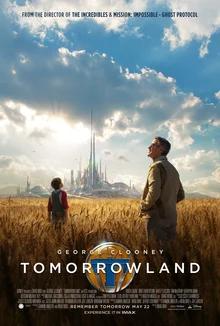
Tomorrowland
Optimistic teenager Casey Newton receives a mysterious pin that, when touched, drops her into a vision of Tomorrowland — a gleaming hidden city of impossible future technology. Tracking down the pin's origin leads her to Frank Walker, a disillusioned former boy-genius who was exiled from that city decades ago, and together they race to understand why humanity's brightest possible future has been sealed away and left to die.
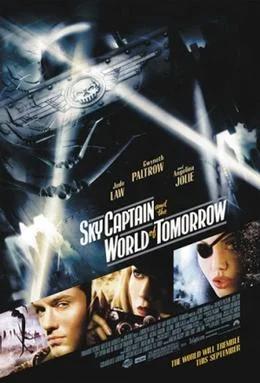
Sky Captain and the World of Tomorrow
1939, an alternate New York besieged by giant robots stomping through Manhattan. Mercenary pilot Joe 'Sky Captain' Sullivan and journalist Polly Perkins — his ex — race to uncover who is behind the attacks, chasing the trail across the globe to a hidden island fortress where a mad scientist's decades-old plan for 'the world of tomorrow' is finally coming to fruition.
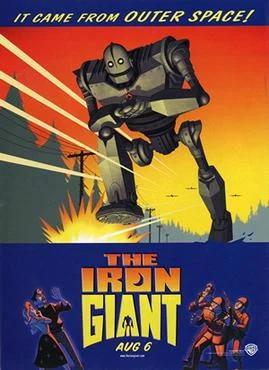
The Iron Giant
Maine, 1957. Young Hogarth Hughes discovers a colossal robot that fell from space, its memory wiped, hiding in the woods behind his house. As Hogarth teaches the Giant about the world — and about choice — a paranoid government agent closes in, convinced the visitor is a Cold War weapon that must be destroyed before it destroys them first.
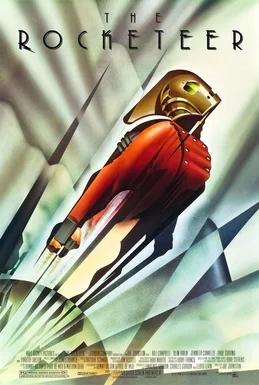
The Rocketeer
1938, Los Angeles. Stunt pilot Cliff Secord stumbles onto a prototype jetpack hidden in his hangar by gangsters — and straps it on. As word of a flying man spreads, Cliff finds himself hunted by Neville Sinclair, a matinee-idol movie star secretly working for Nazi agents desperate to recover the rocket before it reaches Germany, with only his mechanic Peevy and his girlfriend Jenny standing between the jetpack and the Third Reich.
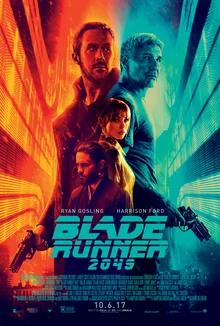
Blade Runner 2049
Thirty years after the original, K is a new-model replicant working as a blade runner for the LAPD, retiring older rogue models without complaint — until a routine job unearths a buried secret: evidence that a replicant once gave birth. The discovery could break the wall between the born and the built, and it sends K hunting for a child hidden decades ago, for a vanished blade runner named Deckard, and for an answer about himself he wants too badly to trust.
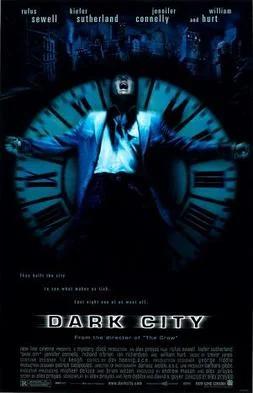
Dark City
John Murdoch wakes in a hotel bathtub with no memory, a dead woman in the next room, and detectives closing in for murders he can't remember committing. As he runs through a city where it is always midnight, he begins noticing what no one else does: at 12:00 exactly, the entire population falls asleep, the buildings physically rearrange themselves — and pale men in long coats move among the sleepers, injecting new memories into new lives.
Comments
Sign in to join the conversation
No comments yet. Be the first!
Advertisement