Soylent Green (1973)
MGM· USA· 97 min· English
Directed by Richard FleischerMusic by Fred Myrow
Synopsis
New York City, 2022: forty million people are crammed into a metropolis choking on pollution and starvation, and most of the population survives on rations of a mysterious, government-distributed wafer called Soylent Green. When a wealthy executive of the company that makes it is murdered, hard-bitten detective Frank Thorn's investigation uncovers a conspiracy far worse than the killing itself — a secret buried in exactly what Soylent Green is actually made of.
Advertisement
Review
Set in a 2022 that imagines ecological collapse, mass starvation and a population crisis rendered with genuinely grim specificity, Soylent Green stands as 1970s eco-anxiety cinema at its absolute bleakest — a film considerably less interested in frightening audiences with a monster than with an extrapolated future assembled entirely out of real 1973 headlines about pollution, overpopulation and resource scarcity, pushed to their logical, starving conclusion. Richard Fleischer, a director who moved fluidly between war epics, film noir and science fiction across a five-decade career, stages his overcrowded, collapsing New York with real conviction: bodies sleeping on staircases because there's nowhere else left to put them, riot police literally using modified garbage trucks as crowd-control scoops during food-ration disturbances, and a state-run euthanasia clinic offering what the film frames as the only remaining dignified exit from an entirely undignified existence.
Charlton Heston's detective Frank Thorn anchors the film's murder-investigation plot competently enough, but the picture's real emotional center is Edward G. Robinson, playing Thorn's aging police researcher roommate Sol — a man old enough to personally remember an era when food, breathable air and basic personal space weren't rationed luxuries. Robinson was dying of cancer during the actual production, a fact Heston has said he didn't fully understand until sometime after filming had wrapped, and that knowledge retroactively gives Sol's voluntary final trip to the euthanasia clinic a genuinely doubled emotional weight. The sequence is scored to a wordless montage of forests, oceans and animals set against Beethoven's Pastoral Symphony — natural beauty the film's characters have literally never witnessed firsthand — and it stands as Robinson's actual final screen performance, closing out a five-decade career that had begun with gangster pictures like Little Caesar decades before this genre detour.
The film's overpopulation premise drew directly and explicitly on Paul R. Ehrlich's controversial 1968 bestseller The Population Bomb, which predicted imminent mass famine driven by unchecked global population growth. Ehrlich's specific numerical predictions proved substantially overstated in the decades that followed, but the underlying book shaped serious public policy debate throughout the 1970s regardless, and the film's vision of runaway population growth colliding head-on with pollution and agricultural collapse channels that real, contemporary scientific anxiety directly rather than inventing its dread from nothing.
Fred Myrow's score is used with real discipline against the film's grinding urban misery, largely absent until it's needed most, which makes its deployment during Sol's death scene land with considerably more force than a more continuously present score could have managed. The production itself carries a quiet historical footnote: it was the final film shot on MGM's original studio backlot before the company sold off the property entirely, giving the production access to standing sets that helped construct its crumbling, overcrowded future city on a considerably more modest budget than the finished film's scale might otherwise suggest.
And then, of course, there's the reveal that gives the film its title and its lasting cultural footprint — "Soylent Green is people" — a line so thoroughly absorbed into popular culture as a stand-alone punchline, frequently quoted by people who've never actually seen the source film, that it's genuinely easy to forget how horrifying the line plays within its actual context: a starving, desperate population unknowingly, industrially recycled to feed itself, the ultimate resource-scarcity nightmare rendered completely, grotesquely literal. Judged purely as a plot twist, it's blunt, even a little cheap by the standards of more carefully seeded mysteries. But the miserable, meticulously constructed world built around it — one of the more convincingly bleak projected futures 1970s cinema ever produced — earns the shock completely, and it's a large part of why the line has outlived nearly everything else about the film that spawned it.
Heston's presence here, alongside The Omega Man and Planet of the Apes within a few years of each other, cements this loose unofficial trilogy of collapsed civilizations as one of the most sustained single-actor explorations of dystopian science fiction any performer produced in that decade. Watched today, with real debates over synthetic food, resource scarcity and climate-driven agricultural stress considerably less abstract than they were in 1973, the film's specific brand of grim extrapolation reads less like a period curiosity and more like an early, blunt-force draft of anxieties the culture still hasn't fully resolved.
Director Richard Fleischer, more commonly associated with war epics and crime pictures than science fiction, brings a procedural, almost documentary interest to the mechanics of Thorn's investigation that grounds the film's wilder speculative premise in recognizable, lived-in police-drama beats — overworked detectives, bureaucratic indifference, evidence that keeps quietly disappearing before it can be examined too closely — which makes the eventual reveal land as an extension of institutional corruption the film has been depicting all along, rather than as a science fiction twist arriving from nowhere.
Trivia & Color Notes
A final performance, hidden from the star
Edward G. Robinson was dying of cancer during production and passed away less than two weeks after filming wrapped. Charlton Heston later said he didn't know how ill Robinson was during the shoot, and considers Sol's death scene one of the most emotional he's ever filmed as a result.
The line everyone knows, out of context
'Soylent Green is people!' has become one of the most quoted and parodied lines in film history, frequently referenced by people who have never seen the film itself — a rare case of a spoiler outliving broad cultural knowledge of its source.
Built on a real, controversial book
The film's overpopulation premise was directly inspired by Paul R. Ehrlich's 1968 bestseller The Population Bomb, which predicted mass famine from unchecked population growth — predictions that proved substantially overstated but shaped serious public policy debate throughout the 1970s.
MGM's last picture on its old lot
Soylent Green was the final film shot on MGM's original backlot before the studio sold off the property, giving the production access to standing sets that helped build its crumbling, overcrowded future city on a modest budget.
The film's specific mechanism — a food company secretly processing human remains into ration wafers — is grim shock value rather than plausible industrial process, but its underlying ecological premise (runaway population growth colliding with pollution, resource depletion, and agricultural collapse) drew directly on real, serious scientific debate of its era, particularly Paul R. Ehrlich's 1968 book The Population Bomb. Its 2022 population estimate for New York City overshot reality substantially, but its warnings about greenhouse effect and ecological overshoot register as more prescient today than they did as a background detail in 1973.
🎵 Soundtrack
Music by Fred Myrow
Fred Myrow's score is used sparingly against the film's grinding urban misery, saving its most memorable moment for Sol's death: Beethoven's Pastoral Symphony scoring a wordless montage of forests, oceans, and animals — natural beauty the film's characters have never actually seen.
🔗 This film connects to…
Cast & Crew
Advertisement
You Might Also Like
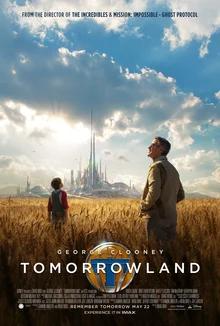
Tomorrowland
Optimistic teenager Casey Newton receives a mysterious pin that, when touched, drops her into a vision of Tomorrowland — a gleaming hidden city of impossible future technology. Tracking down the pin's origin leads her to Frank Walker, a disillusioned former boy-genius who was exiled from that city decades ago, and together they race to understand why humanity's brightest possible future has been sealed away and left to die.
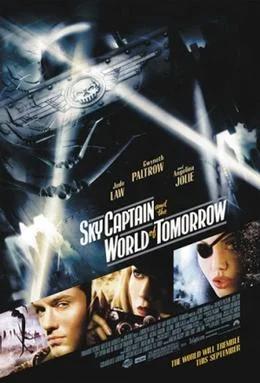
Sky Captain and the World of Tomorrow
1939, an alternate New York besieged by giant robots stomping through Manhattan. Mercenary pilot Joe 'Sky Captain' Sullivan and journalist Polly Perkins — his ex — race to uncover who is behind the attacks, chasing the trail across the globe to a hidden island fortress where a mad scientist's decades-old plan for 'the world of tomorrow' is finally coming to fruition.
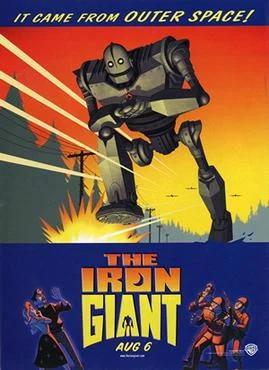
The Iron Giant
Maine, 1957. Young Hogarth Hughes discovers a colossal robot that fell from space, its memory wiped, hiding in the woods behind his house. As Hogarth teaches the Giant about the world — and about choice — a paranoid government agent closes in, convinced the visitor is a Cold War weapon that must be destroyed before it destroys them first.
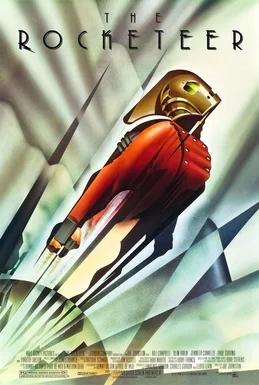
The Rocketeer
1938, Los Angeles. Stunt pilot Cliff Secord stumbles onto a prototype jetpack hidden in his hangar by gangsters — and straps it on. As word of a flying man spreads, Cliff finds himself hunted by Neville Sinclair, a matinee-idol movie star secretly working for Nazi agents desperate to recover the rocket before it reaches Germany, with only his mechanic Peevy and his girlfriend Jenny standing between the jetpack and the Third Reich.
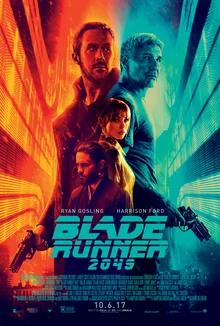
Blade Runner 2049
Thirty years after the original, K is a new-model replicant working as a blade runner for the LAPD, retiring older rogue models without complaint — until a routine job unearths a buried secret: evidence that a replicant once gave birth. The discovery could break the wall between the born and the built, and it sends K hunting for a child hidden decades ago, for a vanished blade runner named Deckard, and for an answer about himself he wants too badly to trust.
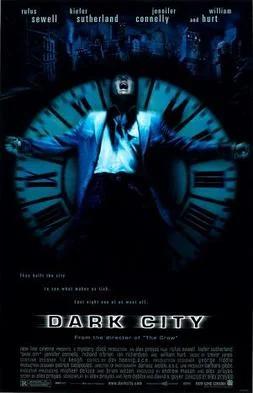
Dark City
John Murdoch wakes in a hotel bathtub with no memory, a dead woman in the next room, and detectives closing in for murders he can't remember committing. As he runs through a city where it is always midnight, he begins noticing what no one else does: at 12:00 exactly, the entire population falls asleep, the buildings physically rearrange themselves — and pale men in long coats move among the sleepers, injecting new memories into new lives.
Comments
Sign in to join the conversation
No comments yet. Be the first!
Advertisement