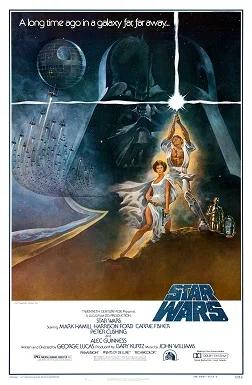
No decade in science fiction cinema contradicts itself as violently as the 1970s. For most of its length, the genre was the most cynical it has ever been — institutions distrusted, ecosystems collapsing, leisure itself turned into a trap. Then, in the space of about eighteen months at the very end of the decade, two films flipped the entire mood of American science fiction from dread to wonder, and the blockbuster era was born. Understanding the 1970s means holding both of those decades in your head at once.
The Paranoid Wing: Institutions You Can't Trust
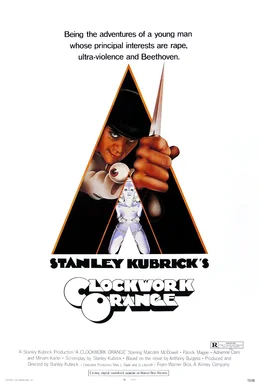
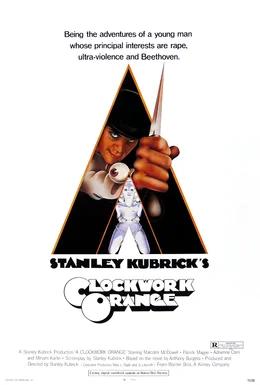
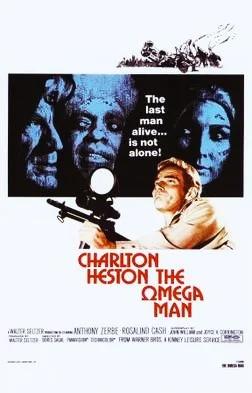
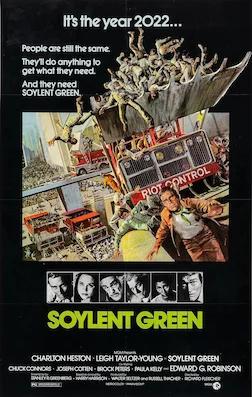
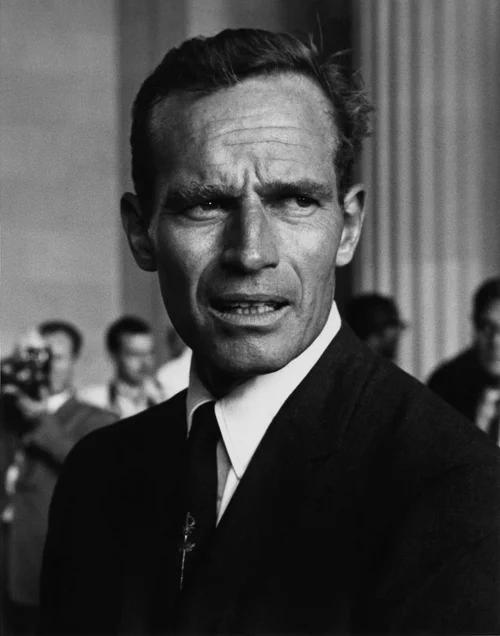
Post-Watergate, post-Vietnam distrust of authority runs through the decade's opening years like a fever. A Clockwork Orange (1971) opens the decade with the ultimate expression of that distrust: a state that can condition free will out of a person and call it rehabilitation. The Omega Man (1971) and Soylent Green (1973) gave Charlton Heston two of the decade's bleakest final-act reveals — a lone survivor negotiating with a cult that worships the plague that killed everyone else, and a "food" twist so notorious it became cultural shorthand for institutional cover-up. Both films trade in the same 1970s anxiety: the people in charge know something terrible, and they are not going to tell you.
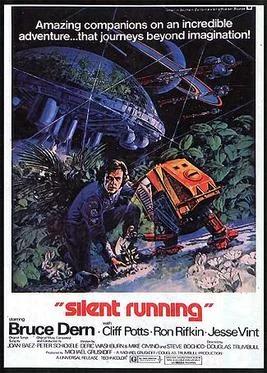
Silent Running (1972) took the decade's ecological dread furthest, imagining Earth's last forests preserved only aboard a commercial freighter — corporate logic, not malice, deciding what's worth saving. Effects visionary Douglas Trumbull's directorial debut is gentler in tone than Heston's double feature, but its premise is just as damning: by 1972, science fiction already assumed nobody back home was going to fix the planet in time.
Leisure Utopias Gone Wrong
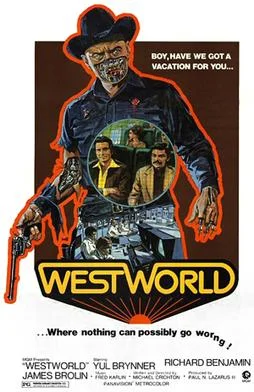
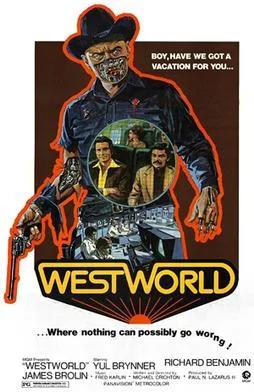
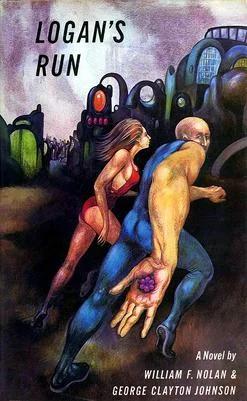
A stranger, more specifically 1970s anxiety shows up in Westworld (1973) and Logan's Run (1976): the decade's growing leisure and consumer culture, rendered as a trap with a glitch in it. Michael Crichton's theme park where the robots learn to aim and Michael York and Jenny Agutter's crystal-clear, comfort-saturated domed city both imagine paradise engineered for a population that never has to ask what it costs — until the systems running the fantasy stop cooperating. It's the era's signature move: take something the audience actually enjoyed in 1970s America — a vacation resort, a consequence-free utopia — and reveal the machinery grinding underneath.
1977: The Year Everything Changed
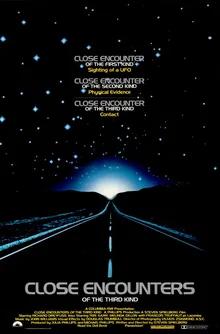
Then, astonishingly, the same cultural moment that produced all that institutional dread also produced Star Wars and Close Encounters of the Third Kind — released within five months of each other in 1977. George Lucas's space opera and Steven Spielberg's suburban-UFO wonder both reject the decade's cynicism outright: here, authority (a farm boy's destiny, a father's obsession) is worth trusting, and the unknown turns out to be something to reach for rather than run from. Lucas's Industrial Light & Magic effectively invented the modern effects industry to make it possible; Spielberg's mothership sequence remains one of the most purely awe-struck moments studio filmmaking has ever produced. Science fiction didn't get more optimistic than 1977, before or since.
1979: Ending on a Note of Dread — Deliberately
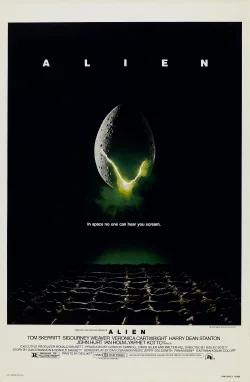
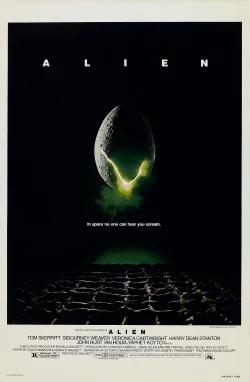
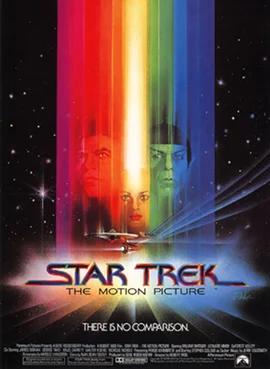
The decade doesn't end on that high, though — it ends on two films that pull the genre back toward seriousness from opposite directions. Alien (1979) took Star Wars's confident spectacle and drained every drop of it away, replacing farm-boy destiny with blue-collar truckers who get a corporate memo demanding they investigate a distress signal, company priorities be damned. Star Trek: The Motion Picture, released the same year, swung the opposite way — a slow, Kubrick-influenced meditation on a machine intelligence searching for its creator, closer in spirit to 2001 than to the crew's own television swagger. Together they're proof the 1970s never fully let go of its founding instinct: even after 1977 proved wonder could sell tickets, the decade's best filmmakers kept reaching for dread and doubt right up to the final year.
The checklist: what makes a film 1970s sci-fi?
Institutions that can't be trusted, or a control system with an off switch nobody can find. Practical models and matte paintings doing work CGI would later take over. A pivot, mid-decade, from cosmic dread to cosmic wonder — and filmmakers on both sides of that pivot working at the top of their craft. Above all: a genre that assumed you should be worried about the people in charge, right up until the moment two films convinced an entire industry that maybe, just this once, you didn't have to be.
Every film above is reviewed in full on this site, with trivia, science-accuracy notes and connections between them — browse the complete 1970s catalog to keep exploring.