The Thing from Another World (1951)
RKO Radio Pictures· USA· 87 min· English
Directed by Christian NybyMusic by Dimitri Tiomkin
Synopsis
An Air Force crew and a team of Arctic researchers uncover a flying saucer buried in the ice — and, frozen a short distance away, its pilot. When their attempt to thaw the block of ice for study goes wrong, an eight-foot alien plant-based organism with a taste for blood is loose in the isolated research station, and there is nowhere in the frozen dark for anyone to run.
Advertisement
Review
Three decades before John Carpenter remade it, The Thing from Another World set the template that essentially every isolated-outpost horror film has followed since: a small group of professionals, a frozen wasteland with no rescue arriving anytime soon, and a threat that gradually turns colleagues into suspects of their own survival instinct rather than allies against a common enemy. The credited director is editor Christian Nyby, making his sole feature directing credit, but cast and crew — including star Kenneth Tobey — have maintained for decades that producer Howard Hawks directed the bulk of the film himself, using the credit primarily to help his regular editor gain entry into the directors' guild. Whoever actually called the shots day to day, the finished film is unmistakably stamped with Hawks's signature rhythms: overlapping, wisecracking dialogue delivered at a naturalistic clip rare for a 1950s creature feature, giving the ensemble a lived-in professional camaraderie well before anything monstrous interrupts it.
What sets the film apart from its B-movie contemporaries is a discipline around restraint that most low-budget creature features of the era simply couldn't afford, whether by choice or necessity. The alien itself, played by a six-foot-seven James Arness buried under heavy prosthetic makeup, spends the majority of the runtime confined to shadow, quick glimpses and off-screen implication, letting accumulated dread do work that the effects budget genuinely couldn't have sustained if the creature had been given extended, well-lit screen time. Arness, notably, received no on-screen credit for the role at all — a strange footnote given that within three years he'd become a household name playing Marshal Matt Dillon on the long-running television western Gunsmoke.
The film's ideological spine runs directly through its central military-versus-science conflict: soldiers who simply want the alien threat eliminated before it can do further damage, against a scientist who insists on studying and preserving it even as it continues killing members of the outpost. That tension between pragmatic self-preservation and idealistic scientific curiosity would have registered instantly to Cold War audiences already primed to see both impulses reflected in real contemporary debates about nuclear research and weapons development, and the film never fully resolves which position it endorses, leaving the argument genuinely open rather than settling it with an easy authorial thumb on the scale.
Production traveled to Cut Bank, Montana and Fairbanks, Alaska to capture genuine snowbound exteriors for authenticity, even though the bulk of the "Arctic" interior scenes were shot on a refrigerated Hollywood soundstage — a combination of practical location work and controlled studio conditions that gave the film a tactile, believable cold the era's cheaper competitors usually couldn't match. Dimitri Tiomkin's score leans into full orchestral menace rather than anticipating the electronic textures that would come to define the genre just a few years later, using brass stabs and theremin-adjacent string writing to keep the creature's presence felt even during long stretches when it's entirely off-screen.
The film's closing warning — "Watch the skies, everywhere, keep watching the skies!" — became one of the most widely imitated closing lines in the genre's subsequent history, and its influence runs in a direct, traceable line through decades of isolated-crew science fiction horror that followed. A young Steven Spielberg has cited seeing the film as a formative childhood experience, and later paid it direct homage by having it play, visibly, on a television set during Close Encounters of the Third Kind. Its most direct descendant remains Carpenter's own 1982 version, which swaps this film's tense but comparatively restrained men-in-a-cabin dread for outright body horror while keeping essentially the same narrative skeleton fully intact — proof of how sturdy the original premise still is, sixty-plus years and multiple genre revolutions later.
What separates the original from so many of the imitators it inspired is a fundamental confidence in its cast's ability to carry tension through dialogue and characterization rather than through the creature itself. Nyby or Hawks, whoever was truly steering the day-to-day direction, understood that a group of people you actually enjoy listening to talk will generate real dread once something starts picking them off one at a time, a lesson plenty of later, more effects-driven monster pictures forgot entirely in the decades that followed.
The film also holds a specific, somewhat overlooked place in the broader history of alien-invasion cinema for treating its extraterrestrial threat as fundamentally, almost mundanely biological rather than supernatural or overtly mystical. There's no cosmic mythology attached to the creature, no grand galactic conspiracy — just an aggressive organism from elsewhere in the solar system that reacts to threats the way any dangerous animal might, which makes the story's tension feel closer to a genuine wilderness-survival scenario than to the more overtly theological framing many of its contemporaries favored.
Margaret Sheridan's Nikki Nicholson deserves particular mention within an ensemble otherwise dominated by military men, since she's written and played with the same rapid-fire competence and equal footing in the group's banter as any of her male castmates, a detail that stands out favorably against how thinly female characters were often sketched in comparable genre pictures of the same decade. It's a small thing, easy to overlook, but it's part of why the ensemble as a whole feels like a group of actual colleagues rather than a hero surrounded by disposable supporting players.
Trivia & Color Notes
Who really directed it?
Christian Nyby received sole director credit, but cast and crew — including star Kenneth Tobey — have long maintained producer Howard Hawks directed most of the film himself, using the credit to help Nyby, his regular editor, join the directors' guild.
A future Gunsmoke star, uncredited
James Arness, who played the towering alien creature under heavy makeup, received no on-screen credit for the role — three years before he became a household name as Marshal Matt Dillon on Gunsmoke.
It scared a young Steven Spielberg
Spielberg has cited seeing this film as a child as one of his formative movie experiences, and later paid direct homage to it — it's the film playing on TV in Close Encounters of the Third Kind.
Alaska stood in for the Arctic
Interior 'Arctic' scenes were shot on a refrigerated Hollywood soundstage, but the production traveled to Cut Bank, Montana and Fairbanks, Alaska to shoot genuine snowbound exteriors for authenticity.
The film's "intellectual carrot" — an alien with plant-based, vegetable physiology capable of near-human intelligence and blood-based reproduction — is 1950s pulp biology rather than anything grounded in real botany or exobiology, though the underlying premise that alien life might not share Earth's carbon-and-cellular basis at all remains a genuinely open question in astrobiology. Its Arctic-outpost setting, isolation, and radio-blackout tension are the film's most enduring realistic touch, and directly shaped the far more scientifically careful John Carpenter remake three decades later.
🎵 Soundtrack
Music by Dimitri Tiomkin
Dimitri Tiomkin's score leans on full orchestral menace rather than the electronic textures that would define the genre a few years later — brass stabs and theremin-adjacent strings that make the creature's presence felt even when it's off-screen.
🔗 This film connects to…
Cast & Crew
Director
Producer
Composer
Cast
- Kenneth Tobey as Captain Patrick Hendry
- Margaret Sheridan as Nikki Nicholson
Advertisement
You Might Also Like
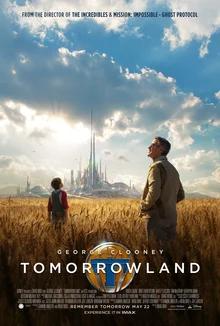
Tomorrowland
Optimistic teenager Casey Newton receives a mysterious pin that, when touched, drops her into a vision of Tomorrowland — a gleaming hidden city of impossible future technology. Tracking down the pin's origin leads her to Frank Walker, a disillusioned former boy-genius who was exiled from that city decades ago, and together they race to understand why humanity's brightest possible future has been sealed away and left to die.
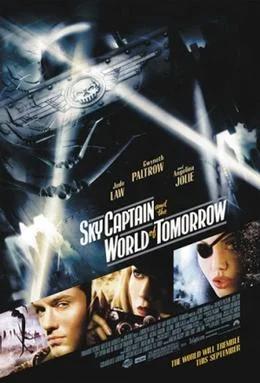
Sky Captain and the World of Tomorrow
1939, an alternate New York besieged by giant robots stomping through Manhattan. Mercenary pilot Joe 'Sky Captain' Sullivan and journalist Polly Perkins — his ex — race to uncover who is behind the attacks, chasing the trail across the globe to a hidden island fortress where a mad scientist's decades-old plan for 'the world of tomorrow' is finally coming to fruition.
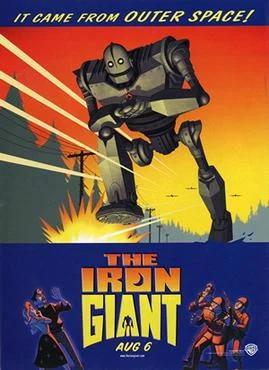
The Iron Giant
Maine, 1957. Young Hogarth Hughes discovers a colossal robot that fell from space, its memory wiped, hiding in the woods behind his house. As Hogarth teaches the Giant about the world — and about choice — a paranoid government agent closes in, convinced the visitor is a Cold War weapon that must be destroyed before it destroys them first.
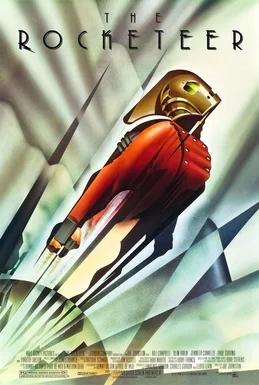
The Rocketeer
1938, Los Angeles. Stunt pilot Cliff Secord stumbles onto a prototype jetpack hidden in his hangar by gangsters — and straps it on. As word of a flying man spreads, Cliff finds himself hunted by Neville Sinclair, a matinee-idol movie star secretly working for Nazi agents desperate to recover the rocket before it reaches Germany, with only his mechanic Peevy and his girlfriend Jenny standing between the jetpack and the Third Reich.
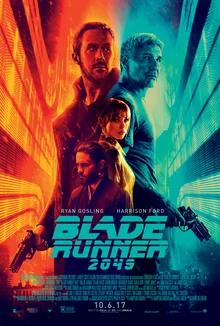
Blade Runner 2049
Thirty years after the original, K is a new-model replicant working as a blade runner for the LAPD, retiring older rogue models without complaint — until a routine job unearths a buried secret: evidence that a replicant once gave birth. The discovery could break the wall between the born and the built, and it sends K hunting for a child hidden decades ago, for a vanished blade runner named Deckard, and for an answer about himself he wants too badly to trust.
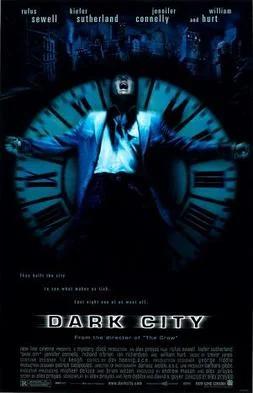
Dark City
John Murdoch wakes in a hotel bathtub with no memory, a dead woman in the next room, and detectives closing in for murders he can't remember committing. As he runs through a city where it is always midnight, he begins noticing what no one else does: at 12:00 exactly, the entire population falls asleep, the buildings physically rearrange themselves — and pale men in long coats move among the sleepers, injecting new memories into new lives.
Comments
Sign in to join the conversation
No comments yet. Be the first!
Advertisement