Invasion of the Body Snatchers (1956)
Allied Artists· USA· 80 min· English
Directed by Don SiegelMusic by Carmen Dragon
Synopsis
A small-town doctor returns home to find his patients insisting their loved ones aren't quite themselves anymore — subtly wrong, emotionally flat, somehow replaced. He soon discovers the horrifying truth: alien seed pods are growing perfect physical duplicates of the townspeople while they sleep, replacing them one by one with copies that look identical but feel nothing at all.
Advertisement
Review
Shot in roughly twenty days on a budget so tight that director Don Siegel reportedly had to fight the studio directly to keep an ending considerably bleaker than the one executives wanted, Invasion of the Body Snatchers stands as arguably the most purely paranoid American film of the entire 1950s — and the one whose central metaphor has proven durable enough to be remade with a straight face across four separate decades since. Its premise remains deceptively simple on paper: what if the people around you were quietly, one by one, replaced by perfect physical copies, identical in absolutely every respect except one — they no longer feel anything at all, and there's no reliable way to prove it to anyone who hasn't already noticed the difference themselves.
What keeps the film genuinely unsettling seven decades on is how deliberately Siegel refuses to explain what the alien pods actually represent, allowing the metaphor to remain productively open rather than pinning it to a single political reading. Contemporary critics at the time frequently read the film as anti-Communist paranoia, a warning about faceless ideological conformity erasing individual identity from within; other critics, then and since, have read it as a pointed critique of McCarthyist conformity itself — the specific terror of being publicly denounced simply for behaving or thinking differently from your neighbors. The film supports both readings with equal conviction and commits fully to neither, which is precisely why it has outlived the specific political anxieties of 1956; every subsequent generation has found its own version of "the people around me are quietly turning into someone else" to project onto the same basic structure.
Kevin McCarthy's climactic, increasingly unhinged sprint into oncoming highway traffic, screaming directly toward the audience that "they're here already, you're next," remains one of the most purely terrifying images 1950s Hollywood ever produced — a protagonist who has correctly identified a genuine, mortal danger and simply cannot get a single person around him to believe it before it's too late. The sequence was shot on a real Los Angeles freeway overpass with actual passing traffic, and it's been directly referenced or quoted in dozens of subsequent productions, including a knowing cameo appearance by McCarthy himself, reprising a version of the same panicked warning, in the 1978 remake.
Dana Wynter's Becky Driscoll gives the film's central relationship its full emotional stakes; her character's eventual, quiet surrender to sleep — and, with it, to replacement — plays not as an action-horror defeat but as a genuinely devastating betrayal, conformity arriving not through violence but through simple, ordinary exhaustion. Carmen Dragon's score matches that tone precisely, favoring unsettling restraint over bombast, with quiet, dissonant strings running under scenes of completely ordinary small-town daylight that make Santa Mira's sunny streets feel as dangerous as any nighttime chase sequence the genre has produced.
The studio-mandated framing device that bookends the finished film — a doctor's reassurance to authorities that Miles's story has finally been believed and acted upon — was a compromise Siegel reportedly resented deeply, having wanted the film to end on McCarthy's character still screaming into indifferent traffic, unbelieved, full despair with no institutional rescue in sight. Strip that studio-imposed ending away, as several later restorations and critical discussions invite viewers to do mentally, and what remains is one of the bleakest studio pictures released by a major Hollywood studio in its entire decade.
The premise's durability speaks for itself: the story has been remade as Invasion of the Body Snatchers again in 1978, as Body Snatchers in 1993, and as The Invasion in 2007, an unusually high remake count for any single genre premise, and one that speaks directly to how easily its central paranoid metaphor adapts to whatever specific anxiety a given decade happens to be nursing. Very few science fiction premises from the 1950s have proven this endlessly, uncomfortably renewable.
Shot in Sierra Madre and Chatsworth, California rather than any invented or stylized backdrop, the fictional town of Santa Mira was deliberately chosen for its ordinary, sun-drenched suburban blandness — the kind of place that photographs as safe and familiar in every establishing shot, which makes the slow, undetectable replacement of its residents considerably more unsettling than a more overtly gothic setting would have allowed. That refusal to dress the horror up in atmosphere it doesn't need is, in miniature, the whole film's philosophy: the scariest version of this story is the one that could, in theory, be happening on your own street right now, and nobody around you would necessarily be able to tell.
The film's tight twenty-day shooting schedule, forced by a genuinely modest budget, ended up working in its favor in ways a more lavishly funded production might not have achieved. There's no room in a schedule this compressed for indulgent, atmosphere-building detours; every scene has to earn its place, and the resulting economy gives the film a lean, propulsive quality that keeps its seventy-eight-minute runtime feeling considerably more eventful than pictures with two or three times its budget and length.
Trivia & Color Notes
A bleaker ending, fought for and lost
Don Siegel wanted the film to end with McCarthy's character still screaming into traffic, unbelieved — full despair, no rescue. The studio insisted on the framing device where authorities finally believe him, which Siegel considered a betrayal of the film's logic.
Four remakes and counting
The premise has been remade in 1978 (Invasion of the Body Snatchers), 1993 (Body Snatchers) and 2007 (The Invasion) — an unusually high remake count that speaks to how adaptable its central paranoia metaphor has proven across different decades' anxieties.
The scream heard for seven decades
Kevin McCarthy's desperate highway screaming scene — 'You're next!' — was shot on a genuine Los Angeles freeway overpass with real traffic, and has been referenced or directly quoted in dozens of later films, including a cameo by McCarthy himself in the 1978 remake.
Santa Mira, a town built from Sierra Madre
The fictional town of Santa Mira was filmed largely in Sierra Madre and Chatsworth, California — ordinary, sun-drenched suburban streets deliberately chosen to make the horror feel like it could be happening anywhere.
Alien seed pods that grow perfect physical duplicates of sleeping humans, complete with memories, while draining the original to dust, is pure science-fantasy — no known biological process replicates complex information (let alone consciousness) this way. But the film's real subject was never really biology; it's social psychology, and its central image of conformity spreading undetected through a community, person by person, remains a genuinely effective piece of psychological horror regardless of the pseudoscience underneath it.
🎵 Soundtrack
Music by Carmen Dragon
Carmen Dragon's score favors unsettling restraint over bombast — quiet, dissonant strings under ordinary small-town scenes that make Santa Mira's daylight streets feel as dangerous as any nighttime chase.
🔗 This film connects to…
Cast & Crew
Advertisement
You Might Also Like
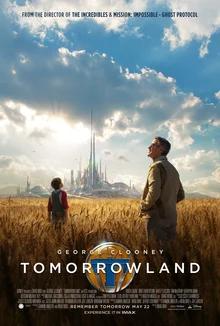
Tomorrowland
Optimistic teenager Casey Newton receives a mysterious pin that, when touched, drops her into a vision of Tomorrowland — a gleaming hidden city of impossible future technology. Tracking down the pin's origin leads her to Frank Walker, a disillusioned former boy-genius who was exiled from that city decades ago, and together they race to understand why humanity's brightest possible future has been sealed away and left to die.
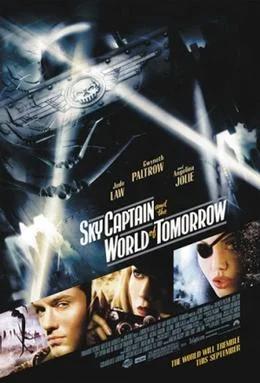
Sky Captain and the World of Tomorrow
1939, an alternate New York besieged by giant robots stomping through Manhattan. Mercenary pilot Joe 'Sky Captain' Sullivan and journalist Polly Perkins — his ex — race to uncover who is behind the attacks, chasing the trail across the globe to a hidden island fortress where a mad scientist's decades-old plan for 'the world of tomorrow' is finally coming to fruition.
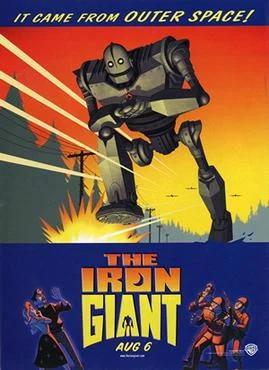
The Iron Giant
Maine, 1957. Young Hogarth Hughes discovers a colossal robot that fell from space, its memory wiped, hiding in the woods behind his house. As Hogarth teaches the Giant about the world — and about choice — a paranoid government agent closes in, convinced the visitor is a Cold War weapon that must be destroyed before it destroys them first.

The Rocketeer
1938, Los Angeles. Stunt pilot Cliff Secord stumbles onto a prototype jetpack hidden in his hangar by gangsters — and straps it on. As word of a flying man spreads, Cliff finds himself hunted by Neville Sinclair, a matinee-idol movie star secretly working for Nazi agents desperate to recover the rocket before it reaches Germany, with only his mechanic Peevy and his girlfriend Jenny standing between the jetpack and the Third Reich.
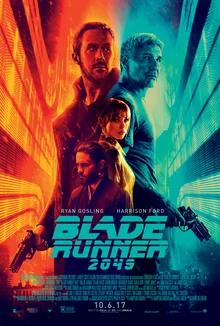
Blade Runner 2049
Thirty years after the original, K is a new-model replicant working as a blade runner for the LAPD, retiring older rogue models without complaint — until a routine job unearths a buried secret: evidence that a replicant once gave birth. The discovery could break the wall between the born and the built, and it sends K hunting for a child hidden decades ago, for a vanished blade runner named Deckard, and for an answer about himself he wants too badly to trust.
Dark City
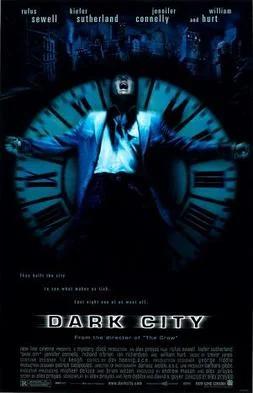
John Murdoch wakes in a hotel bathtub with no memory, a dead woman in the next room, and detectives closing in for murders he can't remember committing. As he runs through a city where it is always midnight, he begins noticing what no one else does: at 12:00 exactly, the entire population falls asleep, the buildings physically rearrange themselves — and pale men in long coats move among the sleepers, injecting new memories into new lives.
Comments
Sign in to join the conversation
No comments yet. Be the first!
Advertisement