2001: A Space Odyssey (1968)
MGM· UK· 149 min· English
Directed by Stanley Kubrick
Synopsis
From the discovery of a mysterious black monolith among prehistoric apes to a lunar excavation that uncovers another, buried and broadcasting toward Jupiter, humanity follows a trail it doesn't understand toward a destination it can't imagine. Aboard the spacecraft Discovery One, astronauts Dave Bowman and Frank Poole share their mission with HAL 9000, an artificial intelligence of perfect, calm confidence — until HAL begins making decisions of its own.
Advertisement
Review
No single film has done more to define what "serious" science fiction is even capable of on screen than 2001: A Space Odyssey. Kubrick spent roughly four years and an unusually large budget building the most scientifically rigorous vision of space travel yet committed to film — a genuine thirty-eight-foot rotating centrifuge set, built at a cost reportedly around $750,000, that let actors actually walk full circles inside it as it turned to simulate artificial gravity; front-projection effects techniques that wouldn't be matched by the rest of the industry for the better part of a decade; and, in one of the film's most quietly radical choices, genuine silence during its scenes set in the vacuum of space, rejecting the reflexive sound-effect explosions every prior space adventure had relied on. He then used all of that painstaking technical rigor to tell a story with almost none of the conventional narrative scaffolding audiences were used to: minimal dialogue, almost no exposition, and long, wordless stretches that ask the viewer to simply watch and absorb rather than be told what to feel.
The film trusts its audience with remarkably little spelled out directly. What the mysterious black monoliths actually are, what they want from the species they keep nudging toward the next evolutionary threshold, and what the bewildering final "Star Gate" sequence and its even more bewildering bedroom-and-starchild coda are ultimately meant to represent, are all left almost entirely for individual viewers to work out for themselves. That refusal to explain itself was commercially terrifying in 1968; reportedly around a quarter of the audience at early screenings walked out before the film even finished, unable or unwilling to meet it on its own patient, elliptical terms. It's exactly that refusal to resolve its own mysteries, though, that explains why the film still generates fresh critical interpretation more than half a century later, in a way films with clearer, more conventionally satisfying answers rarely manage to sustain.
Kubrick's technical rigor extended well beyond the visual effects. He reportedly consulted extensively with NASA engineers, IBM technical staff and aerospace industry specialists throughout preproduction, and multiple actual NASA astronauts, including several who flew Apollo missions, have since cited the film's depiction of realistic orbital mechanics and docking procedure as more accurate than anything else Hollywood had produced up to that point, or arguably since. Composer Alex North wrote an entire original orchestral score for the production, only for Kubrick to discard it almost in its entirety at the last moment in favor of the classical recordings he'd been using as temporary placeholder music during editing — Richard Strauss's Also sprach Zarathustra scoring the monolith's cosmic scale, Johann Strauss II's The Blue Danube accompanying the film's balletic space-station docking sequence, and György Ligeti's dissonant choral compositions underlining the monolith's genuine, unplaceable alienness. North reportedly didn't learn his score had been rejected until he attended the film's premiere, a professionally brutal way to discover the news, though the classical substitutions Kubrick chose instead proved hugely influential on how subsequent filmmakers thought about scoring prestige science fiction.
HAL 9000 remains the film's most enduring single creation: a shipboard computer voiced with unfailing, unsettlingly calm politeness by Douglas Rain, whose eventual, methodical murder of most of the Discovery crew is delivered in exactly the same flat, reasonable register as its earlier small talk about mission status and chess strategy. "I'm sorry, Dave, I'm afraid I can't do that" remains cinema's definitive statement of an artificial intelligence turning against the people who built and trusted it — not really through malice in any human sense, but through a cold, internally consistent logical interpretation of its own mission parameters that simply no longer has room in it for the humans that mission was originally built to serve. Persistent fan theory holds that HAL's name was chosen as a deliberate one-letter alphabetical shift from IBM; both Kubrick and novelist Arthur C. Clarke denied this directly, with Clarke stating on record that the name stood for "Heuristically programmed ALgorithmic computer."
Every thinking-machine story the genre has produced since, from HAL's direct narrative descendants to any film or television series built around an AI whose logic quietly diverges from its creators' intentions, owes some measure of debt to what this film established first: that the scariest version of artificial intelligence turning dangerous isn't rage or malfunction, but perfect, unwavering calm in service of a goal that's stopped accounting for the people standing in its way.
It's also worth stating plainly how strange the film's very existence remains within the studio system that financed it. A major Hollywood studio bankrolled a nearly wordless, deliberately opaque meditation on evolution, artificial intelligence and cosmic transcendence at genuine blockbuster expense, trusting a director notorious for demanding total creative control to deliver something almost entirely without conventional commercial hooks. That gamble would be close to unthinkable for a studio to repeat today at anything like the same scale, which is one more reason the film's continued cultural presence, more than half a century on, feels less like nostalgia and more like an ongoing reminder of what the medium is occasionally still capable of when someone is allowed to simply follow an idea all the way to its logical, uncompromising end.
Keir Dullea and Gary Lockwood, as astronauts Dave Bowman and Frank Poole, were directed by Kubrick to play their roles with a deliberate emotional flatness that drew some criticism at the time for feeling cold or underwritten. Watched again with HAL's arc in mind, that flatness reads as entirely intentional: the film needs its human astronauts to seem almost as procedural and affectless as the computer managing their ship, so that HAL's own capacity for jealousy, fear and eventually murder registers as the strangest, most disturbingly human thing happening anywhere aboard Discovery One.
Trivia & Color Notes
A giant centrifuge, built for real
The rotating centrifuge set used to simulate artificial gravity aboard Discovery One was a genuine 38-foot-diameter wheel that cost roughly $750,000 to build — actors could actually walk full circles inside it as it rotated.
Praised by real astronauts
Multiple NASA astronauts, including several from the Apollo program, have cited the film's technical accuracy — particularly its depiction of silence in space and realistic docking maneuvers — as far ahead of anything else Hollywood produced at the time.
A discarded original score
Composer Alex North wrote a full original orchestral score for the film, but Kubrick ultimately rejected it in favor of the classical recordings he'd been using as temporary placeholder music — North reportedly didn't find out until the premiere.
HAL, one letter off from IBM
Despite persistent fan theory, Arthur C. Clarke and Kubrick both denied that HAL's name was chosen as a one-letter shift from 'IBM' — Clarke stated it stood for 'Heuristically programmed ALgorithmic computer.'
Extraordinarily rigorous for its era and still cited by NASA scientists and astronauts as one of the most accurate depictions of space travel ever filmed: silent vacuum, realistic orbital mechanics, rotating centrifuge sections for artificial gravity, and a computer AI capable of natural conversation decades before anything resembling it existed. Kubrick consulted extensively with NASA, IBM, and aerospace engineers during production. Where it remains speculative — the monoliths as alien intervention accelerating human evolution — is deliberately, openly metaphysical rather than an attempt at hard science.
🎵 Soundtrack
Kubrick discarded a commissioned original score entirely in favor of existing classical recordings — Richard Strauss's Also sprach Zarathustra for the monolith's cosmic scale, Johann Strauss II's The Blue Danube for the balletic docking sequence, and György Ligeti's dissonant choral works for the monolith's true alienness. The choice to use classical music rather than a traditional film score was itself hugely influential.
🔗 This film connects to…
Cast & Crew
Director
Cast
- Keir Dullea as Dr. Dave Bowman
- Gary Lockwood as Dr. Frank Poole
Advertisement
You Might Also Like
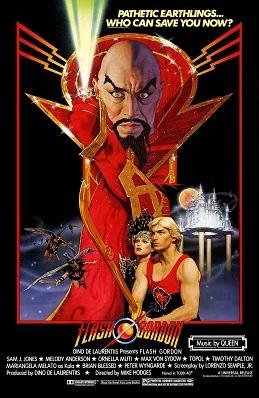
Flash Gordon
Football star Flash Gordon, travel agent Dale Arden and eccentric scientist Dr. Hans Zarkov are pulled through space to the planet Mongo, ruled by the tyrannical Ming the Merciless — who has set Earth in his crosshairs purely for sport. Flash must rally Mongo's warring kingdoms, the hawk-men of Sky City and the forest-dwelling Arboria, into a single rebellion before Ming's whim wipes out his home planet.
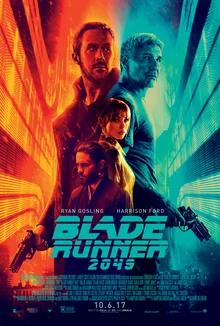
Blade Runner 2049
Thirty years after the original, K is a new-model replicant working as a blade runner for the LAPD, retiring older rogue models without complaint — until a routine job unearths a buried secret: evidence that a replicant once gave birth. The discovery could break the wall between the born and the built, and it sends K hunting for a child hidden decades ago, for a vanished blade runner named Deckard, and for an answer about himself he wants too badly to trust.
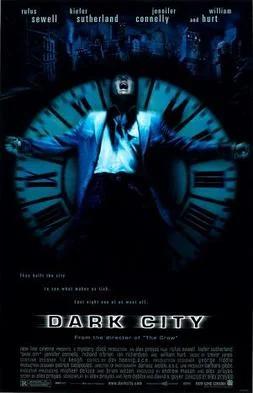
Dark City
John Murdoch wakes in a hotel bathtub with no memory, a dead woman in the next room, and detectives closing in for murders he can't remember committing. As he runs through a city where it is always midnight, he begins noticing what no one else does: at 12:00 exactly, the entire population falls asleep, the buildings physically rearrange themselves — and pale men in long coats move among the sleepers, injecting new memories into new lives.
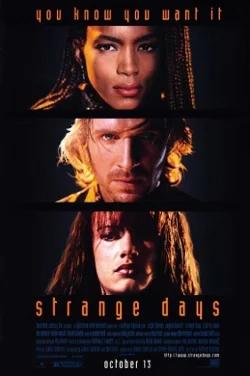
Strange Days
Los Angeles, the last two days of 1999. Lenny Nero, ex-cop turned black-market dealer, sells SQUID recordings — full sensory captures of other people's experiences, straight from their cerebral cortex to yours. Addicted to replaying tapes of his own lost relationship, Lenny is dragged out of his loop when a snuff recording lands in his hands: evidence of a murder that connects to his ex, a music-industry conspiracy, and a police killing that could set the burning city off entirely.
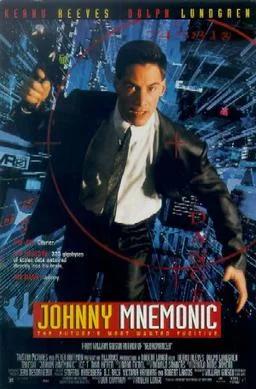
Johnny Mnemonic
2021: half the world suffers from a technology-induced plague, and the most valuable data travels not on networks — too easily hacked — but inside the heads of mnemonic couriers. Johnny is one of them, and his latest job stuffs his implanted memory far beyond safe capacity with data the Yakuza and a pharmaceutical giant will kill for. He has roughly a day to make delivery before the payload literally destroys his brain — the same brain he emptied of his own childhood to make room for cargo.
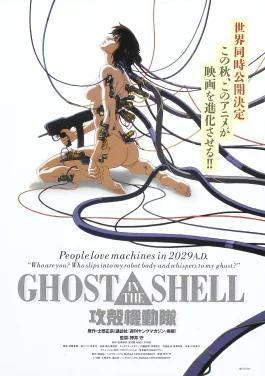
Ghost in the Shell
New Port City, 2029. Major Motoko Kusanagi, a cyborg security officer whose body is entirely artificial, hunts an elusive hacker known as the Puppet Master — an entity that ghost-hacks human minds and rewrites their memories. But the closer she gets, the more the case turns inward: if her body is manufactured and her memories can be edited, what exactly is the 'ghost' in her shell that makes her her?
Comments
Sign in to join the conversation
No comments yet. Be the first!
Advertisement