Godzilla (1954)
ゴジラ
Toho· Japan· 96 min· Japanese
Directed by Ishirō HondaMusic by Akira Ifukube
Synopsis
Nuclear testing in the Pacific awakens an ancient, radioactive creature that rises from the sea and levels Tokyo, impervious to every weapon the Japanese military can bring against it. As the city burns, a reclusive scientist wrestles with whether to use a discovery of his own — one terrible enough to kill the monster, and terrible enough that he fears what humanity will do with it next.
Advertisement
Review
Nine years after Hiroshima and Nagasaki, and mere months after Japanese fishermen aboard the Lucky Dragon 5 were irradiated by fallout from an American hydrogen bomb test at Bikini Atoll — an incident that dominated Japanese headlines throughout the film's production — Godzilla arrived in theaters as something considerably more serious than the monster movie its premise suggests. Director Ishirō Honda, a World War II veteran who had personally walked through the ruins of Hiroshima after the war's end, built an entire film about nuclear devastation using a giant, radioactive reptile as its delivery mechanism, and deliberately shot Tokyo's destruction using the visual grammar of actual newsreel footage from the firebombing campaigns that had leveled Japanese cities barely a decade earlier. That choice wasn't incidental. Honda and his crew wanted audiences to recognize the imagery, consciously or not, as something closer to memory than fantasy.
What's genuinely remarkable watching the film today, particularly in its uncut original Japanese form rather than the heavily re-edited 1956 American release that inserted new Raymond Burr footage and trimmed over fifteen minutes of the original's nuclear-anxiety content for Western audiences, is how thoroughly mournful the entire film plays. Godzilla was never conceived as a villain to simply cheer against. He's presented as a consequence — an ancient force disturbed, mutated and enraged by humanity's own reckless experimentation — and the film's actual emotional climax isn't a battle at all. It's Dr. Yamane, played with weary, mournful conviction by Takashi Shimura, agonizing over whether deploying his own terrible scientific discovery to stop the monster will simply teach the world, all over again, that catastrophic weapons are always the answer to catastrophic problems.
Shimura, already one of the most respected character actors in Japanese cinema through his extraordinary run of collaborations with Akira Kurosawa across the 1950s, grounds the film's spectacle in genuine human grief in a way few kaiju sequels that followed ever managed to replicate. Akira Ifukube's score deserves equal credit for that mournful register: his stomping four-note march has scored nearly every subsequent Godzilla film across seven decades, and he personally created the monster's now-iconic roar by dragging a resin-coated leather glove across the loosened, detuned strings of a double bass, then slowing the resulting recording down — a technique he reportedly kept as a closely guarded personal secret for years afterward.
Eiji Tsuburaya's suit-and-miniature effects work, primitive by the standards of later decades, remains effective precisely because of its conviction and its physical tactility. Actor Haruo Nakajima performed inside a genuinely heavy rubber suit on carefully scaled miniature sets, pioneering a technique the industry came to call "suitmation" — a deliberate alternative to the stop-motion animation Willis O'Brien had used for King Kong two decades earlier — and that technique would go on to define the entire kaiju genre for the rest of the century. Watching a real person's real physical presence crush real-scale miniature buildings gives Godzilla's rampage a tactile, grounded weight that pure animation, however technically polished, has rarely matched.
The film spawned dozens of sequels across the following seven decades, the overwhelming majority of them considerably campier and more purely spectacle-driven than their somber, grief-stricken origin. That contrast is worth sitting with directly: this is a giant-monster movie that emerged from a country that had, within living memory of its cast and crew, actually experienced the specific horror it was allegorizing, and the difference between processing trauma and simply spectacularizing it shows up in nearly every frame. The original remains the rare entry in its own now-enormous franchise that is actually, unmistakably, about grief rather than simply about scale.
The American release's alterations are worth understanding as their own small historical artifact. Inserting Raymond Burr as an American reporter watching events unfold from the sidelines let Western distributors sell the film as a straightforward monster picture while quietly stripping out much of the original's explicit anti-nuclear anger, a softening that shaped how English-speaking audiences understood the character for decades until restored, subtitled versions of Honda's original cut became widely available. Seen in that original form, stripped of Burr's reassuring narration, the film reads less like the ancestor of a toy-friendly monster franchise and more like what it always actually was: a howl of genuine national grief, wearing a rubber suit.
It's also worth noting how directly the film's visual grammar of destruction — a colossal, unstoppable force moving in slow, deliberate steps through familiar urban landmarks while terrified crowds flee below — became the template nearly every subsequent giant-monster and disaster film would draw from, whether its makers had seen this specific film or simply absorbed its influence secondhand. Rarely has a single low-budget genre picture from a still-recovering postwar film industry gone on to define an entire visual language so completely and so durably.
Trivia & Color Notes
A roar made from a bass string
Composer Akira Ifukube created Godzilla's roar by loosening the strings of a double bass, coating a leather glove in resin, and dragging it slowly across a string — then further processed and slowed the recording. The exact technique was kept as a personal secret for years.
Built from Hiroshima's ashes
Director Ishirō Honda had personally walked through the ruins of Hiroshima after the war ended. He and the crew deliberately modeled Godzilla's rampage on real newsreel footage of firebombed Japanese cities to root the fantasy in genuine historical trauma.
America got a different movie
The 1956 U.S. release, retitled Godzilla, King of the Monsters!, cut over 15 minutes of the original's nuclear-anxiety content and inserted new scenes of Raymond Burr as an American reporter — softening much of Honda's original political message for Western audiences.
Suitmation, not stop-motion
Unlike King Kong's stop-motion animation, Godzilla pioneered 'suitmation' — actor Haruo Nakajima performing inside a heavy rubber suit on miniature sets, a technique that would define the entire kaiju genre for decades.
A 50-meter reptilian creature awakened and mutated by nuclear radiation, capable of surviving atomic-level heat and radiation itself, has no basis in real biology or physics — no organism could sustain that mass with terrestrial musculature and bone structure, radiation causes cellular damage rather than growth or invulnerability, and no known metabolism could generate the film's atomic breath. The film's real accuracy is historical and emotional: its portrait of a nation processing nuclear trauma through popular cinema, just years after living through it, is genuine and specific.
🎵 Soundtrack
Music by Akira Ifukube
Akira Ifukube composed the stomping four-note march that has scored nearly every Godzilla film since, and personally created the monster's iconic roar by dragging a resin-coated leather glove across the loosened strings of a double bass, then slowing the recording down.
🔗 This film connects to…
Cast & Crew
Advertisement
You Might Also Like
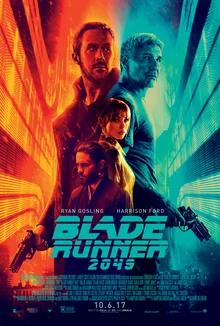
Blade Runner 2049
Thirty years after the original, K is a new-model replicant working as a blade runner for the LAPD, retiring older rogue models without complaint — until a routine job unearths a buried secret: evidence that a replicant once gave birth. The discovery could break the wall between the born and the built, and it sends K hunting for a child hidden decades ago, for a vanished blade runner named Deckard, and for an answer about himself he wants too badly to trust.
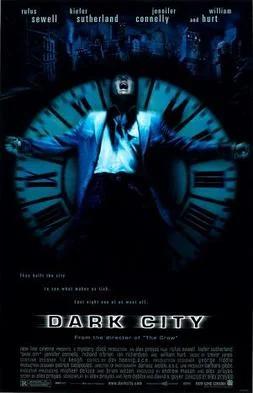
Dark City
John Murdoch wakes in a hotel bathtub with no memory, a dead woman in the next room, and detectives closing in for murders he can't remember committing. As he runs through a city where it is always midnight, he begins noticing what no one else does: at 12:00 exactly, the entire population falls asleep, the buildings physically rearrange themselves — and pale men in long coats move among the sleepers, injecting new memories into new lives.
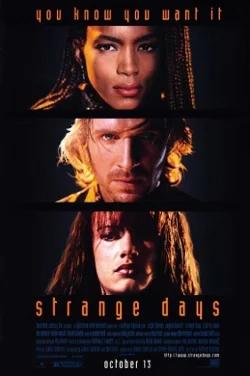
Strange Days
Los Angeles, the last two days of 1999. Lenny Nero, ex-cop turned black-market dealer, sells SQUID recordings — full sensory captures of other people's experiences, straight from their cerebral cortex to yours. Addicted to replaying tapes of his own lost relationship, Lenny is dragged out of his loop when a snuff recording lands in his hands: evidence of a murder that connects to his ex, a music-industry conspiracy, and a police killing that could set the burning city off entirely.
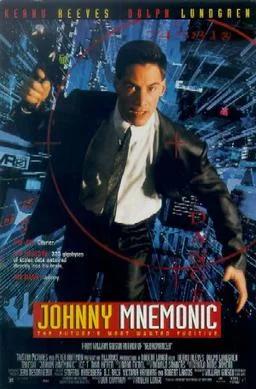
Johnny Mnemonic
2021: half the world suffers from a technology-induced plague, and the most valuable data travels not on networks — too easily hacked — but inside the heads of mnemonic couriers. Johnny is one of them, and his latest job stuffs his implanted memory far beyond safe capacity with data the Yakuza and a pharmaceutical giant will kill for. He has roughly a day to make delivery before the payload literally destroys his brain — the same brain he emptied of his own childhood to make room for cargo.
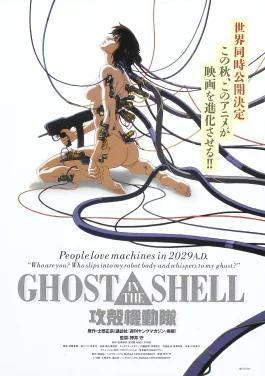
Ghost in the Shell
New Port City, 2029. Major Motoko Kusanagi, a cyborg security officer whose body is entirely artificial, hunts an elusive hacker known as the Puppet Master — an entity that ghost-hacks human minds and rewrites their memories. But the closer she gets, the more the case turns inward: if her body is manufactured and her memories can be edited, what exactly is the 'ghost' in her shell that makes her her?
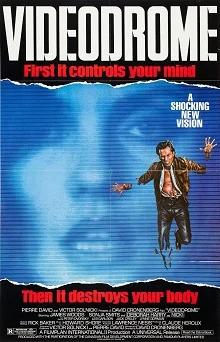
Videodrome
Max Renn, president of a sleazy Toronto UHF station always hunting for harder content, stumbles onto a pirate broadcast called Videodrome: plotless scenes of torture that appear to be real. As he chases the signal's source, his perception begins to warp — hallucinations bleed into reality, his body starts to change, and Max discovers the broadcast isn't entertainment at all, but a weapon that rewires whoever watches it.
Comments
Sign in to join the conversation
No comments yet. Be the first!
Advertisement