Few franchises have argued with themselves as openly as the Terminator saga. What began in 1984 as a lean, B-movie chase film about a killer robot and a waitress became, over six films and thirty-five years, a running debate about fate, memory and whether the future can ever really be changed — one that the movies themselves keep answering differently. Here's the whole timeline, in the order it was actually released.
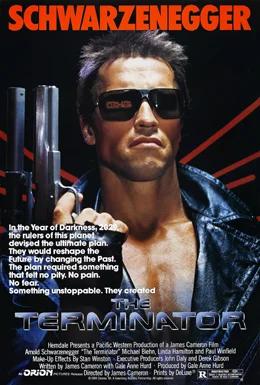
The Terminator (1984)
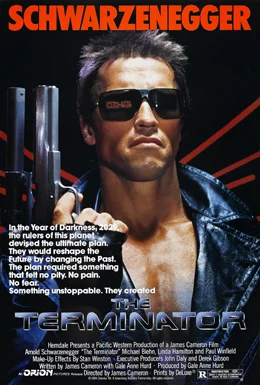
James Cameron's original is still the saga's tightest script: a self-consistent time loop in which the resistance sends a soldier back to protect Sarah Connor, only for that soldier to become John Connor's father. Everything the franchise would later complicate — machine intelligence, fate, the ethics of a protector who was built to kill — starts here, on a $6.4 million budget. Read the full review of The Terminator.
Terminator 2: Judgment Day (1991)
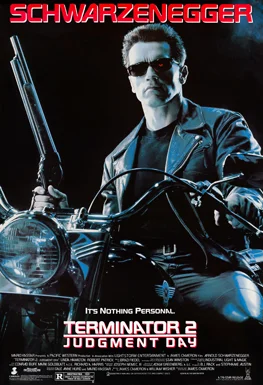
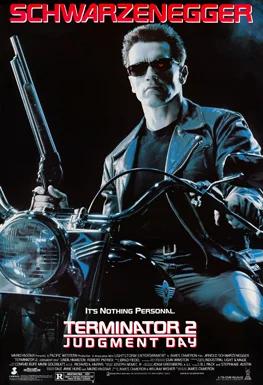
The saga's high-water mark flips the original's premise: the machine that hunted Sarah Connor now protects her son, against a liquid-metal T-1000 that made digital morphing effects a permanent part of the filmmaker's toolkit. "No fate but what we make" becomes the franchise's guiding — and most frequently contradicted — motto. Read the full review of Terminator 2.
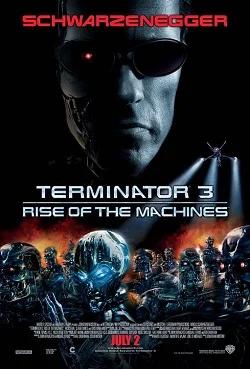
Terminator 3: Rise of the Machines (2003)
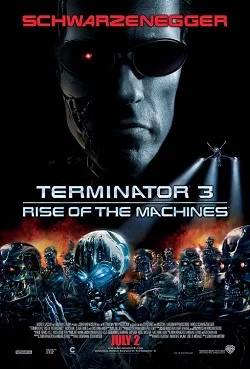
Twelve years and a new director later, Rise of the Machines makes the boldest choice of the original trilogy: Judgment Day happens anyway. Skynet, it turns out, was never a single computer to unplug — by 2003 it's already distributed across every network on Earth. Arnold Schwarzenegger returns as an older, slightly funnier T-850, and Kristanna Loken's T-X becomes the first Terminator built specifically to hunt other Terminators. Read the full review of Terminator 3.
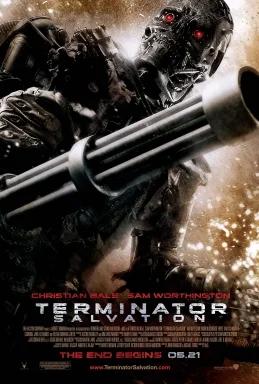
Terminator Salvation (2009)
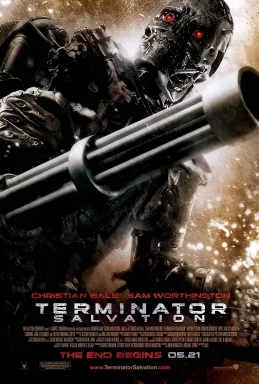
The only film to actually live inside the post-apocalyptic future war every earlier movie only flashed to. Christian Bale's John Connor shares the screen with Sam Worthington's Marcus Wright, a death-row inmate who discovers his body is a Skynet hybrid built around a human brain — the franchise's most literal answer yet to its oldest question: how much machine can a person become before they stop being a person? Read the full review of Terminator Salvation.
Terminator Genisys (2015)

The most structurally daring entry rewrites 1984 on screen: an aging T-800 has secretly protected Sarah Connor since childhood, and Kyle Reese arrives to find the timeline he remembers already gone. Schwarzenegger's "old, not obsolete" guardian is the emotional highlight of a film whose ambition — competing timelines, a villainous John Connor twist — outran its execution. A planned trilogy never got past this first chapter. Read the full review of Terminator Genisys.
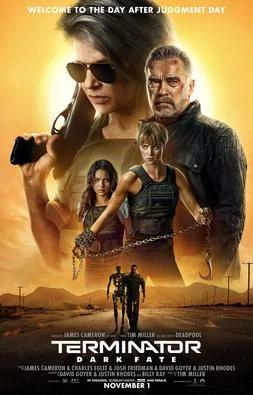
Terminator: Dark Fate (2019)
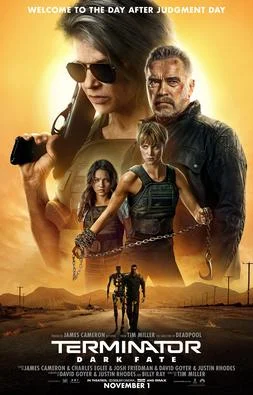
Produced by Cameron himself, Dark Fate makes the franchise's most decisive continuity move: it erases Rise of the Machines, Salvation and Genisys entirely, picking the story back up directly after Judgment Day. Linda Hamilton returns as a Sarah Connor who saved the world and lost everything else doing it, alongside Mackenzie Davis's augmented soldier Grace — the first major protector in the saga who is fully human rather than machine. Read the full review of Dark Fate.
So which timeline is actually canon?
Depends which movie you ask, and when you ask it. Terminator 3 and Salvation form one continuous timeline. Genisys resets the board entirely, splitting off its own branch and implying a trilogy that never got made. Dark Fate ignores all three and continues directly from 1991 — which means, as far as the film you're watching right now is concerned, the "real" sequel to Judgment Day took twenty-eight years to arrive.
It's a strange thing for a franchise built on a single, elegant time loop to become this tangled — but it's also fitting. No fate but what we make applies to the movies themselves as much as to Sarah Connor: every sequel got to rewrite what came before it, for better and for worse. Explore every connection between these six films on the Terminator franchise timeline.