Videodrome (1983)
Universal Pictures· Canada· 87 min· English
Dirigida por David CronenbergMúsica de Howard Shore
Sinopsis
Max Renn, president of a sleazy Toronto UHF station always hunting for harder content, stumbles onto a pirate broadcast called Videodrome: plotless scenes of torture that appear to be real. As he chases the signal's source, his perception begins to warp — hallucinations bleed into reality, his body starts to change, and Max discovers the broadcast isn't entertainment at all, but a weapon that rewires whoever watches it.
Publicidad
Reseña
A year before William Gibson's Neuromancer named the movement, Videodrome arrived with cyberpunk's nervous system already fully formed: media as drug, technology as flesh, corporations weaponizing signal against the people consuming it. Cronenberg's masterstroke is refusing to separate the metaphor from the meat — when Max Renn's television set breathes and his torso opens into a videocassette slot, the film isn't illustrating an idea about media penetration, it's performing it, in latex and slime, courtesy of Rick Baker's still-astonishing practical effects.
James Woods gives the performance of his career as Renn, a man whose professional appetite for the transgressive makes him the perfect host for the Videodrome signal — the film understands that its victim volunteers, which is precisely the point. Debbie Harry's Nicki Brand, a radio therapist drawn toward the broadcast rather than repelled by it, deepens the film's queasiest insight: the signal doesn't force itself on anyone. It simply offers what the audience already wants, and lets appetite do the rest.
The film flopped in 1983 and has spent four decades being caught up to. Its slogans — "long live the new flesh," "the television screen is the retina of the mind's eye" — read today like prophecies about parasocial media, algorithmic escalation and screen-mediated reality delivered two decades before anyone needed them. Of everything in the cyberpunk canon, this is the entry that got more relevant every single year since release.
Curiosidades y Datos
The breathing television
The famous pulsating TV set was built by effects legend Rick Baker's team using a flexible screen membrane with crew members physically pushing into it from behind — a fully practical effect that still unsettles in an era of digital everything.
Long live the new flesh
The film's closing line has become one of body horror's most quoted phrases, referenced across music, games and film — shorthand for the entire idea of technology merging with the human body.
Cronenberg's cable-TV inspiration
Cronenberg drew the premise from his own childhood habit of picking up distant American TV stations late at night after Canadian channels signed off, wondering if he might someday catch something he wasn't supposed to see.
Blondie goes body horror
Debbie Harry took the role of Nicki Brand at the height of Blondie's fame — her first major dramatic film part, and still the performance she's most associated with on screen.
A broadcast signal that induces brain tumors and hallucinations, and flesh that fuses with videotape hardware, is pure body-horror metaphysics with no basis in neurology or media technology. But the film's underlying model of media effects — escalating content consumption rewiring perception, appetite trained toward ever-harder stimulation, broadcasters engineering that escalation deliberately — anticipated real, serious research debates about desensitization and algorithmic amplification with unnerving precision. The technology is fantasy; the media ecology is close to documentary now.
🎵 Banda Sonora
Música de Howard Shore
Howard Shore's score blends orchestral writing with early digital synthesis — much of it composed on a Synclavier, then among the most advanced music computers in existence — so the music itself is half-organic, half-machine, exactly like the film's imagery.
🔗 Esta película conecta con…
Reparto y Equipo
Publicidad
También Te Puede Gustar
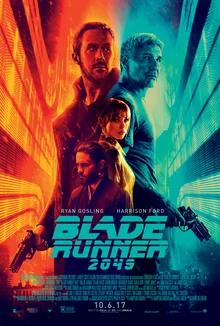
Blade Runner 2049
Thirty years after the original, K is a new-model replicant working as a blade runner for the LAPD, retiring older rogue models without complaint — until a routine job unearths a buried secret: evidence that a replicant once gave birth. The discovery could break the wall between the born and the built, and it sends K hunting for a child hidden decades ago, for a vanished blade runner named Deckard, and for an answer about himself he wants too badly to trust.
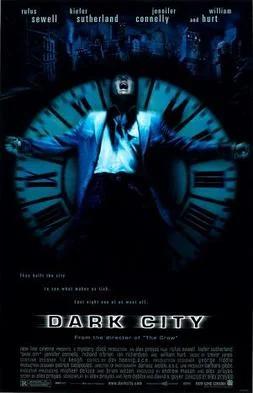
Dark City
John Murdoch wakes in a hotel bathtub with no memory, a dead woman in the next room, and detectives closing in for murders he can't remember committing. As he runs through a city where it is always midnight, he begins noticing what no one else does: at 12:00 exactly, the entire population falls asleep, the buildings physically rearrange themselves — and pale men in long coats move among the sleepers, injecting new memories into new lives.

Strange Days
Los Angeles, the last two days of 1999. Lenny Nero, ex-cop turned black-market dealer, sells SQUID recordings — full sensory captures of other people's experiences, straight from their cerebral cortex to yours. Addicted to replaying tapes of his own lost relationship, Lenny is dragged out of his loop when a snuff recording lands in his hands: evidence of a murder that connects to his ex, a music-industry conspiracy, and a police killing that could set the burning city off entirely.
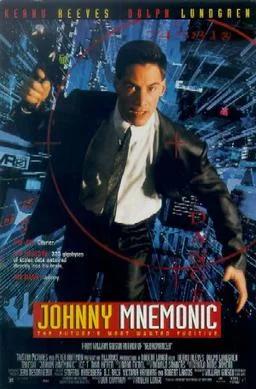
Johnny Mnemonic
2021: half the world suffers from a technology-induced plague, and the most valuable data travels not on networks — too easily hacked — but inside the heads of mnemonic couriers. Johnny is one of them, and his latest job stuffs his implanted memory far beyond safe capacity with data the Yakuza and a pharmaceutical giant will kill for. He has roughly a day to make delivery before the payload literally destroys his brain — the same brain he emptied of his own childhood to make room for cargo.

Ghost in the Shell
New Port City, 2029. Major Motoko Kusanagi, a cyborg security officer whose body is entirely artificial, hunts an elusive hacker known as the Puppet Master — an entity that ghost-hacks human minds and rewrites their memories. But the closer she gets, the more the case turns inward: if her body is manufactured and her memories can be edited, what exactly is the 'ghost' in her shell that makes her her?
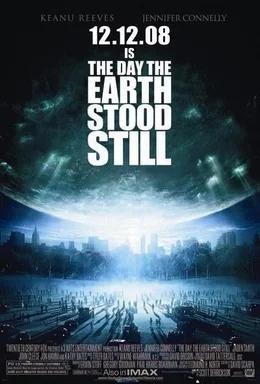
The Day the Earth Stood Still
An alien visitor named Klaatu arrives on Earth inside a glowing sphere, escorted by an enormous, silent robotic guardian called Gort — this time carrying an ultimatum about humanity's environmental destruction rather than its nuclear weapons. As government agents scramble to contain him and astrobiologist Helen Benson tries to understand his true intentions, Klaatu must decide whether a species this reckless with its own planet deserves to survive at all.
Comentarios
Inicia sesión para unirte a la conversación
Aún no hay comentarios. ¡Sé el primero!
Publicidad