Brazil (1985)
Universal Pictures· UK· 132 min· English
Dirigida por Terry GilliamMúsica de Michael Kamen
Sinopsis
In a retro-futuristic, totalitarian bureaucracy choking on paperwork and ductwork, low-level government clerk Sam Lowry spends his days processing forms and his nights escaping into elaborate flying dreams. When a literal typing error — a squashed fly jamming a printer, turning 'Tuttle' into 'Buttle' — sends the wrong man to his death, Sam's attempt to correct the paperwork pulls him into a nightmarish collision between his fantasies and a state that treats a clerical mistake as more dangerous than the person it actually kills.
Publicidad
Reseña
Terry Gilliam's Brazil imagines totalitarian control not through jackboots and surveillance screens but through something far more mundane and, somehow, far more terrifying: paperwork. Its retro-futuristic setting — crumbling art deco architecture strangled by exposed ductwork, malfunctioning machines everywhere, a bureaucracy so vast and self-justifying that fixing a clerical error becomes an act of open rebellion — gives the film's satire a texture unlike any other dystopia in the genre, closer to Kafka rewritten as slapstick than to Orwell rewritten as spectacle.
Jonathan Pryce's Sam Lowry, a man who escapes his suffocating bureaucratic reality into elaborate winged-hero fantasies, anchors the film's collision between imagination and institutional cruelty — and Gilliam stages that collision with a visual density (every frame crammed with production design detail, every institutional space simultaneously grand and crumbling) that rewards repeated viewing. Robert De Niro's cameo as Harry Tuttle, a renegade heating engineer operating outside the state's suffocating permit system, gives the film's second act a jolt of genuine anarchic energy against all that bureaucratic gray.
The film's production history is nearly as famous as the film itself: Gilliam fought a protracted, public battle with Universal over final cut, refusing the studio's demanded happy ending and eventually taking out a full-page trade ad publicly asking the studio's chairman when he'd release the film as intended. Gilliam won, more or less, and the film's actual ending — Sam's escape revealed as pure fantasy while his body remains catatonic under interrogation — is one of the bleakest, most formally audacious closes any studio-backed genre film has ever gotten away with.
Curiosidades y Datos
A trade-ad war with the studio
When Universal demanded a happier ending and shelved Gilliam's cut, he took out a full-page ad in Variety publicly asking studio chairman Sid Sheinberg when he intended to release the film — a rare, aggressive public pressure campaign by a director against his own studio.
The 'Love Conquers All' cut
Universal secretly prepared a drastically re-edited version with a happy ending, nicknamed the 'Love Conquers All' cut, without Gilliam's approval — it aired on American television but was never released as the studio's official theatrical version.
De Niro's uncredited-feeling cameo
Robert De Niro took the small role of renegade repairman Harry Tuttle specifically because he wanted to work with Gilliam, reportedly taking a much smaller fee than his standing would normally command for the part.
Ductwork as set design philosophy
Production designer Norman Garwood built entire sets around exposed, oversized ductwork specifically to visualize bureaucracy as something that had literally overtaken and strangled the physical architecture of everyday life.
Brazil isn't extrapolating real technology so much as satirizing bureaucratic institutions through deliberately anachronistic, decaying machinery — antique typewriters wired into modern systems, pneumatic tubes, ductwork that dominates every space and constantly malfunctions. Its genuine insight isn't technological but institutional: a surveillance and security state so committed to procedural self-justification that correcting its own factual error becomes more dangerous, bureaucratically, than the human cost of the error itself — a dynamic real whistleblowers and bureaucratic-accountability researchers would recognize immediately.
🎵 Banda Sonora
Música de Michael Kamen
Michael Kamen builds the score around Ary Barroso's cheerful 1939 song 'Aquarela do Brasil' (giving the film its title), deploying its bright, escapist melody with increasing irony against the state's mounting cruelty — a soundtrack choice that becomes darker every time it recurs.
🔗 Esta película conecta con…
Reparto y Equipo
Publicidad
También Te Puede Gustar
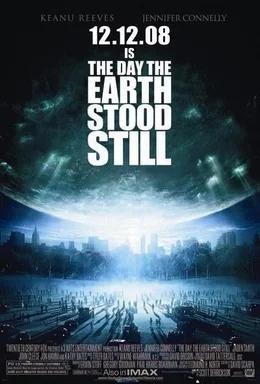
The Day the Earth Stood Still
An alien visitor named Klaatu arrives on Earth inside a glowing sphere, escorted by an enormous, silent robotic guardian called Gort — this time carrying an ultimatum about humanity's environmental destruction rather than its nuclear weapons. As government agents scramble to contain him and astrobiologist Helen Benson tries to understand his true intentions, Klaatu must decide whether a species this reckless with its own planet deserves to survive at all.
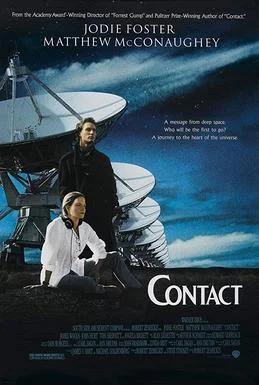
Contact
Radio astronomer Dr. Ellie Arroway has spent her career searching for proof of extraterrestrial intelligence against the skepticism of the scientific establishment and her own government funders. When she finally detects an unmistakable signal from the star Vega — instructions for building a machine of unknown purpose — Ellie is thrust into a collision between science, faith, politics and her own deepest need to believe that the universe holds more than empty static.
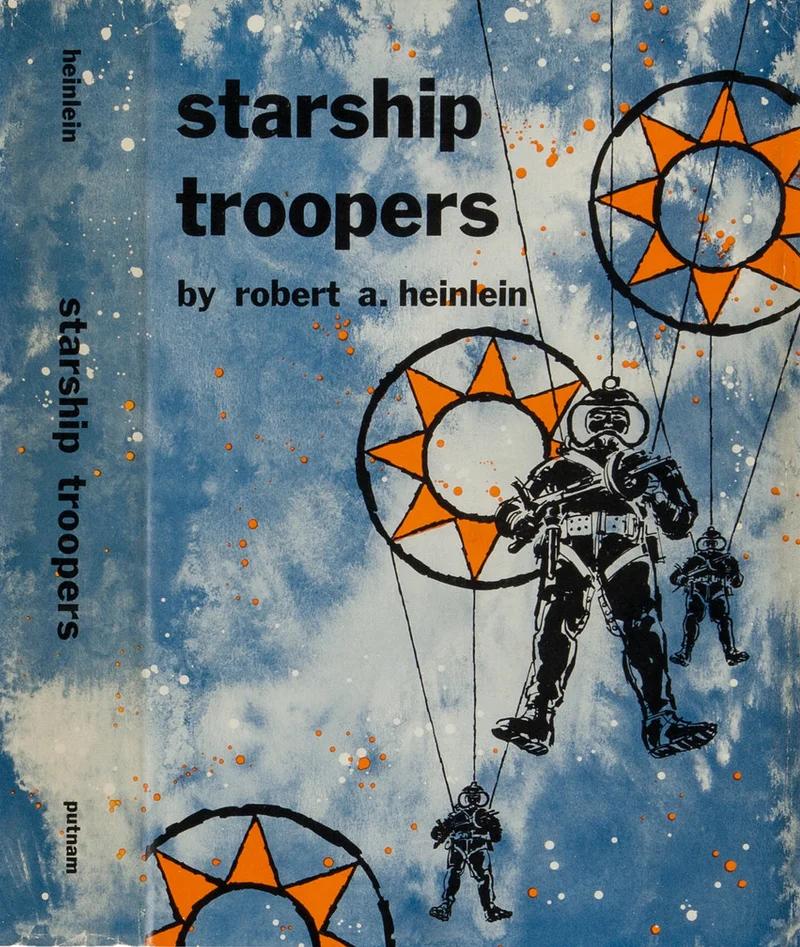
Starship Troopers
In a militarized future where citizenship must be earned through federal service, high school graduate Johnny Rico enlists in the Mobile Infantry alongside his friends, expecting glory. Instead, he finds himself on the front lines of an all-out interstellar war against the Arachnids, a species of massive, ravenous alien insects — while the propaganda broadcasts back home keep insisting humanity is winning.
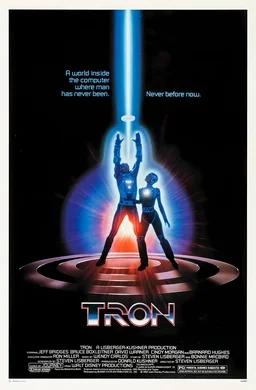
TRON
Video game programmer Kevin Flynn breaks into his former employer's mainframe to find evidence a rival executive stole his game designs — and is instead digitized by an experimental laser, pulled physically inside the computer system itself. Trapped in a neon-lit digital world where programs are living beings forced to compete in gladiatorial games by a tyrannical AI called the Master Control Program, Flynn allies with the security program Tron to fight his way back to the real world.
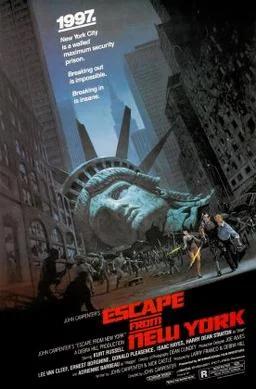
Escape from New York
By 1997, Manhattan Island has been walled off entirely and converted into a maximum-security prison where convicts are dumped and left to build their own lawless society. When Air Force One crashes inside the island with the President of the United States aboard, the authorities offer decorated ex-soldier and convicted bank robber Snake Plissken a full pardon for one impossible job: go in, get the President out, in 24 hours or less.
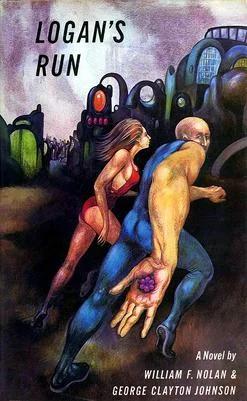
Logan's Run
In a domed city of endless pleasure centuries after civilization's collapse, every citizen lives in comfort until the age of thirty — at which point they're required to submit to Carousel, a ritual execution disguised as reincarnation. Logan 5, an enforcer tasked with hunting down citizens who try to run rather than submit, is ordered to go undercover as a runner himself — and begins to question everything his society has told him about what actually happens after the crystal in his palm turns black.
Comentarios
Inicia sesión para unirte a la conversación
Aún no hay comentarios. ¡Sé el primero!
Publicidad